




The Stillness That Strengthens
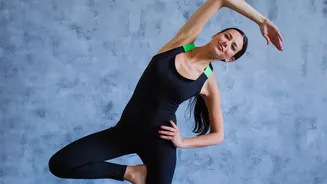
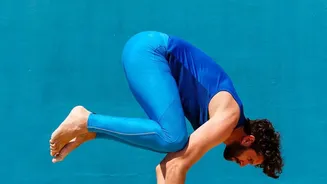
The secret to why yoga helps prevent stumbles isn't just about holding a pose without wobbling; it’s about training a 'sixth sense' called proprioception. This is your body's ability to know where it is in space without looking. When you balance in Tree
Pose or Warrior III, you are challenging a complex network of nerves in your muscles and joints. These nerves send constant feedback to your brain about your position, and your brain sends back instructions to make tiny muscular adjustments to maintain stability. Over time, this constant communication strengthens the neuromuscular pathways, making your reflexive adjustments quicker and more accurate in daily life. This heightened body awareness is what helps you recover your balance instantly from an unexpected trip on the pavement, often preventing a stumble from becoming a fall.
Training Your Body's Internal GPS
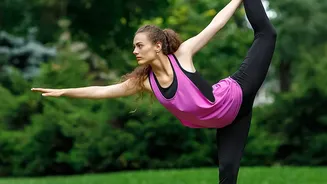
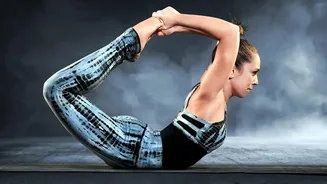
Yoga poses are essentially controlled balancing acts. Holding a position like Dancer's Pose or Eagle Pose forces your body to integrate information from three systems: your vision, your vestibular system (inner ear), and your somatosensory system (touch and proprioception). By practicing poses that challenge your base of support, you are methodically improving your body's ability to find and maintain its center of gravity. This isn't just about strengthening the large muscles of the legs and core; it’s about activating the smaller, stabilizing muscles that are often neglected in other forms of exercise. This deep-level conditioning provides a robust foundation of stability that makes you more resilient and less prone to injury.
The Rhythmic Power of the Jump
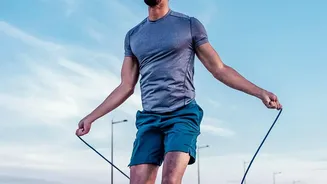
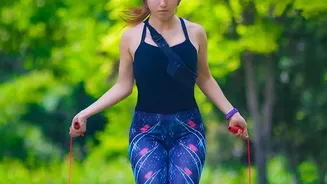
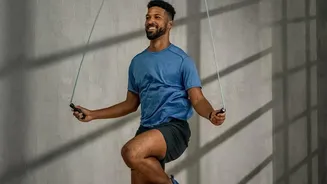
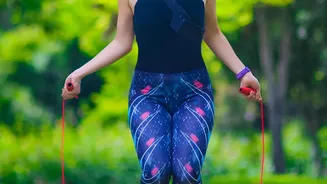
While yoga cultivates quiet stability, skipping builds explosive power. The rapid, repetitive bouncing of skipping is a form of plyometric training. Plyometrics involve a stretch-shortening cycle, where a muscle is stretched (as you land) and then rapidly contracted (as you jump). This trains your muscles, particularly in the lower legs, to produce maximum force in a minimum amount of time. It's this exact quality—elastic, reactive strength—that is fundamental to sprinting. Skipping specifically targets fast-twitch muscle fibers, which are responsible for powerful, short-duration movements like bursting off the starting line. This training teaches your body to be light and quick on its feet, minimizing ground contact time, which is a key component of efficient running.
Building the Foundation for Speed
The agility gained from skipping goes beyond just bouncing in place. Drills like high knees, side-to-side jumps, and double-unders improve coordination, rhythm, and footwork. This mimics the complex neuromuscular demands of sprinting and changing direction. The constant need to coordinate the turning of the rope with the timing of your jumps sharpens the connection between your brain and your body, leading to better overall athletic control. Running drills like A-skips and B-skips, which are foundational for sprinters, share a similar rhythmic, knee-driving motion to high-intensity skipping. In essence, skipping serves as an accessible way to develop the postural stability and cyclical leg action needed for powerful acceleration and maintaining top-end speed.