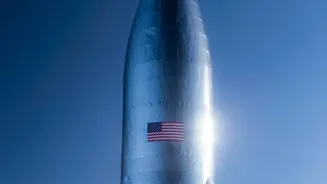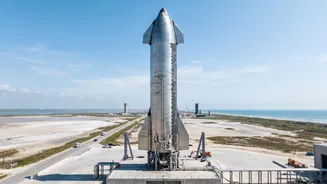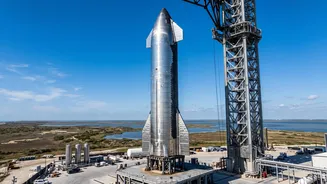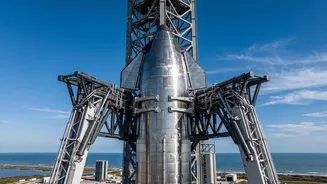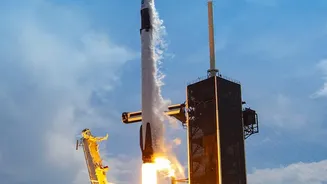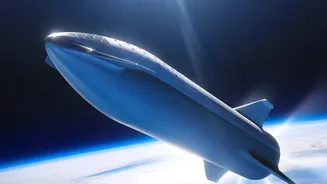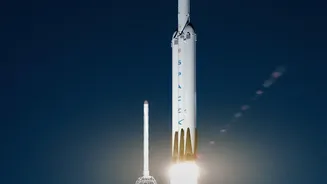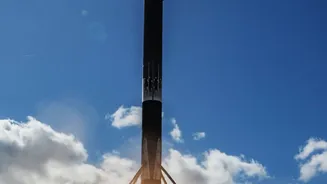




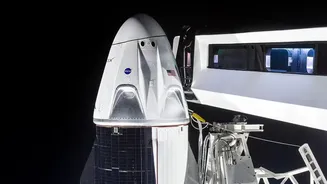
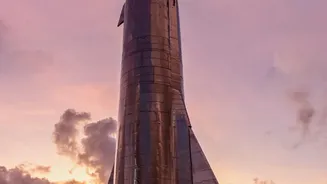
What was once science fiction is now a reality hanging from a tower in Texas. SpaceX has successfully launched its Starship, kept it in orbit for nearly a day, and caught the massive spacecraft with giant mechanical arms as it returned.
A Science-Fiction Catch Becomes Reality
On Saturday, November
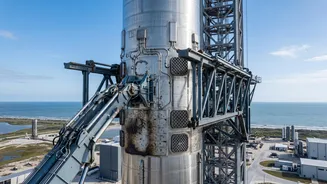
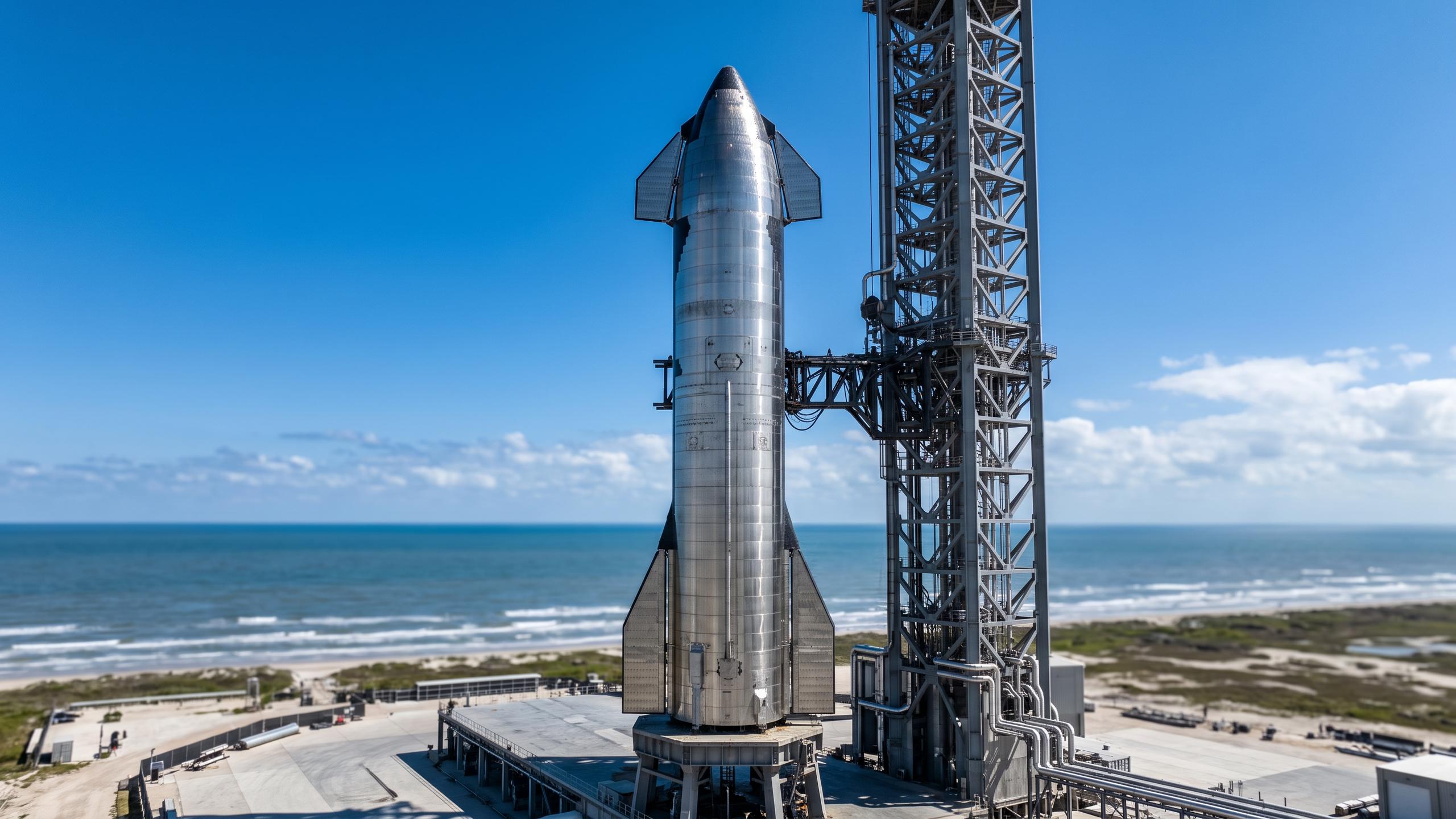
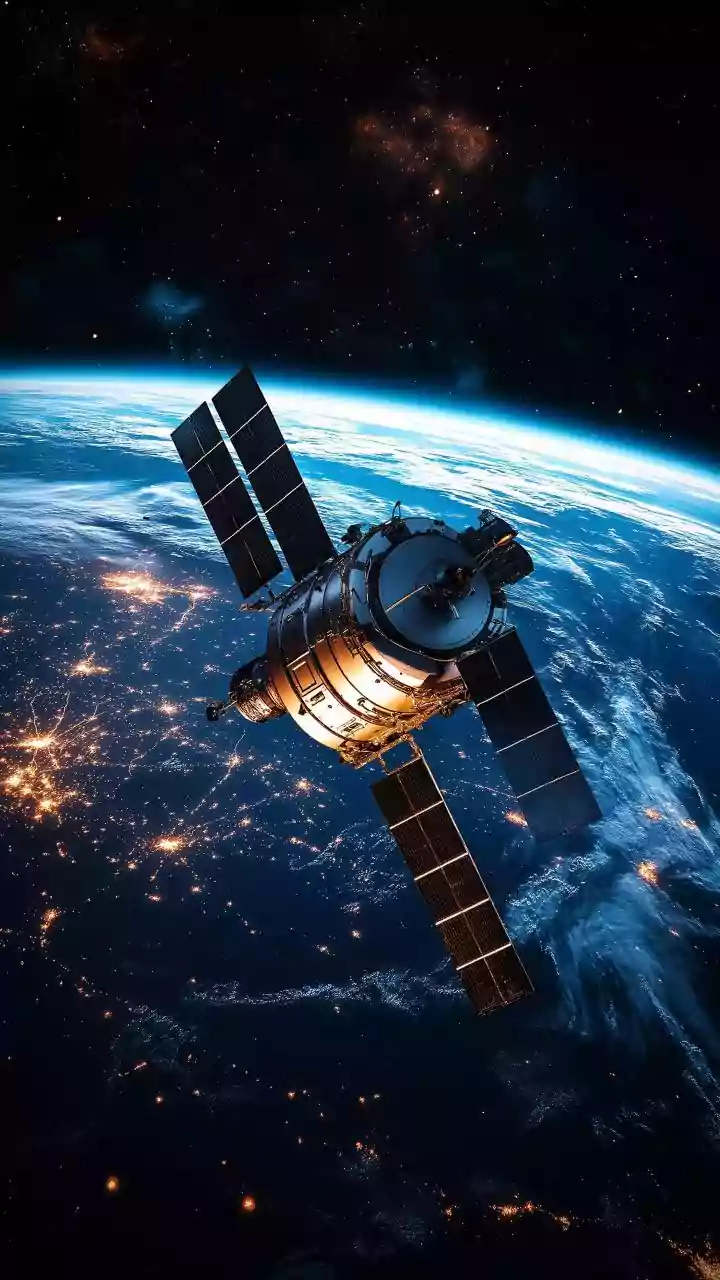
14, 2026, the world watched as the 171-foot Starship upper stage, known as Ship 42, descended from the Texas sky. After completing an ambitious 22.5-hour mission that saw it circle the Earth 14 times, the vehicle fired its engines one last time, flipped into a vertical position, and lowered itself precisely into the grasp of the launch tower's 'chopstick' arms. The maneuver, which had never been successfully attempted with a vehicle returning from orbit, marks a monumental achievement in aerospace engineering. During its extended stay in space, the ship also successfully deployed 26 of SpaceX's next-generation Starlink satellites, proving its capability as an operational cargo transport system.
An Ambitious but Imperfect Flight
While the dramatic catch of the Starship spacecraft was the main event, the mission was not a complete success. SpaceX's ultimate goal for Flight 15 was a 'double catch'—recovering both the Starship upper stage and its massive Super Heavy booster. However, minutes after the successful launch on Friday, the booster's return attempt was automatically aborted. The guidance system detected that the booster was not in the correct position for a catch, reportedly due to a low fuel mass alarm, and diverted it for a controlled splashdown in the Gulf of Mexico. This means the challenge of perfecting the full recovery of the entire launch system remains, though SpaceX had previously caught the booster stage on three prior flights.
Why 22 Hours on Orbit Matters
Beyond the spectacle of the landing, the mission's 22-hour duration is arguably just as significant. Previous test flights had much shorter profiles. By proving Starship can operate in orbit for nearly a full day, SpaceX gathered invaluable data on the vehicle's life support, power, and thermal management systems. This endurance is a critical prerequisite for the missions Starship is designed for. A trip to Mars will take months, and even missions to the Moon for NASA's Artemis program will require the vehicle to loiter in space for extended periods, potentially for in-orbit refueling—another key technology yet to be demonstrated. This long-duration flight proves Starship is more than a test article; it's an increasingly capable long-haul spacecraft.
The Holy Grail of Reusability
Catching a returning rocket with its own launch tower is central to Elon Musk's vision of making humanity a multi-planetary species. The reason is economics and speed. While SpaceX's Falcon 9 rockets have mastered landing boosters on ships and land, the process still requires transport, inspection, and refurbishment. The 'chopstick' system is designed to eliminate many of those steps. The goal is to catch the rocket, place it back on the launch mount, refuel it, and fly it again in a matter of hours, much like a commercial airliner. Achieving this with the upper stage—which returns from orbit much faster and hotter than the booster—was the harder part of the puzzle. By nailing the catch, SpaceX has validated the most radical part of its plan for full and rapid reusability.
A New Era for Access to Space
This successful mission signals a profound shift. The ability to launch, deploy a payload, and recover the spacecraft for rapid reuse will dramatically lower the cost of access to orbit. This has immediate implications for SpaceX's own Starlink internet constellation, allowing for faster and cheaper deployment of thousands more satellites. It's also a critical step forward for NASA, which has bet billions on a modified Starship to land its Artemis astronauts on the Moon, a mission now planned for 2028. Though challenges remain, Flight 15 demonstrated that the core principles of Starship's architecture work. It's a system that no longer exists only in computer renderings but in the real world.