






The Thirsty Engine of Modern AI
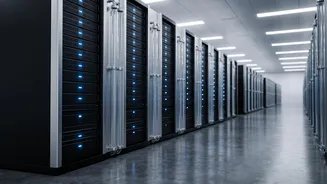
At the heart of every AI application is a data centre, a vast warehouse of powerful computer servers. These servers, particularly the high-performance chips or GPUs needed for complex AI tasks, generate an enormous amount of heat. To prevent them from
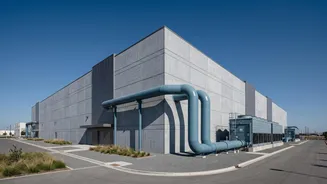
overheating and failing, they need to be constantly cooled. While some data centres use air conditioning, many of the largest and most powerful ones rely on water-based cooling systems, such as evaporative cooling towers. These systems work by evaporating water to dissipate heat, a highly effective but consumptive process. A single large data centre can use millions of litres of water per day, sometimes as much as a small city. As the AI boom accelerates, so does the demand for these water-intensive facilities.
Putting Numbers on the Water Footprint
Quantifying AI's water usage is complex because it depends on the AI model, the data centre's efficiency, and the local climate. However, recent studies provide a startling picture. Research from the University of California, Riverside estimated that training a model like GPT-3 alone consumed around 700,000 litres of fresh water. Day-to-day use adds up, too. One study estimated that a user could consume a 500ml bottle of water for every 10 to 50 questions asked of a chatbot like ChatGPT, when accounting for both direct cooling and indirect water use. It's crucial to distinguish between direct water use (on-site cooling) and the much larger indirect footprint, which comes from the water used by power plants—often thermoelectric—that generate the massive amounts of electricity these centres require. In fact, over 90% of a data centre's water usage can be indirect, linked to its power source.
The Indian Context: A Looming Challenge
For India, a nation with 18% of the world's population but only 4% of its freshwater resources, the implications are profound. The country is in the midst of a data centre construction boom, fuelled by the government's IndiaAI Mission and massive corporate investment. India's data centre water consumption was estimated at 150 billion litres in 2025 and is projected to more than double to 358 billion litres by 2030. This growth is concentrated in cities like Mumbai, Chennai, and Bengaluru, many of which already face significant water stress. The Economic Survey has cautioned that scaling up AI data centres could put extraordinary stress on India's already strained groundwater and freshwater reserves. This sets up a potential conflict between a thriving digital economy and the fundamental need for water security in local communities.
The Search for Sustainable Solutions
The technology industry is aware of the problem and is exploring solutions. Companies are increasingly building data centres that use air-cooling, especially in water-stressed regions like India. Google, for instance, has stated that its upcoming data centre in Visakhapatnam will be air-cooled. Other innovations include closed-loop cooling systems that recycle water, direct-to-chip liquid cooling that is more efficient, and using treated wastewater or seawater instead of fresh water. Tech giants like Amazon and Google have also committed to becoming "water positive," pledging to replenish more water than they consume through conservation and restoration projects. Furthermore, India's Bureau of Indian Standards (BIS) has introduced a voluntary framework for measuring Water Usage Effectiveness (WUE), encouraging operators to become more efficient even before mandatory regulations are in place.