

Not Fire, and Not a Rainbow
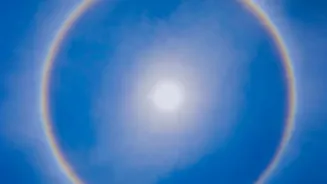
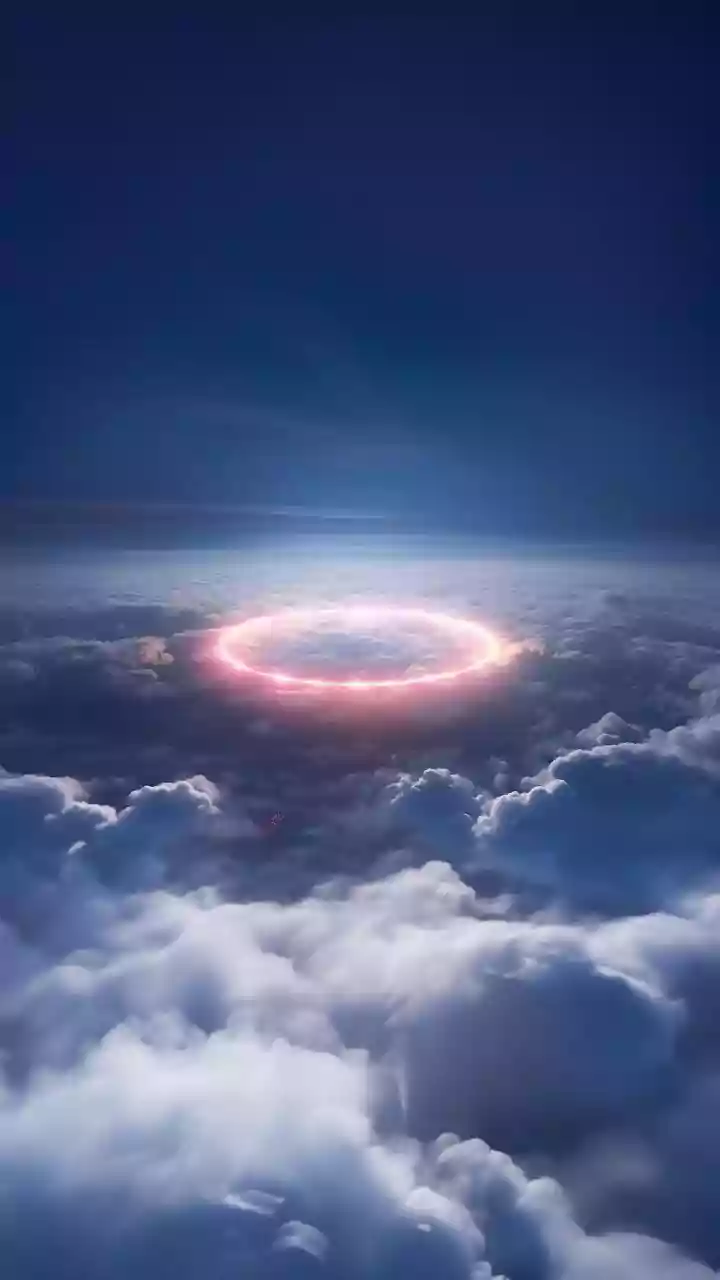
The captivating sight in NASA's latest popular image is scientifically known as a circumhorizontal arc. Unlike a traditional rainbow, which is formed by the refraction and reflection of light in round water droplets and appears as an arc opposite the sun,
a 'fire rainbow' is something else entirely. It belongs to a family of optical phenomena called ice halos. These arcs are always located below the sun and run parallel to the horizon, which is why they appear as a wide, flat band of colour rather than the familiar arch of a rainbow. The colours are also purer and more distinctly separated than in a rainbow, with red always appearing as the topmost colour.
The First Ingredient: Ice Crystals
A circumhorizontal arc can only form in very specific types of clouds. The magic happens in high-altitude cirrus clouds, which are thin, wispy clouds floating where the air is cold enough to be filled with millions of tiny ice crystals instead of water droplets. But not just any ice crystals will do. For this particular effect, the crystals must be shaped like flat, six-sided plates. Furthermore, these hexagonal plate-like crystals need to be oriented horizontally, floating flat like leaves on a pond, in order to properly refract the sunlight in a uniform manner. It's this precise shape and alignment that acts as a crucial first step in creating the colourful display.
The Second Ingredient: The Sun's Angle
Having the right clouds is only half the battle. The other essential ingredient is the position of the sun. A circumhorizontal arc will only appear when the sun is extremely high in the sky—at an elevation of at least 58 degrees above the horizon. Light from the sun must enter the vertical side face of the hexagonal ice crystal and exit through its flat bottom face. This specific path bends the light, splitting it into its component colours like a prism. Because such a high sun angle is required, this phenomenon is impossible to see in locations at latitudes above 55 degrees, as the sun never gets high enough in the sky there. It’s most commonly a mid-latitude spectacle, typically seen during the summer months around midday.
A Rare Celestial Symphony
The rarity of fire rainbows comes down to this precise convergence of conditions. You need the sun to be at a very high angle at the same time that you have a layer of cirrus clouds present. Those clouds must contain ice crystals that are not just hexagonal, but specifically plate-shaped. And those plates must all be aligned horizontally to the ground. If the sun is too low, or the clouds are made of the wrong kind of ice crystals (or water droplets), or if the crystals are tumbling randomly, the effect won't happen. The phenomenon can sometimes appear patchy or fragmented if the cloud itself is small or inconsistent. When all these factors align perfectly, however, the result is a breathtaking arc that can stretch for hundreds of miles across the sky.