


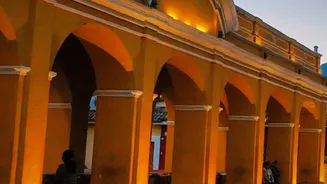
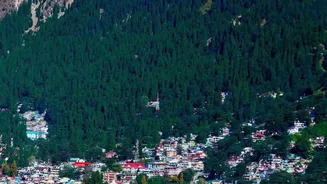
1. Raj Bhawan (Government House)
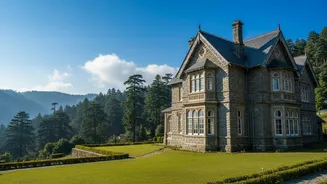
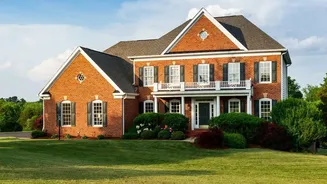
Modelled after Buckingham Palace, the Raj Bhawan is a stunning example of Victorian Gothic architecture. Built between 1897 and 1900, it served as the summer residence of British governors. Today, it is the official residence of the Governor of Uttarakhand
and its sprawling grounds, which include a 45-acre golf course, are a sight to behold. With 113 rooms, its grandeur speaks of an era when Nainital was the summer capital of the United Provinces. Visitors can tour the magnificent building and its lush gardens, stepping back into a regal past.
2. St. John in the Wilderness Church
Tucked away in a tranquil deodar forest near Mallital is one of Nainital's earliest buildings, the St. John in the Wilderness Church. Consecrated in 1852, this Anglican church gets its evocative name from a Bishop of Calcutta who fell ill and had to stay in an unfinished hut in the forest while visiting to lay the church's foundation. Built in the Neo-Gothic style, it is known for its beautiful Belgian stained-glass windows. The church also holds a brass plaque listing the names of victims from the devastating 1880 landslide, serving as a sombre and historic memorial.
3. Gurney House
For literature and wildlife enthusiasts, Gurney House is a must-visit pilgrimage site. This was the former residence of the legendary hunter-turned-conservationist, Jim Corbett. He lived here with his sister Maggie until they left for Kenya in 1947, selling the house to the Varma family who own it to this day. The charming cottage, built in the 1880s, preserves many of Corbett's personal belongings and furniture, offering an intimate glimpse into his life. While it remains a private residence, the owners often welcome Corbett admirers for a tour by appointment, making it a truly special experience.
4. The Nainital Club & Boat House Club
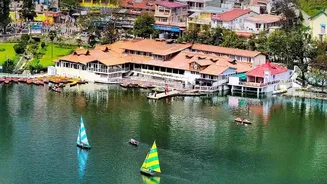
Once a bastion of British social life, The Nainital Club was considered one of the most exclusive clubs in pre-independence India. A key part of its legacy is the Boat House Club, which overlooks the Naini Lake. The club is home to the Naini Tal Yacht Club (NTYC), founded in 1910, making it one of the highest yacht clubs in the world. While the club itself was for members, it established yachting as a key activity on the lake. Today, visitors can enjoy the views from the club's vicinity and watch the colourful sailboats, a tradition that continues from the colonial era.
5. The Palace Belvedere
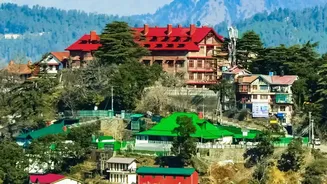
History meets hospitality at The Palace Belvedere, a former summer palace of the Rajas of Awagarh that is now a heritage hotel. Built in 1897, this stately mansion allows visitors to not just see history, but to live in it. Retaining its old-world charm with period furniture and a regal ambience, the hotel offers stunning panoramic views of Naini Lake. Staying here or visiting for a meal provides a taste of the gracious living that was once the hallmark of the princely and colonial elite who frequented Nainital during the Raj era.
6. The Old Secretariat Building
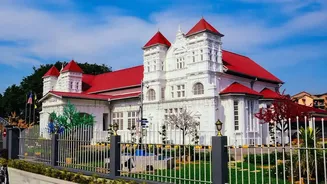
What now serves as the magnificent High Court of Uttarakhand was originally the Secretariat for the United Provinces during the British Raj. Constructed in 1900, this imposing Gothic-style building was designed by F.W. Stevens. As Nainital was the summer capital, this building was the centre of administration for the entire province for half the year. Its impressive facade, complete with turrets and arches, makes it a prominent landmark and a powerful symbol of the town's administrative importance during the colonial period. While access is restricted, its exterior is a highlight of any architectural tour of Nainital.
7. Methodist Church
Located on the Mall Road in Mallital, the Methodist Church holds the distinction of being one of the first Methodist churches in India, established in 1858. Founded by Rev. William Butler, it was built to serve the growing community. Its simple yet elegant Gothic architecture, with stone and wood construction and beautiful stained-glass windows, provides a peaceful sanctuary away from the bustle of the main road. The church stands as a testament to the diverse communities that formed the fabric of colonial Nainital and remains an active place of worship today.