




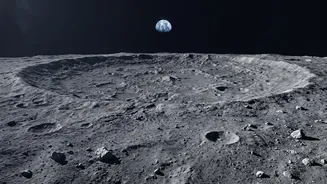
A Once-in-a-Century Impact Event
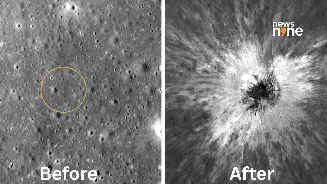
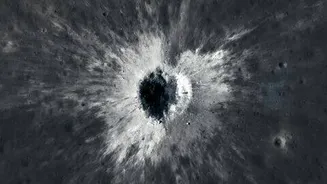
Scientists using NASA's Lunar Reconnaissance Orbiter (LRO) have confirmed the existence of a new crater, dubbed McGetchin, on the Moon's eastern edge. Measuring a staggering 222 meters (728 feet) across and 43 meters (141 feet) deep, it's large enough
to comfortably swallow the Colosseum in Rome. Researchers believe the crater was formed sometime in the spring of 2024 by an object the size of a small apartment building. An impact of this magnitude is considered a once-in-a-century event, making its discovery a rare opportunity to study how the lunar surface changes in real time. The impact was so powerful that it hurled debris across the surface for more than 100 kilometers and created a surrounding 'cold spot' several kilometers wide where the 'fluffed up' soil now retains less heat.
A Dangerous and Dynamic Environment
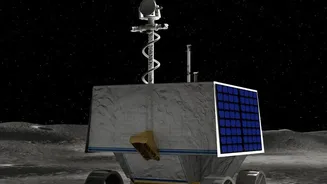
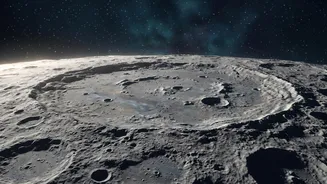
The discovery of McGetchin crater is a dramatic reminder that the Moon is not a static, unchanging world. Unlike Earth, it has no significant atmosphere to burn up incoming meteoroids or space debris. Everything from tiny cosmic dust particles to building-sized asteroids and even human-made rocket stages hits the surface at incredible speeds. Without an atmosphere, the ejecta from a crash—the rock and soil thrown out by the impact—can travel for vast distances, creating a high-velocity shrapnel effect. This constant bombardment poses a direct and serious threat to any long-term infrastructure, whether it's habitats, solar panels, rovers, or the astronauts themselves. A single, well-placed impact could be catastrophic.
The Growing Problem of Lunar Debris
The threat isn't just from natural sources. As more countries and private companies launch missions to the Moon, the amount of artificial debris in cislunar space—the region between Earth and the Moon—is growing. This includes discarded rocket stages and defunct satellites. Due to the Moon's uneven gravitational field, objects in lunar orbit can become unstable and eventually crash onto the surface in unpredictable locations. This not only adds to the kinetic impact risk but also threatens to contaminate pristine scientific sites, such as the permanently shadowed craters at the poles that may hold water ice. The liability for damage caused by space objects is established in the Outer Space Treaty, making debris a legal and diplomatic issue as well as a physical one.
Engineering for Survival
So, how do you protect a future lunar base? The new crater reinforces the need for robust engineering solutions. Planners are exploring several strategies to mitigate the danger. One leading idea is to build structures underground or use natural formations like lava tubes, which provide excellent shielding from both impacts and radiation. Another approach involves covering surface habitats with a thick layer of lunar regolith—the loose soil and rock on the surface. Studies suggest a layer several meters thick could provide significant protection. Choosing a base location is also critical; the Earth-facing side of the Moon is partially shielded by our planet's own gravity, slightly reducing the rate of impacts. Ultimately, a combination of better debris tracking, strategic site selection, and hardened, resilient construction will be essential for any sustainable human presence on the Moon.