








The Allure and Limits of Progress Photos
Let’s be clear: visual tracking can be highly motivating. Seeing changes in your physique over weeks and months provides tangible proof that your effort is paying off, which can reinforce your commitment. However, relying solely on photos has its downsides.
Our bodies fluctuate daily due to hydration, hormones, and what we’ve eaten. A single photo can be misleading, and obsessing over minor visual changes can create an unhealthy focus on aesthetics rather than health. Sometimes the most significant progress, like gaining muscle while losing fat—a process called body recomposition—might not even show up on the scale or might look different from what you expect in a photo. This is why photos need companions; they are one piece of data, not the entire report card.
Track Your Strength, Not Just Your Shape
A far more reliable indicator of your progress is your strength. Are you getting stronger? This isn't a subjective measure; it's something you can track with simple data. Start a workout journal, whether in a notebook or an app on your phone. For each session, log the exercises you perform, the weight you lift, and the number of sets and reps you complete. The goal is what trainers call 'progressive overload'—gradually increasing the demand on your muscles over time. Lifting a little heavier, completing one more rep, or shortening your rest periods are all concrete signs of progress. Watching these numbers go up provides an empowering sense of achievement that is completely independent of how you look in a mirror on any given day. It’s proof your body is adapting and becoming more capable.
Listen to Your Energy Levels
Fitness isn’t just about what your body can do; it's also about how you feel. How are your energy levels throughout the day? Are you sleeping more soundly? Do you feel less stressed and more mentally clear? These are crucial markers of improved health. While they feel subjective, you can track them. Try keeping a simple daily journal. At the end of each day, rate your overall energy on a scale of 1 to 10. Make a quick note about your mood and the quality of your sleep. Over weeks, you'll start to see patterns. You might notice that your energy is consistently higher or that you’re handling stress better. These improvements in your quality of life are among the most valuable returns on your fitness investment.
Celebrate Your 'Non-Scale Victories'
Beyond the gym and the mirror, fitness progress shows up in everyday life. These wins are often called 'non-scale victories' (NSVs), and they are powerful motivators. A non-scale victory could be your favourite pair of jeans fitting more comfortably, or noticing you can carry all the grocery bags in one trip without struggling. It might be climbing a few flights of stairs without getting breathless or having the stamina to play with your children for longer. Maybe you notice less joint pain or feel a new sense of confidence in your posture. These moments are direct evidence that your fitness is enhancing your life in meaningful ways. Make it a point to acknowledge and even write down these victories. They provide a rich, positive context that a photo or a number on a scale can never capture.
Build a Complete Fitness Dashboard
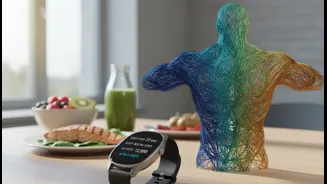
The key to sustainable, long-term fitness is adopting a holistic view of your progress. Think of it as creating your own personal fitness dashboard. Once a week, take a few minutes to check in with yourself. If you find photos motivating, by all means, use them—but don't let them be your only metric. Review your workout log to see your strength gains. Read through your energy journal to appreciate improvements in your mood and sleep. And most importantly, reflect on the non-scale victories you've experienced. This balanced approach shifts the focus from a narrow obsession with appearance to a broader appreciation for your body’s increasing strength, resilience, and vitality. It helps build a healthier, more positive relationship with exercise and your body, ensuring your motivation stays high for the long run.