



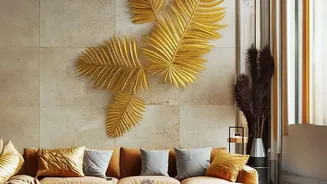
Why a Touch of Gold Works Wonders
The magic of gilding in a small space lies in its interaction with light. Metallic surfaces, particularly those with a warm gold tone, are excellent at reflecting and bouncing light around a room. This subtle amplification can make a space feel brighter
and more dynamic. Unlike a flat paint colour, a gilded surface catches the eye, creating depth and visual interest that can trick the eye into seeing more space. Psychologically, gold tones are associated with warmth, luxury, and comfort. A small glint of gold can evoke the feeling of sunlight, making a room feel cosier and more welcoming, a quality especially valuable in spaces that lack abundant natural light.
Choosing Your Midas Touch
You don’t need to be an ancient artisan to bring gilding into your home. Modern options make it accessible for any DIY-er. Gold leaf, which comes in thin sheets, offers the most traditional and textured finish. It's available as genuine gold leaf (the most expensive option) or more affordable composition and imitation leaf, like Dutch metal, which provides a similar look. For a simpler approach, high-quality metallic paints can create a uniform shimmer on walls or furniture. Gold leaf pens or markers are perfect for fine details and smaller objects, offering precision and control. The choice depends on your project's scale and desired effect; paint provides a smooth glow, while leafing offers a unique, layered texture.
Strategic Placement is Everything
The key to using gold in a small room is restraint. Instead of a bold statement wall, which can be overwhelming, focus on small, strategic accents that draw the eye. Consider gilding the inner bevel of a picture frame or mirror; this catches light and adds a subtle glow. The inside of a lampshade is another brilliant spot—when the light is on, it will cast a warm, golden hue throughout the room. Other effective placements include highlighting architectural details like door frames or trim, adding a touch to furniture legs, or applying it to small decorative objects like vases or trays. These small touches create a sense of cohesion and understated luxury without visually shrinking the space.
The Art of Restraint: What to Avoid
In a small space, a little gold goes a long way. The biggest mistake is overuse, which can quickly make a room feel gaudy and cluttered rather than warm and elegant. Avoid large, solid gold pieces of furniture or applying gold leaf to an entire feature wall. A fully gilded wall, while dramatic, can be overpowering in a compact room and may even feel dated. Similarly, be cautious with high-shine, polished gold finishes across large surfaces, as they can create distracting glare. Instead, opt for brushed or matte gold finishes, which provide a softer, more diffused warmth. The goal is to create a glimmer, not a glare, ensuring the gold accents are delightful discoveries rather than overwhelming statements.
Pairing Gold with the Right Palette
To maximize the warming effect of gilding, pair it with complementary colours and textures. Gold accents pop beautifully against deep, rich colours like navy blue, emerald green, and charcoal grey. This contrast enhances the gold's warmth and creates a sophisticated, layered look. For a softer approach, gold also works wonderfully with creamy whites, warm neutrals, and earthy tones. Texture plays a crucial role as well. Pairing gilded elements with soft materials like velvet, wool, or natural wood creates a pleasing tactile and visual contrast. A gilded mirror frame hanging above a wooden console, for example, combines rustic warmth with a touch of glamour, achieving a perfectly balanced and inviting atmosphere.