






Meet India's Air Taxi Pioneer
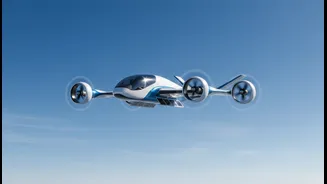
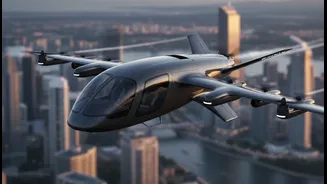
Born from research at IIT Madras, The ePlane Company is at the forefront of India’s push into Advanced Air Mobility. The startup is developing a new type of aircraft called an eVTOL (electric Vertical Take-Off and Landing), designed to operate as a flying
taxi in crowded urban environments. Recently, the company unveiled its first full-scale prototype, the e200X. This two-seater aircraft, built from lightweight carbon-fibre composites, is designed to carry a pilot and two passengers or up to 200 kilograms of cargo. With a targeted range of 110 kilometres, it aims to make short-distance air travel a quiet, emission-free reality. The goal is to cut down a 60-minute road journey to just 14 minutes, fundamentally changing how people move within cities.
What Is an 800-Volt System?
At the heart of ePlane's strategy is its adoption of an 800-volt electrical architecture. To understand why this is a big deal, think of electricity like water flowing through a pipe. Voltage is like the water pressure. By doubling the voltage from the more common 400-volt standard found in many electric cars today, you can push the same amount of power through the system with only half the current (the flow rate). This simple principle has massive implications for an electric vehicle, and especially for an aircraft where every component's performance and weight are scrutinised. The e200X is reportedly India's first aerospace deployment of this high-voltage system.
The High-Voltage Advantage
For an air taxi service to be commercially viable, its vehicles must spend more time flying than charging. An 800-volt system enables significantly faster charging, minimising ground time and maximising operational availability. This is a crucial factor for a business model built on high-frequency trips. Furthermore, because the system operates at a lower current, it generates significantly less waste heat. This leads to higher overall efficiency, meaning more of the battery's energy is used for flying, potentially extending the aircraft's range. The lower current also allows for the use of thinner, lighter wiring throughout the aircraft. While it may seem minor, shaving off kilograms is a monumental victory in aerospace engineering, directly contributing to better performance and payload capacity.
Powering the e200X for Indian Cities
The 800-volt system is not just a technical specification; it is a core enabler of the e200X's design philosophy. The company aims to integrate its air taxis into existing urban infrastructure rather than demanding cities build expensive, dedicated 'vertiports'. The e200X’s compact size is designed to allow it to land on reinforced rooftops and existing helipads. The efficiency gains from the high-voltage system support this practical approach. The company has already received commitments for over 800 aircraft, with strong early interest from emergency medical services who see the potential for using the e200X as a rapid air ambulance.
A Global Race with Local Innovation
The quest to build the first successful air taxi is a global one, with well-funded companies in the US, Europe, and China all competing. The unveiling of the full-scale e200X prototype, complete with its advanced 800-volt powertrain, signals that an Indian company is a serious contender in this deep-tech race. After completing over 10,000 kilometres of test flights with smaller models and securing a Design Organisation Approval from the DGCA, ePlane is now preparing for the rigorous ground and flight testing of its full-scale prototype. The company is targeting certified flight tests by mid-2027, with the ambitious goal of launching commercial services by 2028.