



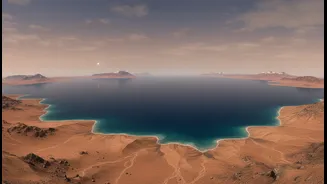
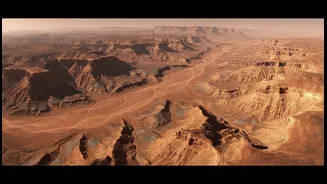


A 'Bathtub Ring' on the Red Planet
For decades, the question of a Martian ocean has been a topic of intense scientific debate. While previous missions found features resembling ancient shorelines, the evidence was often ambiguous. Recent studies, however, have shifted the focus from looking
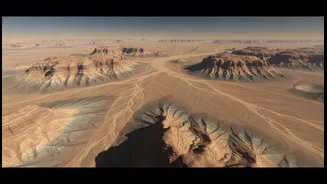
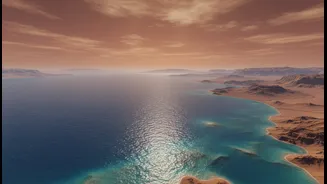
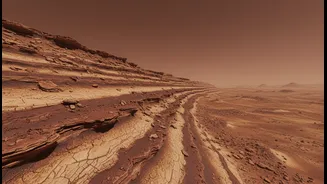
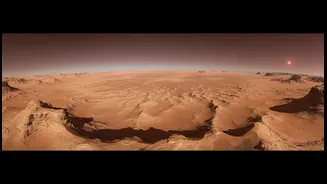
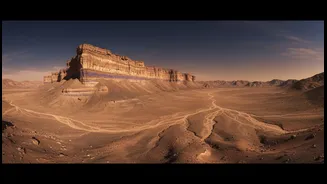
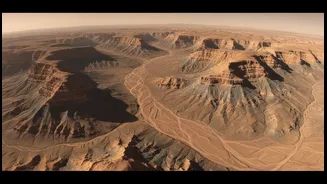
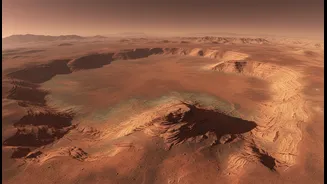
for coastlines to identifying larger, more stable geological fingerprints that a massive body of water would leave behind. One such study identified a feature much like a continental shelf on Earth—a broad, flat band that forms where land meets a stable ocean. This structure, which takes a very long time to form, suggests the ocean was not a fleeting phenomenon but a persistent feature of the Martian landscape. Another team found a chemical 'bathtub ring' of manganese oxides around a large basin, a mineral deposit that forms at the boundary of shallow, oxygen-rich water. This provides a chemical signature for where the ancient water's edge once was.
How Long Did the Ocean Last?
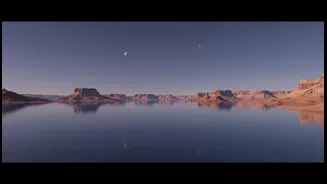
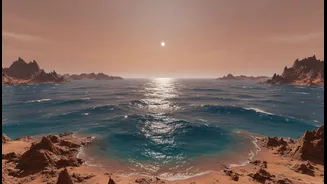
The discovery of these large-scale geological and chemical markers does more than just suggest an ocean existed; it helps estimate its lifespan. Features like continental shelves do not form overnight. They are the result of waves, currents, and sediment deposition over vast timescales. The manganese ring offers an even more specific clue. By measuring the rate at which these oxides form and the depth of the deposits, researchers calculated the ocean could have persisted for somewhere between 800,000 to 1.5 million years. This is a significant finding because it moves the narrative from Mars having brief, violent floods to a world with a potentially stable climate and a long-lasting hydrological cycle, complete with rain and flowing rivers. An ocean of this scale, likely covering a third of the planet in its northern lowlands, would have fundamentally shaped the Martian environment about 3.5 billion years ago.
The Big Question: Where Did the Water Go?
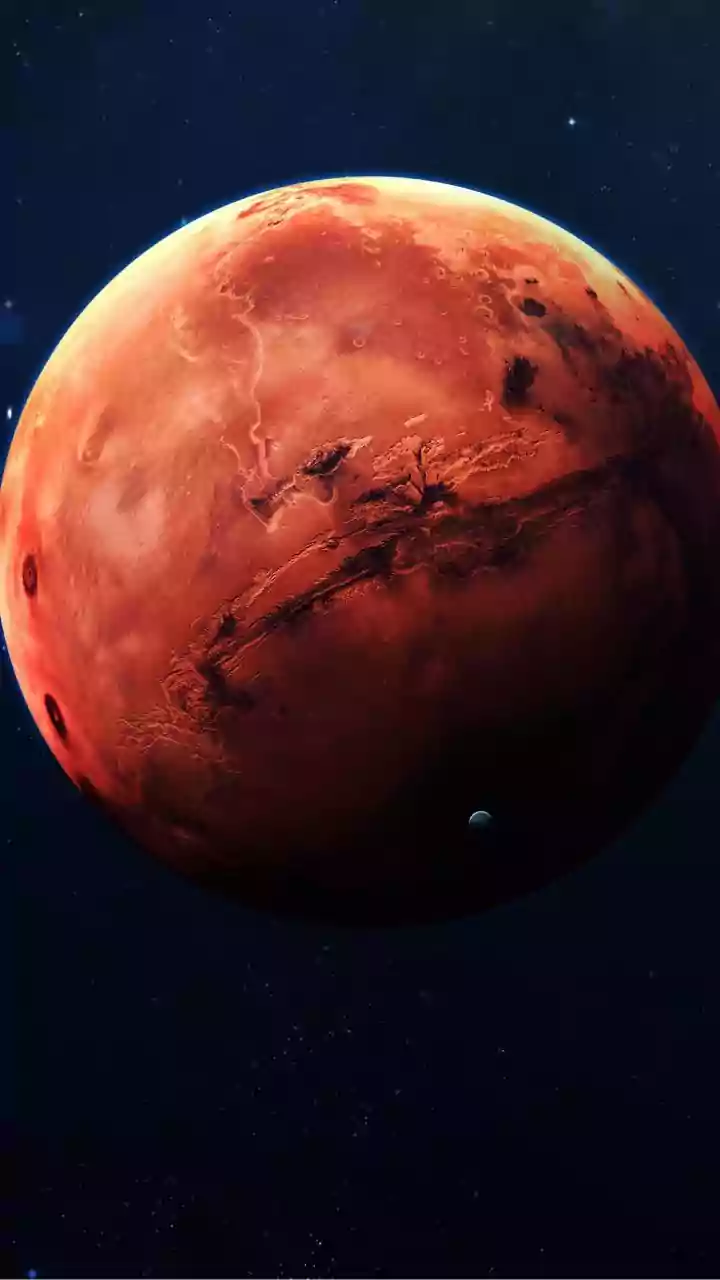
If Mars once held an ocean comparable in size to Earth's Arctic Ocean, the obvious question is what happened to all that water. The answer is complex and likely involves several processes. As Mars lost its protective magnetic field billions of years ago, its atmosphere was gradually stripped away by solar wind. This thinning atmosphere could no longer maintain the warmth and pressure needed for liquid water to remain stable on the surface. Much of the water likely escaped into space. Another portion is believed to be frozen in the planet's polar ice caps and trapped as ground ice beneath the surface. Some recent studies using seismic data even suggest that vast reservoirs of liquid water might still exist deep within the Martian crust, having filtered down billions of years ago.
What This Means for the Search for Life
Every discovery of past water on Mars inevitably leads to the question of life. A stable ocean lasting for a million years or more dramatically extends the window of time in which life could have potentially emerged. On Earth, life is believed to have started in the oceans, and a similar environment on early Mars makes it a much more promising candidate for ancient biology. The sediments deposited along these ancient shorelines and river deltas are now prime targets for future exploration. Much like on Earth, these coastal areas could have preserved traces of organic material or even fossils, should they have existed. While this research is not proof of Martian life, it confirms that the conditions—a large, stable body of liquid water—were present for a significant period.