




An Ambitious Leap for India
The Gaganyaan programme is one of India's most ambitious scientific undertakings. The primary objective is to demonstrate the nation's capability for human spaceflight by launching a crew of astronauts into a low Earth orbit of 400 kilometres for a three-day
mission and bringing them back safely. Success would make India only the fourth country in the world—after the United States, Russia, and China—to have an independent human spaceflight program. This mission is not just about sending people to space; it represents a monumental step forward in India's technological and scientific prowess, building on the legacy of its successful lunar and Mars missions.
The First Uncrewed Mission (G1)
Before astronauts, or 'Gaganauts', can take flight, ISRO must ensure every system is perfect. That is the purpose of the first uncrewed mission, designated Gaganyaan-1 or G1. According to recent updates from ISRO Chairman V Narayanan, work on this mission is progressing vigorously and is targeted for launch within this calendar year, 2026. This flight is the crown jewel of ISRO's packed 2026 schedule and serves as a full dress rehearsal. It will test the performance and safety of all critical components in a real space environment, from the launch vehicle to the crew module's re-entry and recovery systems.
Meet Your Robotic Co-Pilot: Vyommitra
The G1 mission will not have an empty crew cabin. Instead, it will carry Vyommitra, a sophisticated, female-presenting humanoid robot developed by ISRO. The name Vyommitra translates from Sanskrit as "space friend." This AI-enabled 'half-humanoid' is designed to mimic human functions, monitor the crew module's internal environment, and interact with the ground control station. Vyommitra will test the life support and environmental control systems, ensuring that temperature, pressure, humidity, and carbon dioxide levels remain safe for future human occupants. The data collected by Vyommitra will be invaluable for validating the spacecraft's design and ensuring astronaut safety on subsequent missions.
Key Systems Nearing Readiness
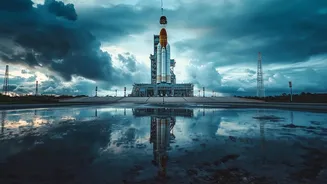
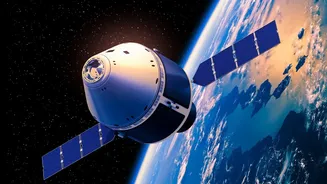
Recent government briefings have confirmed that preparations are in an advanced stage. The specially designed Human Rated Launch Vehicle (HLVM3), a modified version of India's powerful LVM3 rocket, has completed ground testing of all its propulsion stages. The components of the Orbital Module, which consists of the Crew Module where astronauts will sit and the Service Module that houses propulsion and power systems, have been realised, with final assembly and testing nearing completion. Furthermore, the launch pad at the Satish Dhawan Space Centre has undergone extensive upgrades to support human spaceflight requirements. A critical piece of technology, the Environmental Control and Life Support System (ECLSS), is being developed indigenously and a version of it will be demonstrated on the uncrewed flight.
The Road to Crewed Flight
While initially announced in 2018 with a target of 2022, the timeline for the first crewed flight has been adjusted to ensure every aspect of the mission is thoroughly vetted. Following the G1 mission in 2026, ISRO plans at least one more uncrewed test flight before the first human mission, now anticipated in 2027. These tests are non-negotiable steps in a high-stakes program where astronaut safety is the absolute priority. Each successful test, from the integrated simulations currently underway to the upcoming G1 launch, builds confidence and moves India methodically closer to writing a new chapter in its space exploration story. The vigorous progress on the uncrewed mission is the most important indicator that the dream of an Indian in space, launched from Indian soil, is on track.