





Origin: Local Hero vs. Global Traveller
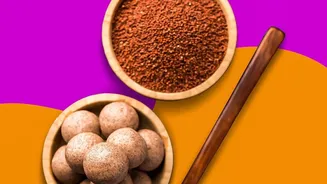
Ragi, or finger millet, is a humble grain with deep roots in Indian agriculture, cultivated for thousands of years across states like Karnataka, Tamil Nadu, and Maharashtra. It's a staple food, woven into traditional dishes like ragi mudde and porridge.
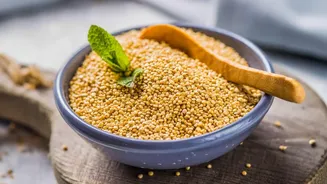
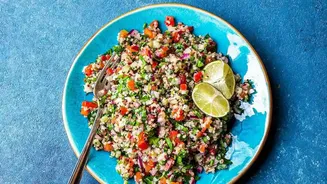
Quinoa, on the other hand, is technically a seed from the amaranth family, native to the Andes mountains of South America. Its journey to Indian kitchens is more recent, propelled by its global reputation as a 'superfood'. While quinoa is now grown in India, it is still widely seen as an imported commodity.
Nutritional Showdown: A Tale of Two Strengths
When it comes to nutrition, neither grain holds a universal advantage; each shines in different areas. Quinoa is famous for being a 'complete protein', meaning it contains all nine essential amino acids your body can't produce on its own. Per 100g, uncooked quinoa offers about 13-14g of protein, almost double that of ragi, which provides around 7g. However, ragi's claim to fame is its extraordinary calcium content. At approximately 344-364mg per 100g, it contains over seven times more calcium than quinoa. This makes ragi an exceptional food for bone health. Ragi also often has more dietary fibre, which aids digestion and helps you feel full longer.
Vitamins, Minerals, and Everything In Between
Beyond the headline nutrients, the comparison gets more nuanced. Ragi is a powerhouse of calcium and a good source of iron, making it particularly beneficial for addressing common nutritional gaps in Indian diets. Quinoa fights back with a superior profile of several other minerals and vitamins. It generally contains more iron, folate, magnesium, and vitamins from the B group than ragi. For instance, quinoa provides significantly more folate, a crucial nutrient for cell growth and metabolism. Both grains are gluten-free and considered beneficial for managing blood sugar levels due to their fibre content and relatively low glycemic index (GI).
Glycemic Index: A Closer Look
For those managing blood sugar, the glycemic index (GI) is a key metric. Quinoa has a GI of about 53, placing it in the low-to-medium range. The GI of ragi can vary more widely depending on its form, ranging from 54 to 68. While these numbers are similar, the high fibre content in both grains helps slow the absorption of sugar into the bloodstream, preventing sharp spikes. This makes both ragi and quinoa suitable choices for diabetic-friendly diets when consumed in moderation as part of a balanced meal.
In the Kitchen: Taste and Versatility
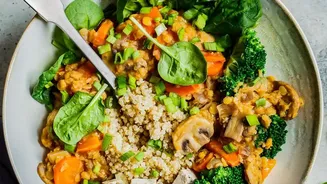
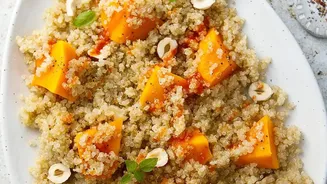
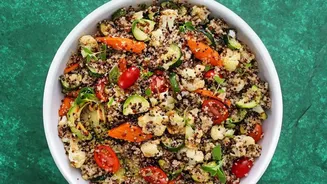
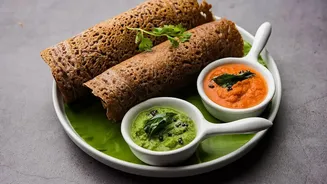
Quinoa has a mild, nutty flavour and a slightly fluffy yet chewy texture when cooked. It's incredibly versatile and can be used as a substitute for rice, in salads, soups, and even breakfast bowls. Ragi has a more distinct, earthy flavour. It is most commonly used in its flour form to make rotis, dosas, idlis, and porridge (kanji). While quinoa can be easily integrated into various cuisines, ragi is already a seamless fit for traditional Indian cooking methods, requiring no new habits for home cooks.
Cost and Accessibility: The Deciding Factor
For many households, this is the most critical difference. Ragi is a locally grown crop, making it widely available and significantly more affordable. As of late 2026, ragi can be purchased for around ₹40-60 per kilogram. Quinoa, being largely an imported product or one with a more complex supply chain, is considerably more expensive, often costing anywhere from ₹250 to over ₹500 for a 500g pack. This substantial price difference makes ragi a far more practical and sustainable choice for daily consumption in an Indian context.