






The Body's Gravity Confusion
On Earth, your cardiovascular system works tirelessly against gravity to pump blood throughout your body. In the microgravity environment of space, this constant battle disappears. Almost immediately upon entering orbit, astronauts experience a significant
fluid shift. Without gravity pulling fluids down toward the legs, blood and other liquids move upward into the chest and head, causing the puffy faces and sinus congestion often seen in astronaut photos. This fluid redistribution tricks the body into thinking it has an excess of fluid, triggering the kidneys to respond and leading to a decrease in overall blood volume. The heart itself also begins to change shape, becoming slightly more spherical as the familiar downward pull it is accustomed to vanishes.
An Unnecessarily Strong Muscle
Imagine you stopped exercising a major muscle group for months. It would naturally weaken and shrink. The same principle applies to the heart in space. Without having to pump against gravity, the heart's workload is significantly reduced. Over time, this can lead to a condition known as cardiac atrophy, where the heart muscle begins to lose mass and shrink. Studies on astronauts, including Scott Kelly who spent nearly a year in space, have documented this reduction in the size of the heart's left ventricle. This deconditioning is a major concern for long-duration missions, as a weakened heart might struggle to re-adapt to a gravity environment, whether it's returning to Earth or landing on Mars.
The ISS as a Cardiac Laboratory
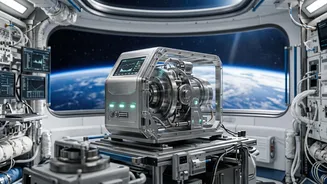
To understand and combat these effects, the International Space Station (ISS) serves as a crucial orbital laboratory. Scientists use a variety of tools to monitor astronaut heart health, including advanced ultrasound and echocardiography scans, blood pressure monitoring, and analysis of biological samples. Some recent experiments even use 'heart-on-a-chip' technology, which involves growing 3D models of human heart tissue to study the effects of microgravity at a cellular level, helping to model disease and test potential drugs. These studies examine everything from the heart's shape and efficiency to how arterial walls may stiffen over time. This constant data collection is vital for building a comprehensive picture of cardiovascular health during missions.
Preparing for the Red Planet
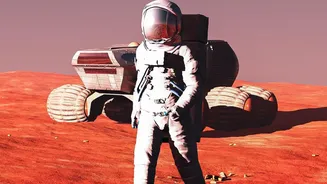
A round trip to Mars could take two to three years, far longer than a typical six-month stay on the ISS. The risks of cardiac deconditioning, coupled with exposure to deep space radiation, are therefore magnified. To counter these effects, astronauts on the ISS follow a rigorous daily exercise regimen, often for two hours a day, using specially designed treadmills, stationary bikes, and resistance equipment. Research shows this intense exercise is highly effective. Recent studies that tracked astronauts on six-month missions found that while their hearts showed some changes initially, the daily workouts helped their cardiovascular function return toward pre-flight levels, suggesting they could tolerate the low-gravity of Mars. This demonstrates that with the right countermeasures, the heart can adapt and remain healthy enough for a Martian mission.
Space Research's Earthly Rewards
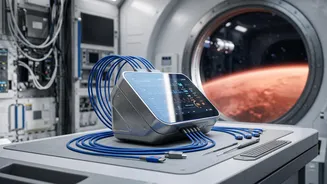
The research dedicated to keeping astronauts healthy has significant benefits back on Earth. The accelerated aging-like effects seen in space, such as muscle atrophy, bone density loss, and cardiovascular changes, provide a unique model for studying the aging process and related diseases on the ground. Understanding how the heart weakens in microgravity can offer insights into treating patients on long-term bed rest or those with congestive heart failure. Furthermore, the development of compact, remote medical technology for astronauts, like user-friendly ultrasound devices, could improve healthcare access for people in remote communities on Earth. Ultimately, the quest to solve the challenges of space medicine is also a quest to advance human health everywhere.