





A Debut on the Global Stage
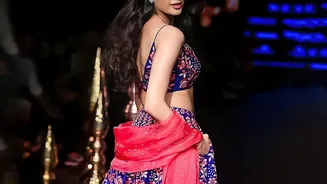
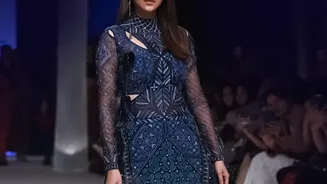
In a landmark collaboration between the Fashion Design Council of India (FDCI) and New Zealand Fashion Week (NZFW), a special showcase titled 'Khadi Beyond Borders' took center stage in Auckland. The event, part of an agreement to create a reciprocal
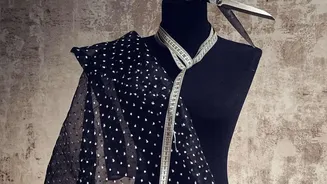
platform for designers from both nations, featured some of India's most innovative minds. Esteemed designer Rajesh Pratap Singh headlined the show, joined by a collective of talent including Samant Chauhan, Shruti Sancheti, and Pawan Sachdeva. Together, they presented collections that reimagined Khadi for an international audience, translating its unique texture and story into contemporary silhouettes. This wasn't just a fashion show; it was a powerful act of cultural diplomacy, demonstrating that Khadi is not merely heritage, but the future of fashion.
The Fabric of Freedom, Reimagined
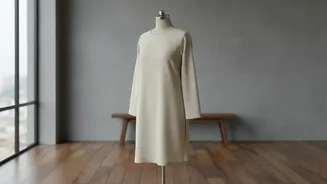
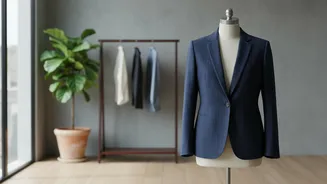
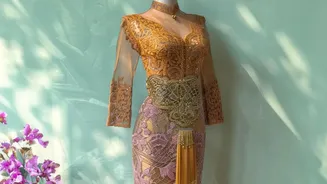
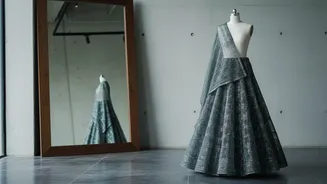
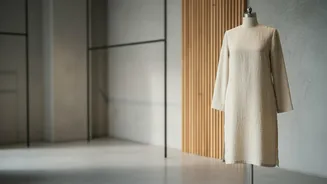
The core challenge for any designer working with Khadi is to innovate without erasing its soul. The collections at NZFW met this challenge head-on. The designers showcased the fabric's incredible versatility, moving it far beyond the traditional kurta. On the runway, Khadi was transformed into chic trench coats, asymmetric dresses, and relaxed suiting, proving its adaptability to modern, global aesthetics. The focus was on clean lines, fluid silhouettes, and understated elegance that allowed the fabric’s inherent character—its texture, its slight imperfections, and its breathability—to shine. This is Khadi 2.0: a version that respects its legacy while confidently stepping into new contexts, from high-street fashion to luxury couture.
More Than Just Thread
To understand why this moment is so significant, one must understand Khadi itself. It is not just a textile; it is a political statement and a philosophy. Championed by Mahatma Gandhi during the Swadeshi Movement, Khadi became a powerful symbol of India's fight for self-reliance (Atmanirbhar) and economic independence. Its production process is inherently sustainable, requiring no electricity and minimal water, giving it a near-zero carbon footprint. In an era of fast fashion and its disastrous environmental impact, Khadi offers a compelling alternative. It represents a slower, more mindful approach to consumption, where every piece tells a story of human craftsmanship and ecological respect.
A Timely Weave for a New Era
Khadi's appearance at NZFW is profoundly timely. The global fashion industry in 2026 is grappling with a crisis of conscience, leading to a powerful shift towards sustainability, transparency, and authenticity. Consumers worldwide are increasingly rejecting mass-produced garments in favor of pieces with a story and a clear provenance. Trends like 'slow fashion,' ethical production, and the celebration of artisanal crafts are no longer niche concerns but mainstream movements. Khadi perfectly aligns with these values. Its global showcase is a testament to a world that is finally ready to embrace fashion that is not just beautiful, but also meaningful and kind to the planet. It signals a growing appetite for products that weave together heritage, humanity, and hope.