



The Creamy Heart: Understanding Arborio Rice
The soul of any great risotto is the rice itself, and Arborio is the undisputed star for many home cooks. Hailing from Italy's Po Valley, this short-grain rice is prized for its high starch content. Unlike long-grain varieties, Arborio's plump grains
are rich in a starch called amylopectin. During the slow, patient process of adding warm broth, this starch is gradually released, creating a velvety, self-saucing liquid that is the hallmark of a true risotto. This process is why you should never rinse Arborio rice; doing so would wash away the starchy magic. The goal is to cook the rice until it's 'al dente'—tender and creamy on the outside, but with a slight bite left in the centre.
Building Richness: The Role of Parmesan and Butter
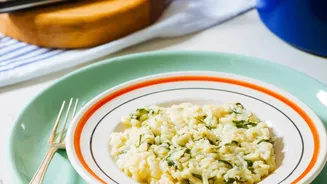
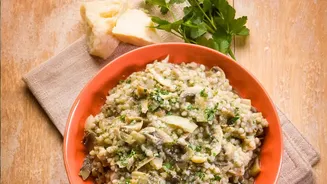
Once the rice is perfectly cooked, the final stage, known as the 'mantecatura', introduces the elements of richness. This is when cold butter and freshly grated Parmesan cheese are vigorously stirred into the risotto off the heat. This technique does more than just add flavour; it creates an emulsion. The fat from the butter and cheese binds with the starchy liquid, resulting in a glossy, exceptionally creamy texture that flows like 'lava' when plated. Parmesan, an aged cheese, contributes a complex, nutty flavour profile, along with salt and umami—that deeply savoury taste. Combined with the luxurious mouthfeel of butter, these ingredients create the comforting, decadent experience we crave in a risotto.
The Balancing Act: Why a Squeeze of Lemon is Key
Now, with all this wonderful richness, the palate can quickly become overwhelmed. This is where the lemon comes in as a culinary hero. The principle is a classic one in flavour science: acid cuts through fat. The citric acid in lemon juice provides a bright, sharp contrast that cleanses the palate from the heavy coating of butter and cheese. This contrast prevents the dish from feeling monotonous or overly heavy, making each bite feel as vibrant as the first. The acidity doesn't just cut richness; it brightens and lifts all the other flavours, making the savoury notes of the broth and the nutty character of the Parmesan pop. It’s the difference between a dish that is simply rich and one that is complex, balanced, and memorable.
Perfect Timing and Technique
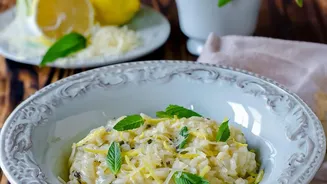
When you add the lemon is just as important as why you add it. Acidity should be one of the final adjustments to a dish. Adding lemon juice too early in the cooking process can result in a taste that is sharp or overly sour, as the flavour concentrates over time. The best practice is to finish the mantecatura with butter and Parmesan first, then take the risotto off the heat completely. At this point, stir in the fresh lemon juice. Start with a small amount—perhaps the juice of half a lemon—and taste. It’s always easier to add more than to take it away. You’re not trying to make a lemon-flavoured risotto; you’re using the lemon to balance the other components. For an extra layer of bright, aromatic fragrance without adding more sourness, you can also stir in some fresh lemon zest at the very end.