


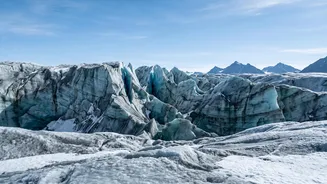
A Ghost of the Ice Age
Imagine an ice sheet so vast it covered most of Canada and the northern United States, stretching from the Arctic Ocean to modern-day Illinois and New York City. In places, the ice was over three kilometres thick. This was the Laurentide Ice Sheet, a dominant
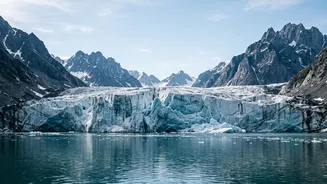
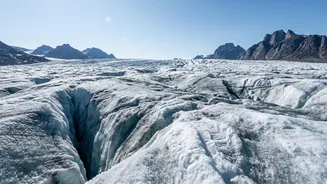
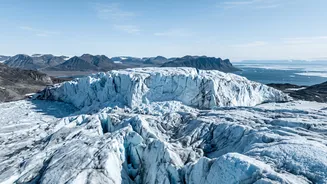
feature of North America for thousands of years during the last glacial period. As the Earth warmed around 14,000 years ago, this immense continent of ice began to retreat. Today, all that remains of that ancient glacial world is a Delaware-sized feature on Baffin Island in Canada: the Barnes Ice Cap. Some of its ice is more than 20,000 years old, making it a direct physical link to a bygone geological era.
A Failed Ice Age
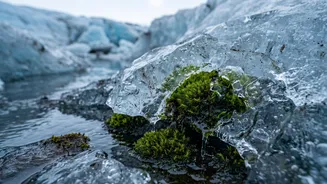
For millions of years, Earth has cycled between cold 'glacial periods' (ice ages) and warmer 'interglacial' periods, driven by predictable wobbles in the planet's orbit. Based on these natural cycles, Earth should have been slowly tipping toward a cooler climate. Recent groundbreaking research confirms this was happening. By studying ancient moss and shrubs exposed by the retreating ice, scientists have created a timeline of the ice cap's life. The evidence shows that after shrinking for millennia, the Barnes Ice Cap began to slowly expand again about 2,000 years ago, signalling the potential start of a new ice age. But then, something unprecedented happened. The nascent ice age was stopped in its tracks.
A Human Fingerprint on a Planetary Cycle
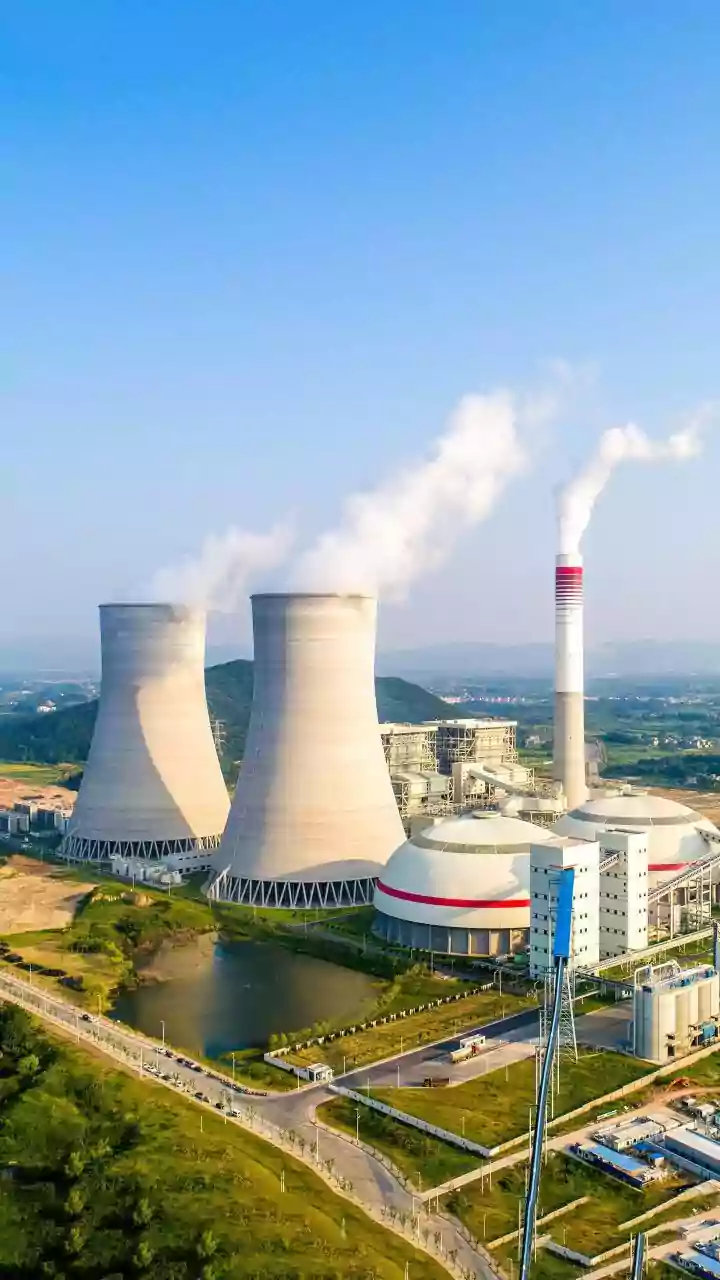
The expansion of the Barnes Ice Cap continued until around the 1960s, when it suddenly and dramatically reversed course. That decade marked a turning point when anthropogenic greenhouse gas emissions became powerful enough to overwhelm the natural cooling trend. The gentle, millennia-long push toward a new glaciation was overridden in just a few decades by human-caused warming. According to scientists, this provides powerful physical evidence of our impact on the planet. We didn't just warm the climate; we halted a planetary-scale process that was already underway.
A Time Capsule in Crisis
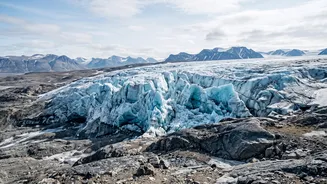
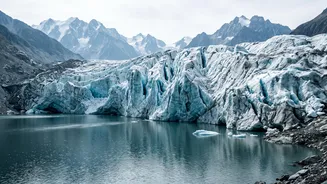
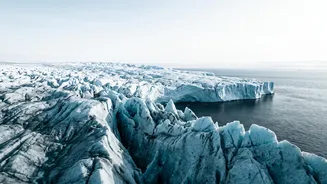
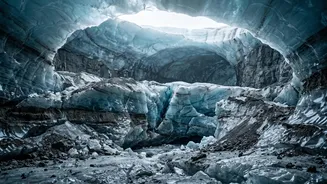
The ice itself acts as a time capsule. By drilling ice cores, scientists can analyse trapped air bubbles, dust, and other particles to reconstruct past climates with incredible precision. But this precious archive is now melting at an alarming rate. Studies show the ice cap thinning by as much as one metre per year, with its edges retreating rapidly. The 2026 summer melt season started exceptionally early, stripping the ice of its protective bright snow cover, which normally reflects sunlight. Without it, the darker ice absorbs more heat, accelerating the melt in a vicious cycle. Scientists project that under current warming trends, the Barnes Ice Cap will disappear completely within the next 300 years.
Why the Final Melt Matters
While the melting of the Barnes Ice Cap alone will have a negligible effect on global sea levels, its disappearance is a profound and ominous signal. For the last 2.5 million years, it has almost never completely disappeared, even during warm interglacial periods. Its demise would signify that we have pushed the Arctic into a thermal state unseen in millions of years. It serves as a canary in the coal mine for much larger and more consequential ice sheets, like those in Greenland and Antarctica. The death of this ancient ice remnant would be a stark, irreversible milestone, confirming that our world has crossed a critical climate threshold from which there is no going back.