




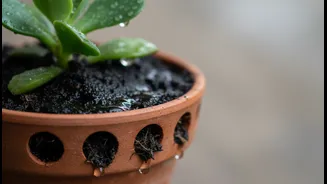


Shift Your Focus From Leaves to Soil
We often treat drooping or yellowing leaves as the first sign of trouble, but they are usually the last. By the time a plant’s foliage shows distress, the problem at the root level may already be advanced. The most proactive approach to plant care is to pay
attention to the soil. A plant’s health is built from the ground up, and the soil environment tells you almost everything you need to know. Slow drainage and soil that remains constantly wet are two of the earliest and most critical indicators that your plant is at risk of being overwatered, long before the leaves cry for help.
Sign 1: The Soil Never Dries Out
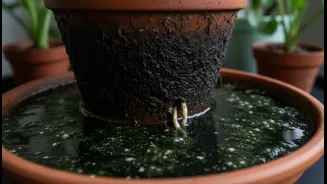
Healthy houseplants need a cycle of wet and dry. Their roots require oxygen just as much as they need water, and constantly saturated soil suffocates them. To check, simply use your finger. Push it about an inch or two into the soil. If it still feels noticeably damp or muddy days after you last watered, that’s a major red flag. The pot might also feel unusually heavy for its size. Soil that stays soggy creates the perfect environment for fungus and bacteria to thrive, leading to the dreaded root rot. You may also notice a musty or sour smell, a clear sign that the soil is not a healthy, airy ecosystem but a stagnant swamp.
Sign 2: Water Drains Too Slowly
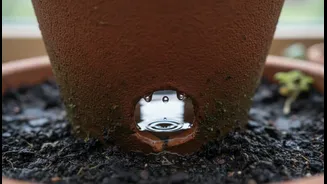
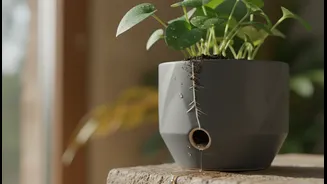
When you water your plant, observe what happens. Does the water pool on the surface for a long time before slowly seeping in? Or, after a thorough watering, does very little water exit the drainage holes at the bottom of the pot? Both are signs of poor drainage. This can be caused by compacted soil, the wrong type of potting mix, or blocked drainage holes. Healthy, well-aerated soil should allow water to flow through it evenly and drain excess away relatively quickly, ensuring roots get a good drink without being drowned. If water sits and waits, your plant's roots are sitting in that water, too.
Why Drooping Leaves Are Deceiving
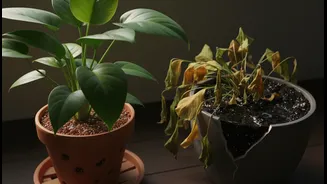
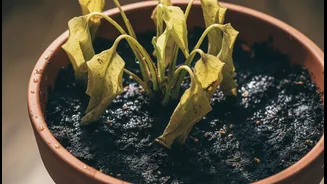
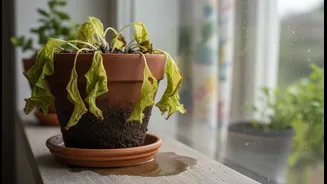
Here is the great paradox of plant care: both overwatering and underwatering can cause leaves to droop and wilt. This is why reacting to drooping leaves by immediately adding more water can be a fatal mistake. Underwatered plants droop because there isn't enough water pressure in their cells to keep them turgid. Overwatered plants droop because their roots have started to rot from a lack of oxygen. These damaged, mushy roots can no longer absorb water and nutrients effectively, so the plant begins to wilt as if it were thirsty, even though it's sitting in a bog. Checking the soil moisture is the only way to know for sure which problem you're facing.
Creating a Rescue Plan
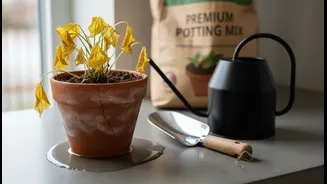
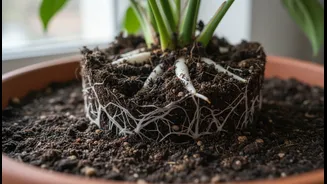
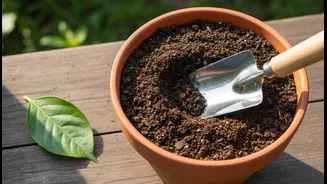
If you’ve identified perpetually wet soil, the first step is simple: stop watering. Allow the soil time to dry out as much as possible. You can increase airflow by placing a fan nearby or moving the plant to a slightly warmer, brighter spot. If the soil is heavily waterlogged, you may need to take more drastic action. Gently remove the plant from its pot and inspect the roots. Healthy roots are typically firm and white or light-colored; rotted roots will be brown, black, and mushy. Trim away any rotted sections with clean scissors. Repot the plant in fresh, dry, well-draining potting mix. Choosing a soil mix with amendments like perlite or pumice can significantly improve aeration and prevent future waterlogging.