
A New Look at an Old Wonder
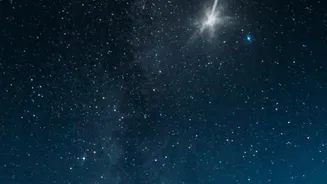
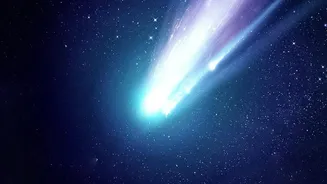
On August 3, 2026, NASA featured a breathtaking long-exposure photograph as its Astronomy Picture of the Day. The image, captured over the starkly beautiful landscape of Death Valley, shows a brilliant meteor streaking across the sky, photobombing the distant,
glowing red Lacerta Nebula. While the sight of a 'shooting star' is familiar, this image serves as a powerful reminder of the violent, transformative journey these objects undertake. The meteoroid, likely no bigger than a pebble, blazes to life as it collides with our atmosphere, creating a momentary spectacle that reveals secrets about its own composition and its profound effect on the air around it.
From Solid Rock to Glowing Gas
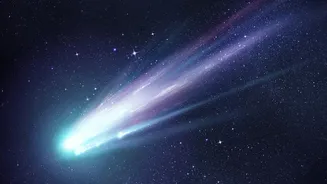
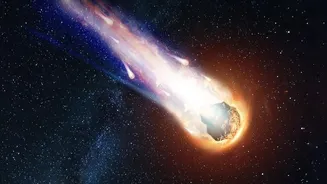
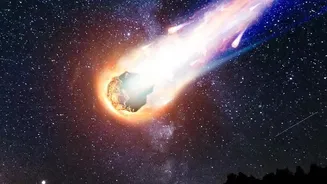
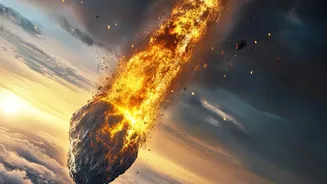
What we perceive as a streak of light is the result of a process called ablation. As a meteoroid enters the upper atmosphere at tremendous speeds—often many kilometres per second—it compresses the air in front of it, generating immense heat and friction. This intense energy doesn't just make the surrounding air glow; it vaporises the meteoroid itself, layer by layer. The rock turns directly into a superheated gas, leaving behind a trail of plasma and vaporised minerals. The different colours often visible in a meteor’s trail act like a chemical fingerprint, with elements like sodium glowing orange, and iron appearing yellow. The August 3rd image captures this fleeting trail, a ghostly wisp left behind after the main event, hinting at the new materials just delivered to our planet's atmospheric doorstep.
A Constant Dusting of Metals
While large, dramatic fireballs capture headlines, Earth is under a constant, gentle shower of microscopic space dust. Scientists estimate that tonnes of this material enter our atmosphere every single day. This steady influx of vaporised rock is a significant source of metals in the upper atmosphere that don't originate from Earth’s surface. Elements like iron, magnesium, sodium, silicon, and calcium, once locked away in asteroids and comets, are liberated in the mesosphere, roughly 50 to 85 kilometres above the ground. This creates a permanent, albeit thin, layer of cosmic metals within our atmospheric system. By studying this 'meteoric smoke,' scientists can better understand not only the composition of the objects hitting Earth but also the chemical budget of the atmosphere itself.
How Space Dust Heats the Sky
These vaporised metals don't just float passively. They become active players in the complex chemistry of the upper atmosphere, directly influencing its thermal balance. For instance, layers of sodium atoms are known to exist in the mesosphere, and these atoms can absorb and re-radiate sunlight, subtly altering the energy budget of that atmospheric layer. Furthermore, these tiny metallic particles act as nucleation sites, providing a surface for water vapour to condense around. This process is fundamental to the formation of noctilucent or 'night-shining' clouds—ethereal, high-altitude clouds visible after sunset. The formation and presence of these clouds, seeded by meteor dust, have a direct, albeit complex, relationship with the temperature and dynamics of the upper atmosphere, a subject of intense and ongoing scientific research.
Updating Our Atmospheric Models
Understanding this cosmic delivery system is crucial for refining our models of Earth's atmosphere. The chemical reactions driven by meteor metals can affect everything from ozone chemistry to the electrical properties of the ionosphere. For decades, scientists have been working to quantify just how much this extraterrestrial material influences our atmospheric system. Each observation, whether from ground-based radar, satellites, or a beautifully captured photograph, adds another piece to the puzzle. As our ability to detect and analyse these events improves, we get a clearer picture of the intricate connection between the seemingly empty space around our planet and the delicate atmospheric shell that protects it.