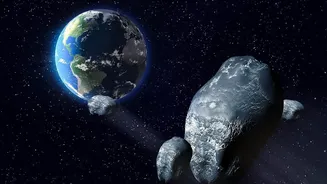





When we think of stopping an asteroid, Hollywood blockbusters come to mind. But in reality, Earth's best defense isn't a spaceship crew, but supercomputers. Scientists are running complex simulations to figure out how to save the world.
Why Simulate Instead of Intervene?
The idea of sending
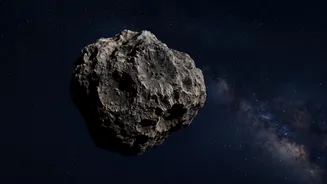
a spacecraft to intercept and destroy an asteroid, while thrilling, is fraught with immense risk and uncertainty. A real-world intervention on a near-Earth object would be a one-shot mission with no room for error. The composition of asteroids varies wildly—some are solid rock, others are loose 'rubble piles' held together by gravity. A physical impact or a poorly placed explosive could shatter an asteroid into multiple, equally dangerous fragments, potentially turning one big problem into many smaller ones. Furthermore, the cost and time needed to launch such a mission are astronomical. Computer simulations, on the other hand, allow scientists to explore thousands of 'what-if' scenarios safely and efficiently from a lab on Earth, building a playbook for a threat we hope never comes.
Inside Sandia's Digital Proving Ground
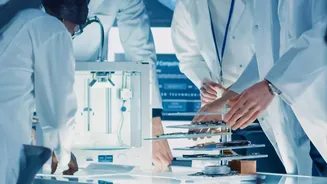
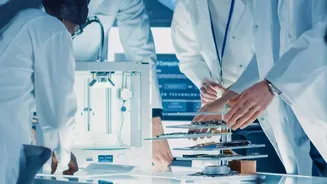
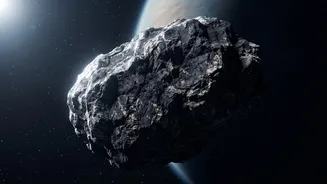
At Sandia National Laboratories, researchers are pioneering a new era of planetary defense. Instead of using simplified spherical models, their latest simulations reconstruct asteroids using detailed, 3D shapes captured from spacecraft flybys. This leap in realism is crucial because, as it turns out, an asteroid's lumpy, irregular shape dramatically affects how it reacts to being pushed. The team combined two powerful simulation programs, ALEGRA and SPARTA, to create a model that is over 1,600 times faster than previous methods. This allows them to model not just the impact of a kinetic object, like in NASA's DART mission, but also the effects of a standoff nuclear detonation.
The Nuclear Option, Modelled Safely
One of the most powerful, and controversial, methods for deflecting an asteroid is using a nuclear device. The idea isn't to obliterate the rock, but to detonate the device at a distance. The resulting burst of X-rays would instantly vaporize a thin layer of the asteroid's surface. This vaporized material shooting off into space acts like a rocket engine, giving the asteroid a gentle but firm nudge in the opposite direction. Sandia's simulations are the only ethical and practical way to study this method. Their models can calculate how a blast's energy is absorbed, how much material is vaporized, and the resulting push and spin imparted on the asteroid. This allows scientists to understand the physics without the catastrophic risks of a real-world test.
The Critical Importance of Aim
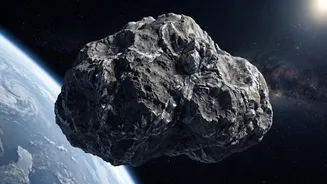
The recent simulations have revealed a startling fact: where you aim matters immensely. In one simulation, irradiating different sides of the same lumpy asteroid resulted in a nearly fivefold difference in its change of speed. On another simulated asteroid, the change in its rotation, or spin, varied by a factor of 17 depending on the angle of the X_ray burst. As lead physicist Nathan Moore noted, they expected aim to matter, but were surprised by how much. 'Pick the right side and you win. Guess wrong and it could be a bad day', Moore said. These findings prove that a one_size_fits_all approach is doomed to fail. A successful defense would require precise information about the asteroid's shape to calculate the optimal point of intervention.
From Pixels to a Planetary Playbook
The work being done at Sandia and other labs like Lawrence Livermore is not just a theoretical exercise. These high_fidelity simulations provide crucial data that informs real_world planetary defense strategies. They helped scientists interpret the results of NASA's successful DART mission, where a spacecraft was intentionally crashed into an asteroid to alter its course. While the simulations have limitations—they can't yet predict if an entire asteroid will fracture—they are rapidly evolving. The ultimate goal is to create a comprehensive and reliable playbook. If a threatening object is ever detected, scientists could, in theory, upload its specific characteristics and use these models to determine the most effective deflection strategy, whether it's a kinetic impactor or a precisely aimed energy burst.