
A Mysterious Red Dot
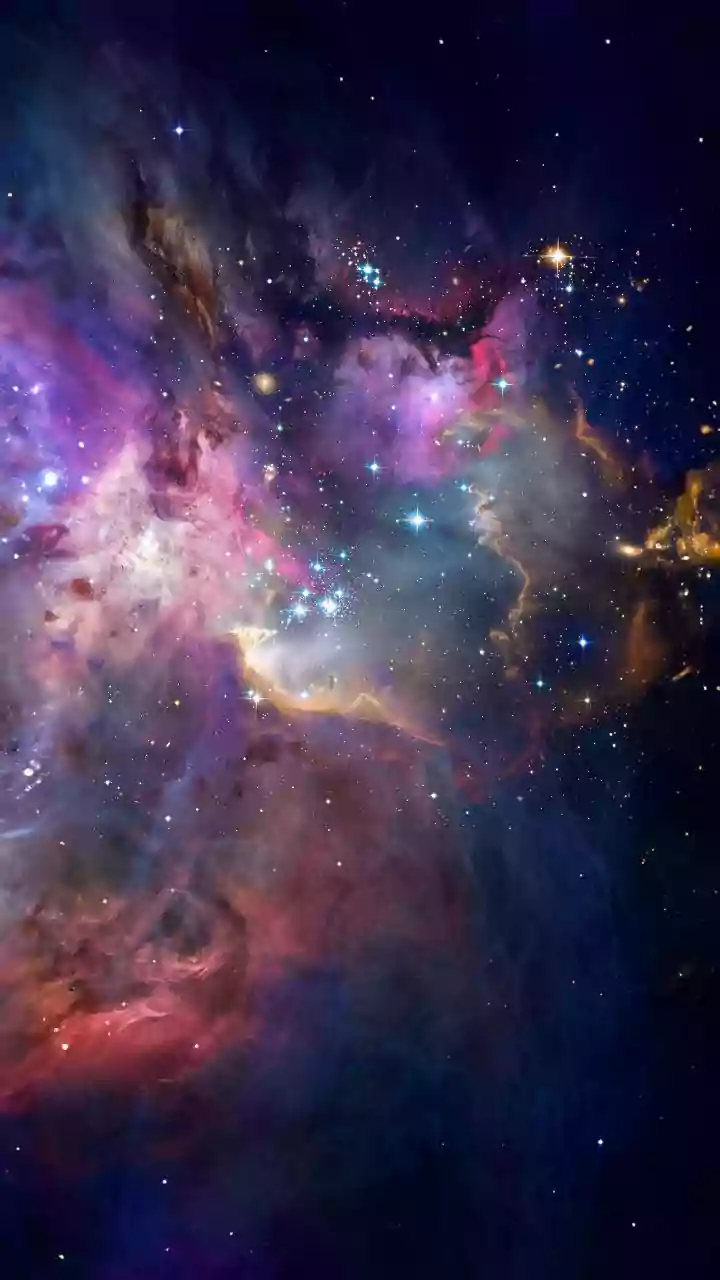
In the deepest images of space captured by the James Webb Space Telescope (JWST), astronomers have been noticing a strange phenomenon: tiny, intensely red dots scattered across the cosmic dark. These objects, seen as they were just a few hundred million
years after the Big Bang, were a puzzle. Initially thought to be extremely distant galaxies, their characteristics didn't quite fit. They were incredibly bright but also compact, and their light signatures were unusual. One object in particular, labeled MoM-BH-1, was so red and so bright it defied conventional explanation, leading scientists to suspect they were looking at something entirely new.
What Is a Black Hole Star?
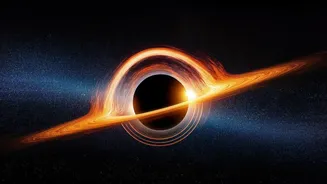
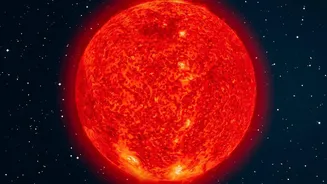
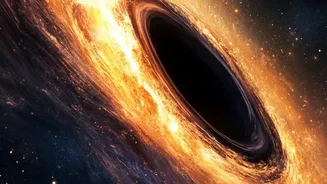
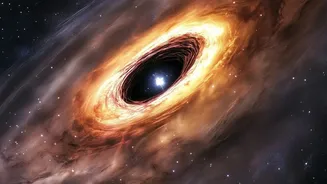
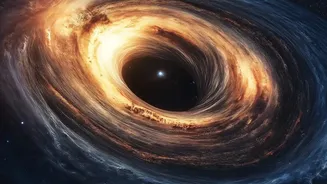
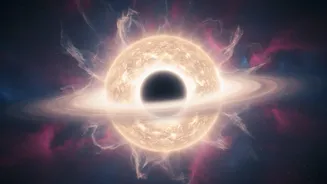
The leading theory is that these red dots are a new class of object, never before observed: a black hole star. This is not a star in the traditional sense. Our sun is powered by nuclear fusion, where hydrogen atoms are fused into helium in its core, releasing enormous energy. A black hole star, however, is thought to be a massive, star-like cocoon of gas powered by a different engine entirely: a large black hole at its center. Instead of fusion, the object's immense energy comes from matter falling into this central black hole. This process would heat the surrounding dense gas, causing it to glow intensely, like a star, but on a scale never seen before.
Solving a Cosmic Riddle
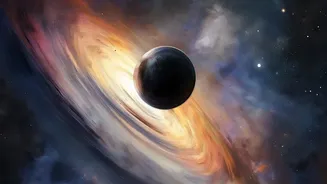
The discovery of these objects could solve a major headache for cosmologists. For years, observations from JWST have shown that supermassive black holes and large galaxies seemed to form much earlier in the universe's history than our models predicted. How did these giants get so big, so fast? Black hole stars provide a potential answer. These objects would have been powered by a central black hole of about 100,000 times the mass of our sun. They would have acted as 'seeds', rapidly growing into the supermassive black holes that now sit at the heart of nearly every major galaxy, including our own Milky Way. This provides a crucial missing link in the story of cosmic evolution.
A New Tool for Understanding Our Origins
The object MoM-BH-1 is about the size of our solar system but shines with the energy of 100 billion suns. It is composed almost entirely of hydrogen and helium, the raw materials forged in the Big Bang, with very few heavier elements. This chemical purity is a strong indicator that we are looking at a truly primordial object from the universe's infancy. Led by researchers including Rohan Naidu, formerly of MIT, the team used detailed analysis of the light from JWST to model the object's properties, concluding a black hole star was the most likely explanation. This finding not only identifies a new celestial object but also gives scientists a new way to study the conditions of the early cosmos.