



1. The Kedarnath Tragedy, Uttarakhand (2013)
In June 2013, unprecedented rainfall led to the melting of the Chorabari Glacier and an overflow of the Mandakini River. The resulting flash floods devastated the Kedarnath valley, leading to thousands of deaths and widespread destruction. Investigations
later revealed that a complete lack of effective early warning systems was a primary cause of the high casualty count. Reports from the Comptroller and Auditor General (CAG) later blamed the state government for being unprepared and failing to act on meteorological warnings. The tragedy was compounded by unregulated construction of hotels and shops along the riverbanks, which not only put more people in harm's way but also obstructed natural flood pathways, magnifying the destruction.
2. The Nepal Earthquake (2015)
While earthquakes are impossible to predict, the catastrophic loss of life and property from the 7.8 magnitude Gorkha earthquake exposed a systemic failure in urban planning and regulation. Nearly half a million buildings were destroyed, with investigations revealing that a vast majority did not comply with the country's own National Building Code, which had been in place since 1994. The disaster highlighted the consequences of weak enforcement, the use of poor-quality materials, and building practices that ignored seismic risks in one of the world's most active earthquake zones. It served as a grim reminder that building codes are meaningless without the political will to enforce them.
3. The Chamoli Rock-Ice Avalanche, Uttarakhand (2021)
In February 2021, a massive chunk of rock and ice broke off from Ronti Peak, triggering a flash flood in the Rishiganga and Dhauliganga river valleys. The deluge destroyed two major hydropower projects and claimed over 200 lives. This event was not a glacial lake outburst flood (GLOF), but a rockslide-triggered event, exposing a different kind of vulnerability. It demonstrated that infrastructure planning had failed to account for the risk of large-scale slope failures in a region destabilised by warming temperatures. The placement of major projects directly in the path of such known, albeit unpredictable, hazards was a critical planning gap.
4. The Amarnath Cloudburst, Kashmir (2022)
A flash flood near the Amarnath cave shrine in July 2022 killed at least 16 pilgrims and washed away a tented colony set up for the annual pilgrimage. While initially termed a cloudburst, meteorologists noted that the rainfall, though intense, may not have met the technical definition, highlighting the extreme sensitivity of the local terrain. The disaster raised urgent questions about the selection of sites for temporary camps in naturally hazardous zones. Placing a high-density settlement of tents in a narrow valley, a natural conduit for flash floods, exposed a critical oversight in disaster management and planning for large-scale religious gatherings in fragile mountain environments.
5. The Joshimath Land Subsidence, Uttarakhand (2023)
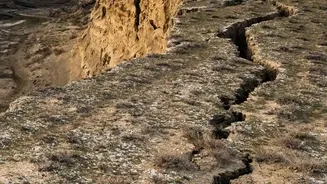
The slow-motion disaster in Joshimath, where large parts of the town began visibly sinking, was a catastrophe decades in the making. The town was built on ancient landslide debris, a fact known to geologists for years. Despite warnings dating back to the 1970s against heavy construction, the town saw decades of unplanned urbanisation. The crisis was acutely worsened by large-scale infrastructure projects, including tunnelling for the Tapovan-Vishnugad hydropower project, which experts believe may have punctured an aquifer and accelerated the subsidence. Joshimath became a textbook example of development proceeding in blatant disregard of geological warnings and land-carrying capacity.
6. The South Lhonak Lake GLOF, Sikkim (2023)
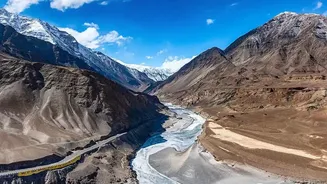
The catastrophic Glacial Lake Outburst Flood (GLOF) from South Lhonak Lake was a disaster foretold. Scientists had identified the rapidly expanding lake as a significant threat for years. On October 4, 2023, the lake breached its moraine dam, sending a devastating flood down the Teesta River valley. The flood destroyed the Chungthang Dam and caused immense damage downstream. While some mitigation efforts like siphoning water had been undertaken, they were insufficient, and a planned early warning system was not yet fully operational. The event showed that even when a hazard is clearly identified, the pace and scale of mitigation and preparedness can fall fatally short.
7. The Malpa Landslide, Uttarakhand (1998)
One of the worst landslides in Indian history, the Malpa disaster wiped out an entire village and killed 221 people, including 60 pilgrims. The massive rockfall was triggered by days of heavy rain acting on geologically unstable, steep slopes in a seismically active area. The tragedy underscored the inherent dangers of building settlements and pilgrimage routes in such fragile zones without extensive geological assessment and slope stabilisation measures. More than two decades later, it remains a powerful case study on the lethal combination of tectonic stress, extreme weather, and human presence in high-risk terrain, a lesson that subsequent disasters show has been slow to be absorbed.