





The Annual Tax Scramble in India
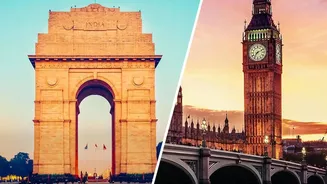
For most salaried individuals in India, July 31 is a date circled in red. It marks the deadline for filing their Income Tax Returns (ITR), a mandatory process for a significant portion of the population. The days leading up to it are a flurry of activity.
Chartered accountants are on speed dial, financial documents are unearthed from drawers, and the government's e-filing portal sees a massive surge in traffic. This annual exercise is the bedrock of India's public finances. The direct taxes collected from individuals and corporations help fund everything from infrastructure projects and defence to healthcare and education for a nation of over 1.4 billion people. It’s a complex, sometimes frustrating, but essential part of the social contract in a modern democracy.
A Different World on the French Riviera
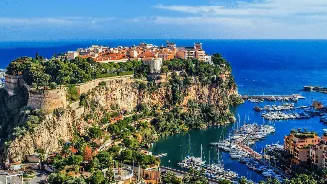
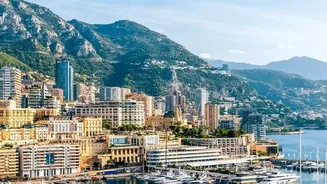
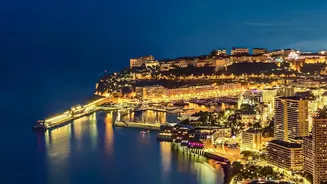
Now, imagine a country where the concept of filing an annual income tax return is entirely foreign. Welcome to Monaco, a tiny, glittering principality nestled on the French Riviera. For over 150 years, its residents have enjoyed a rare privilege: they pay zero personal income tax. This isn't a modern tax haven gimmick; it's a core part of Monaco's identity, established by a royal decree in the 19th century. There is no wealth tax, no property tax, and no capital gains tax for individuals. It sounds like a taxpayer's dream, a stark contrast to the yearly obligations familiar to Indians.
The Prince, The Casino, and a Tax Abolition
The story begins in 1869. Monaco had recently lost about 80% of its territory to France and was facing a severe economic crisis. Its ruler, Prince Charles III, needed a new economic model, and fast. His big idea was to transform the principality into a luxury destination for Europe's elite. He commissioned the world-famous Monte Carlo Casino, luxury hotels, and an opera house. The casino was a spectacular success. By 1869, its profits were so immense that Prince Charles III made a historic decision: he abolished income tax for all residents of Monaco, a move designed to attract even more wealthy individuals to his shores. This single act laid the foundation for the Monaco we know today.
So, How Does the Government Make Money?
If residents don't pay income tax, how does Monaco afford its pristine streets, high security, and public services? The answer lies in a diversified, business-focused revenue strategy. The single largest source of income is a Value-Added Tax (VAT) of 20% on goods and services, similar to France's. The state also collects a corporate tax on businesses that generate more than 25% of their turnover outside the principality. Furthermore, the government profits from state-owned monopolies in sectors like tobacco and postal services, and holds a significant stake in the company that runs the casinos and hotels. Essentially, Monaco funds itself by taxing consumption and corporate activity, not the personal wealth of its inhabitants.
The Price of a Tax-Free Paradise
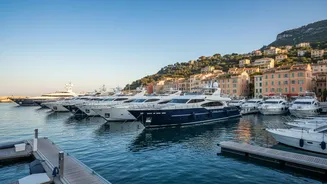
Living in this tax-free haven comes with an extraordinarily high price tag. Monaco is consistently ranked as one of the most expensive places on Earth. The cost of renting or buying property is astronomical, making it accessible only to the ultra-wealthy. A simple one-person household can expect monthly costs to be thousands of dollars, a figure exponentially higher than in India. Gaining residency itself is a rigorous process. Prospective residents, including those from India, must secure a French long-stay visa, prove they have accommodation in Monaco, and deposit a substantial sum (often starting at EUR 500,000) in a local bank to prove financial self-sufficiency. It’s a club with very expensive membership fees.
Two Systems, Two National Realities
The comparison between India's ITR rush and Monaco's tax-free lifestyle is more than just a financial curiosity; it's a tale of two vastly different nations. India's tax system is designed to support a massive, developing economy and a diverse population with wide-ranging needs. It's a tool for social welfare and national development. Monaco’s system, born out of a 19th-century crisis, created a niche economic model for a micro-state with a population of less than 40,000. It functions less like a country and more like an exclusive residential community, prioritizing wealth attraction over broad-based public service funding. One is about managing scale and diversity; the other is about managing exclusivity and luxury.