








Roadside Assistance in Orbit
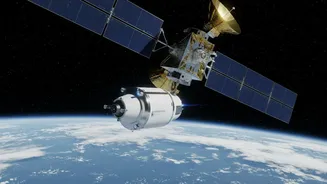
In a significant development for the space industry, three Mission Extension Pods (MEPs) have been built to service satellites for two of the biggest names in communications: Australia's Optus and the global operator Intelsat. These pods are essentially
'jetpacks' for satellites. Many satellites in geostationary orbit are forced into retirement not because their electronics fail, but because they run out of the fuel needed for tiny adjustments to maintain their position. This is a costly problem, as a single communications satellite can be worth hundreds of millions of dollars. The MEPs are designed to attach to these fuel-depleted but otherwise healthy satellites, taking over propulsion and adding up to six or more years to their operational lifespan.
The Technology and the Players
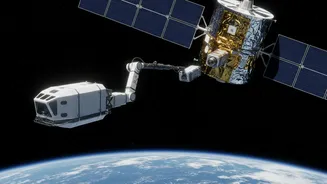
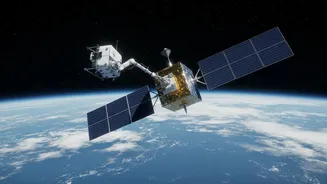
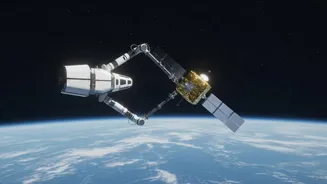
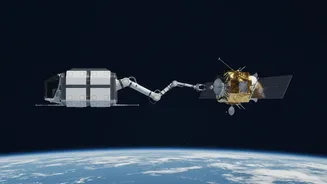
The company behind this innovation is SpaceLogistics, a subsidiary of American defence and aerospace giant Northrop Grumman. These three MEPs were recently launched on a SpaceX Falcon 9 rocket on July 21, 2026, alongside a sophisticated mothership called the Mission Robotic Vehicle (MRV). The MRV is a first-of-its-kind robotic servicer. After a journey of several months to reach geostationary orbit, it will use its advanced robotic arms to grab each pod and physically install it onto the client satellites. This is a major evolution from SpaceLogistics' earlier missions, which involved a servicing vehicle permanently docking with a single satellite. The new MRV-and-pod system allows one robotic vehicle to service multiple clients in a single mission, making the entire process more efficient and scalable.
A Big Win for Satellite Operators
For customers like Optus and Intelsat, this service is a game-changer. Deferring the enormous capital expenditure required to build and launch a replacement satellite offers a significant financial advantage. Intelsat, which has previously used Northrop Grumman's earlier generation of servicing vehicles, has ordered two of the new pods, demonstrating its confidence in the strategy. Optus, Australia's largest satellite owner, has purchased one pod for its D3 communications satellite. This move aligns with a broader trend in an industry grappling with the high costs of infrastructure. The market for satellite life-extension services is growing rapidly, with some analysts projecting it will be worth billions of dollars by the end of the decade as more operators seek to maximize the return on their orbital assets.
A Sustainable Future for Space
Beyond the immediate economic benefits, in-orbit servicing represents a crucial step towards a more sustainable space environment. For decades, the dominant model has been to launch satellites, use them until they fail or run out of fuel, and then leave them as orbital debris. This has contributed to an increasingly cluttered and hazardous environment in Earth's orbit. Technologies that repair, refuel, and extend the lives of existing satellites are critical for mitigating the growth of space junk. By keeping functional hardware in operation for longer, companies can reduce the number of new launches required, which not only saves money but also helps ensure that crucial orbital highways remain clear and safe for future missions.
The Indian Context and Global Race
While this specific mission involves American, Australian, and global satellite operators, the developments are highly relevant for India. ISRO maintains one of the world's largest constellations of satellites, which are vital for communication, national security, and economic development. The emergence of a commercial market for in-orbit servicing creates new possibilities for managing this critical infrastructure. Indian space-tech startups are also entering the fray, with some working on solutions for debris removal and satellite servicing. As the global space economy pivots from a disposable to a serviceable and sustainable model, these technologies will be key to maintaining a competitive edge and ensuring the long-term viability of space-based activities.