

Doñana, Spain: A Mosaic of Ecosystems
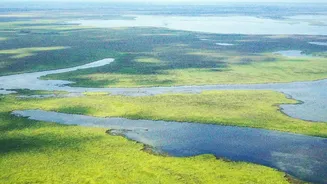
Located in Andalusia where the Guadalquivir River meets the Atlantic, Doñana National Park is one of Europe's most important and largest wetland reserves. It is a place of immense diversity, a tapestry of marshes, lagoons, shifting sand dunes, scrublands,
and pine forests. This variety of habitats makes it a critical sanctuary for millions of migratory birds each year, with over 300 different species recorded within its boundaries. It's not just for the birds; Doñana is also one of the last refuges for the critically endangered Iberian lynx. The park's landscape is dynamic, with seasonal marshes that flood with winter rains and dry out under the summer sun, creating an ever-changing environment that supports a vast array of life. This constant flux defines Doñana's unique character and ecological importance.
The Camargue, France: Europe’s Wild West
Stretching across the Rhône River delta in southern France, the Camargue is Western Europe’s largest river delta, a vast plain of brine lagoons, marshes, and sandbars. This unique, salty environment has fostered a landscape that feels worlds away from the nearby French Riviera. The Camargue is famous for its own icons of the animal kingdom: the semi-wild, white Camargue horses that roam the wetlands and the thousands of greater flamingos that use the saline ponds as a primary European breeding ground. The region is a haven for over 400 species of birds, making it a crucial stopover on the migration flyway from Africa. Designated as a 'Wetland of International Importance', the Camargue's wild beauty is shaped by both nature and the 'gardiens', the local cowboys who herd the region's distinctive black bulls.
Białowieża Forest, Poland & Belarus: A Primeval Past
Step into Białowieża Forest and you step back in time. Straddling the border of Poland and Belarus, this is one of the last and largest remaining parts of the immense primeval forest that once covered the European Plain. A UNESCO World Heritage site, it represents a glimpse of what the continent looked like centuries ago, with mixed forests of oak, hornbeam, and spruce left largely untouched by human hands. The forest's most famous resident is the European bison, the continent's heaviest land animal. After being hunted to extinction in the wild, the species was successfully reintroduced here, and today Białowieża is home to the world's largest free-roaming population. This ancient woodland, with its mix of old-growth stands and swampy alder groves, supports incredible biodiversity and serves as a living symbol of Europe’s natural heritage.
The Wadden Sea, Denmark, Germany & The Netherlands: A Shifting Seascape
A UNESCO World Heritage site since 2009, the Wadden Sea is the largest unbroken system of intertidal sand and mud flats in the world. Shared by three countries, this remarkable coastal wetland is in a constant state of flux, shaped by the rhythm of the tides. Twice a day, vast areas of the seabed are exposed, creating a unique habitat that is a crucial feeding ground for millions of migratory birds. Its dynamic environment, which includes sandbars, salt marshes, dunes, and deep channels, supports incredible biodiversity, with over 10,000 species of plants and animals found here. Harbour seals can often be seen resting on the sandbanks at low tide. This is a landscape defined by its connection to the sea, where you can even walk on the seabed during low tide, offering a truly intimate connection with nature.
Sarek National Park, Sweden: Europe’s Last Wilderness
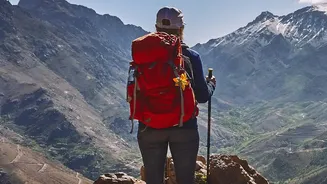
For those seeking true, untamed nature, Sarek National Park in Swedish Lapland offers an unparalleled experience. Often called 'Europe's last wilderness', this is a vast, high-alpine region with no marked trails, no tourist facilities, and only a couple of bridges. Its dramatic landscape features six of Sweden's highest mountains, nearly 100 glaciers, and deep, winding valleys carved by wild rivers. Hiking here is a serious undertaking for experienced adventurers only, requiring self-sufficiency and expert navigation skills. The park is part of the Laponian Area, a World Heritage site recognized for both its natural beauty and the culture of the Sámi people, who have herded their reindeer here for centuries. Sarek is home to large moose, bears, wolverines, and lynx, offering a glimpse into a truly wild and challenging environment.