




A Discovery in the Desert
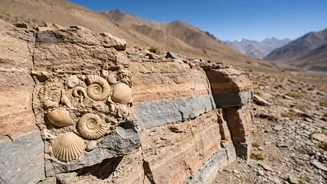
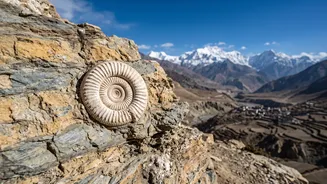
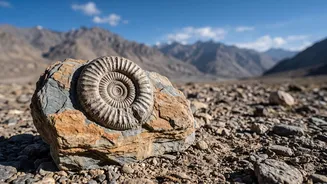
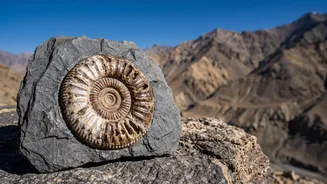
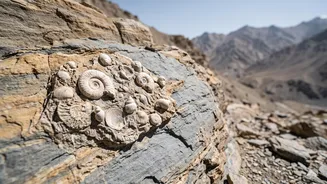
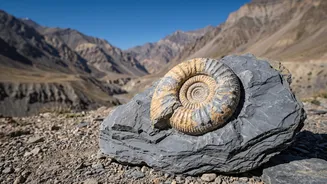
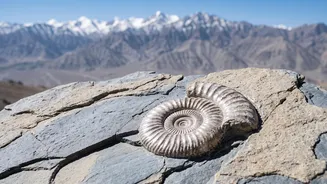
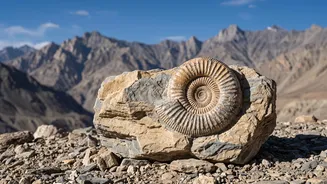
In the remote Changthang region of eastern Ladakh, geologist Dr. Ritesh Arya has uncovered a remarkable collection of fossils. Found near Nyoma, the collection includes spiral-shaped gastropods (snail-like molluscs), bivalves, and oyster-like forms. A preliminary
assessment suggests these fossils are between 34 and 38 million years old, dating them to the Eocene epoch. For Dr. Arya, the founder of the Tethys Fossil Museum, the moment of discovery was a shock of recognition. The fossils bore a striking resemblance to those commonly found hundreds of kilometres away, but this time, he was standing in the cold, arid landscape of Ladakh.
What is the Subathu Marine Link?
The significance of this find lies in its connection to the “Subathu Formation.” Named after a town in Himachal Pradesh, this geological layer is a well-known band of sedimentary rock rich in marine fossils from the Eocene era. These rocks are essentially the compressed remains of the floor of an ancient, shallow sea that existed before the Himalayas were born. The discovery in Nyoma suggests that this ancient marine environment, known as the Subathu Sea, extended much farther east into Ladakh than previously thought. It provides a crucial new data point—a geological breadcrumb—that helps scientists map the true extent of this lost ocean.
From a Warm Sea to the Roof of the World
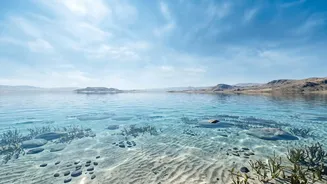
It’s hard to picture, but 38 million years ago, the land we know as Ladakh was not a high-altitude desert. Instead, it was likely a warm, near-coastal environment. Evidence suggests a landscape of shallow seas fringed by palm trees and subtropical vegetation. This was part of the ancient Tethys Ocean, which once separated the northward-drifting Indian plate from the Eurasian continent. The fossils discovered in Ladakh are the preserved remains of the creatures that lived and died in that sea. Their presence so high up in the mountains is a direct result of one of the most powerful events in Earth's history: the collision of continents.
The Birth of the Himalayas
The formation of the Himalayas began around 50 to 60 million years ago when the Indian plate finally slammed into Eurasia. The immense pressure of this collision caused the land to buckle, fold, and thrust upwards. The seabed of the Tethys Ocean, with all its accumulated sediments and dead marine life, was lifted thousands of metres into the air. This monumental process, which is still ongoing, created the planet’s youngest and highest mountain range. Finding marine fossils at extreme altitudes—even near the summit of Mount Everest—is the most dramatic proof of this incredible geological transformation. The Ladakh discovery adds another vital chapter to this story.
Why This Finding Matters Today
Beyond the sheer wonder of finding sea creatures in the mountains, the Nyoma fossils are a scientific breakthrough. If confirmed through detailed study, they will help palaeontologists and geologists refine the timeline of the Himalayan uplift and better understand the final stages before the Tethys Ocean disappeared completely. They offer a clearer picture of the biodiversity and climate of the Eocene epoch, a critical period of global change. As Dr. Arya noted, these fossils tell a completely different story of Ladakh, one that bears little resemblance to the landscape we see today. Each shell and fossil fragment is a piece of a puzzle, helping us reconstruct the epic journey of the Indian subcontinent.