




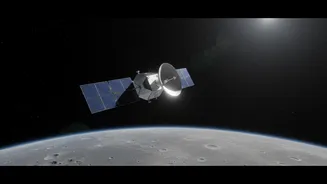

The Lunar Communication Challenge
For decades, communicating with missions on the Moon has relied on a direct line of sight to Earth. This method has significant limitations. If a rover or astronaut is on the far side of the Moon, the Moon's own bulk blocks all radio signals, creating
a total communication blackout. Even in areas with a direct view, like the strategically important South Pole, the Earth hangs low on the horizon, making stable, long-term links difficult due to terrain interference. During the Apollo missions, astronauts orbiting the Moon experienced this radio silence for nearly an hour on every pass. For a future with permanent habitats, complex robotic operations, and crews needing constant support, this intermittent connectivity is not just inconvenient—it's a critical safety and operational risk.
An Internet for the Moon
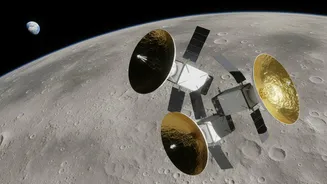
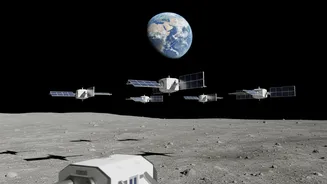
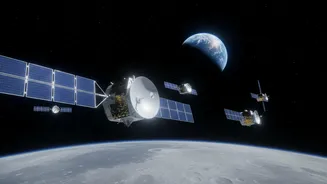
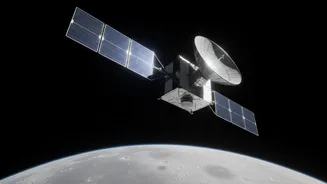
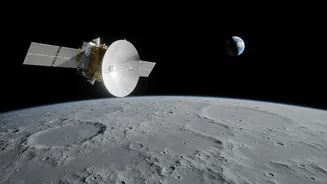
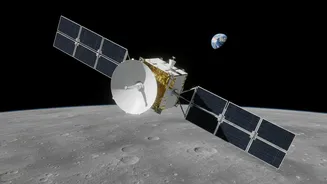
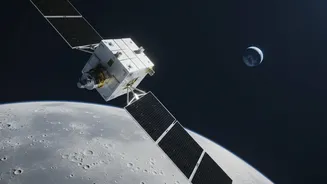
To solve this, NASA is architecting LunaNet, a framework designed to be a flexible and scalable 'internet' for the Moon. This initiative isn't about building a single, monolithic system. Instead, LunaNet is a set of agreed-upon standards and protocols that allow different systems from NASA, international partners like the European Space Agency, and commercial companies to work together seamlessly. The goal is to create an operational environment where sending data from a lunar rover is as straightforward as using Wi-Fi on Earth. This network-of-networks will provide three core services: data networking, precise navigation and timing, and science utilization services.
Commercial Partners Take the Lead
Rather than building and operating the entire satellite constellation itself, NASA is fostering a new lunar economy by partnering with private industry. Through its Lunar Communications Relay and Navigation Services (LCRNS) project, NASA is purchasing services from commercial companies. One key partner is Intuitive Machines, which was awarded a contract to develop, launch, and operate a satellite network to provide these crucial services. This approach allows NASA to act as an anchor customer, spurring private investment and innovation in cislunar space. The agency verifies that the commercial services meet the stringent requirements for its Artemis missions while enabling a broader commercial market for lunar communications.
Powering the Next Generation of Exploration
The impact of this reliable network will be transformative. For robotic explorers like future rovers, it means the ability to transmit vast amounts of high-definition video and scientific data in real-time, and to be operated remotely without communication dropouts. For astronauts, it means constant contact with Mission Control, enhanced safety, and access to a GPS-like navigation system to precisely track their position on the lunar surface. The initial operating capability is planned to begin with at least one satellite providing coverage over the lunar South Pole by 2026, with the network expanding to full operational status by 2029. This infrastructure will also support higher data rates through technologies like optical (laser) communications, which have already been tested successfully on missions like Artemis II, transmitting data at speeds up to 260 megabits per second.