




A New Window to the Universe
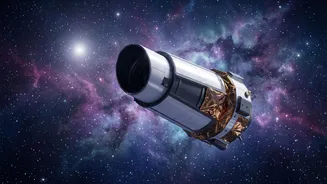
On August 30, 2026, the Nancy Grace Roman Space Telescope successfully launched, embarking on a 100-day journey to its destination 1.5 million kilometers from Earth. Named for NASA's first chief of astronomy, Nancy Grace Roman, this observatory is designed
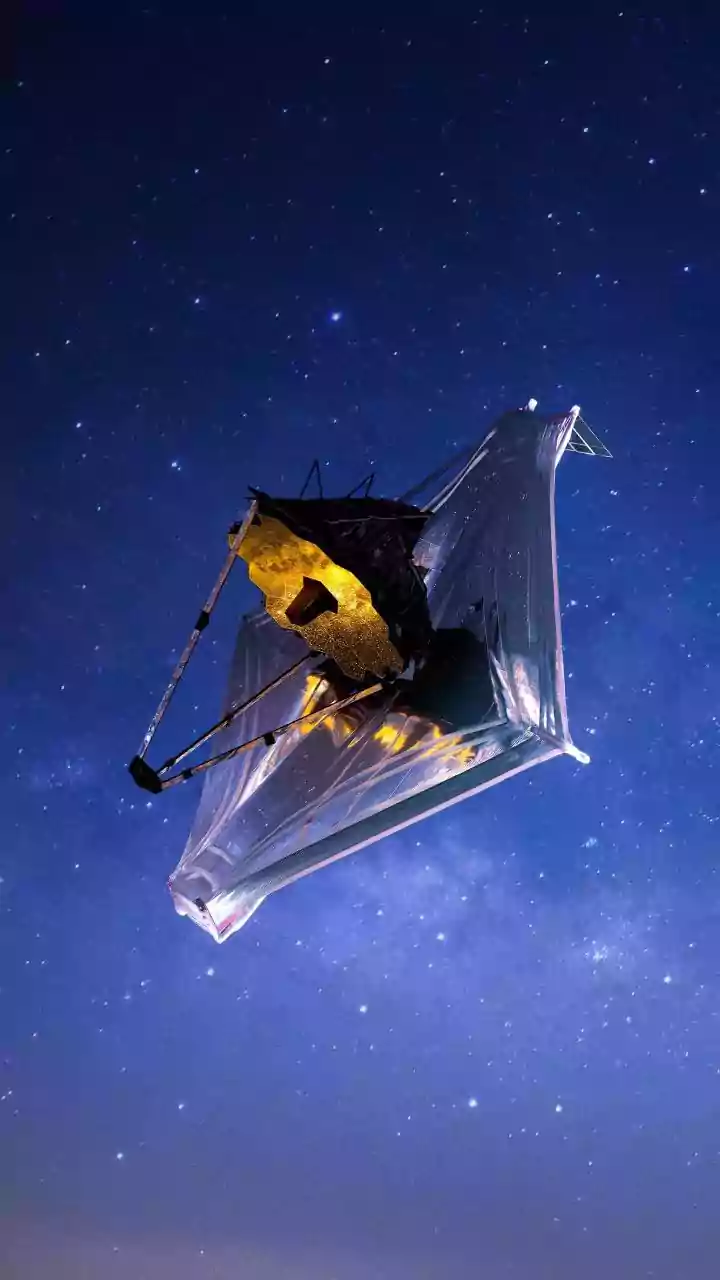
to tackle some of the biggest questions in astrophysics. Its primary goals are to investigate the mysteries of dark energy and dark matter, discover thousands of new exoplanets, and provide breathtaking infrared views of the cosmos. The telescope operates from a gravitationally stable location known as Lagrange Point 2 (L2), the same region where the James Webb Space Telescope (JWST) resides, allowing for continuous and unobstructed observations of the universe.
The Heart of the Telescope
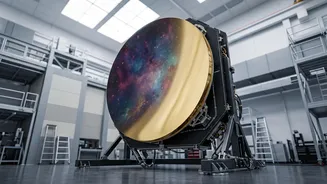
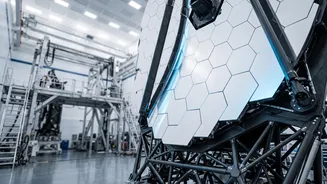
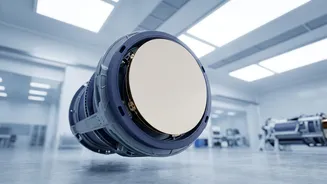
At the core of the Roman Telescope is its impressive primary mirror, which measures 2.4 meters (7.9 feet) in diameter—the same size as the one on the Hubble Space Telescope. This mirror has a fascinating history; it was originally built for a spy satellite and was later donated to NASA by the National Reconnaissance Office (NRO). This gift allowed NASA to build a more powerful observatory than initially planned. Despite being the same size as Hubble's, Roman's mirror is significantly lighter, weighing only about a quarter as much. This reduced mass makes the telescope more agile, enabling it to reorient quickly and capture vast mosaics of the night sky with precision.
A Panoramic View of the Cosmos
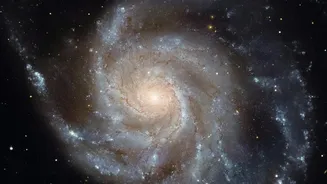
The true game-changer for the Roman Telescope is not just its mirror's size, but its synergy with the Wide Field Instrument (WFI). This 300-megapixel camera gives Roman a field of view 100 to 200 times greater than Hubble's infrared camera. While Hubble might see a single galaxy in stunning detail, Roman can capture thousands of them in a single shot. This panoramic capability will allow astronomers to create enormous, high-resolution maps of the universe, surveying billions of galaxies over the mission's lifetime. This incredible survey speed—about 1,000 times faster than Hubble's—is essential for studying the large-scale structure of the cosmos and detecting the subtle effects of dark energy.
Beyond the Wide View: Hunting for Planets
While the mirror and WFI are designed for sweeping surveys, Roman also carries a groundbreaking piece of technology called the Coronagraph Instrument. This instrument is a technology demonstration designed to block the overwhelming glare of a star, allowing astronomers to directly image the much fainter planets orbiting it. The coronagraph contains deformable mirrors that can make tiny, precise adjustments to counteract starlight, a capability that is 100 to 1,000 times more effective than existing space-based coronagraphs. It will be sensitive enough to directly photograph Jupiter-sized exoplanets in reflected light for the first time. The technologies proven on Roman's coronagraph are crucial precursors for a future mission, the Habitable Worlds Observatory, which aims to find Earth-like planets.
Mission Underway and What's Next
Following its launch, the Roman Telescope successfully deployed its solar panels and established communications. It is now in a 90-day commissioning phase while it travels to its final orbit. During this period, mission controllers will activate and test its instruments, including the Coronagraph and the Wide Field Instrument. The recent launch marks a pivotal moment, transitioning the telescope from years of development and ground testing into a fully operational observatory. With its unique combination of a wide-field mirror and advanced planet-finding technology, Roman is poised to build on the legacies of Hubble and Webb, opening a new chapter in our exploration of the hidden universe.