
The Great Ghat Challenge
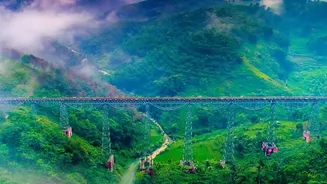
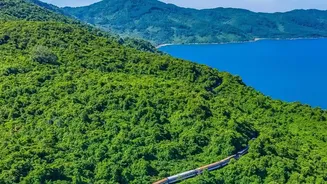
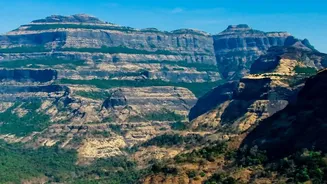
The Western Ghats are a marvel of biodiversity, but for Indian Railways, they represent a significant engineering hurdle. The specific section currently under scrutiny is the 55-kilometre Sakleshpur-Subrahmanya Road stretch on the proposed Bengaluru-Mangaluru
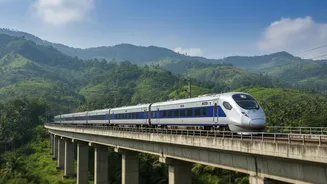
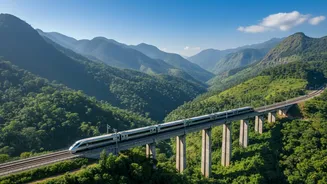
route. This corridor is notorious for its steep gradients, with slopes as sharp as 1-in-50, meaning the track rises one metre for every 50 metres travelled. Adding to the complexity are 108 sharp curves, 57 tunnels, and 226 bridges packed into this short distance. For decades, conventional trains have required the help of 'banker' locomotives—extra engines attached to the rear to push the train up the steep inclines, a time-consuming process. The region is also prone to landslides, especially during heavy monsoons, adding another layer of operational risk.
Why Vande Bharat is Different
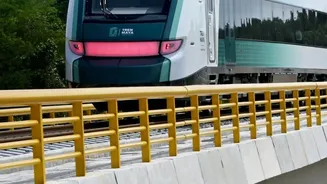
Unlike traditional trains pulled by a locomotive, the Vande Bharat is a self-propelled trainset. Power is distributed across its coaches, giving it faster acceleration and deceleration. While this design is ideal for flat terrains, it makes operating in the Ghats a unique problem. The integrated design means attaching banker engines isn't practical. Therefore, the train must have enough power to climb the steep slopes on its own and, just as importantly, have a braking system robust enough to handle the descent safely. The trials are using a specially manufactured Vande Bharat rake from the Integral Coach Factory (ICF) in Chennai, which includes crucial modifications for this terrain.
Inside the Critical Trials
The recent trials, which began around August 11, 2026, are being meticulously monitored by personnel from the Research Designs and Standards Organisation (RDSO). The main focus is not on raw speed—in fact, the speed on this particular stretch is capped at 30 kmph for safety—but on a range of critical performance parameters. A key feature being tested is the Automatic Emergency Braking (AEB) system. This technology is designed to automatically apply the brakes if the train exceeds the permitted speed, providing a vital safety net on the steep downhill gradients. Officials are closely assessing the train's stability on sharp curves, its acceleration on inclines without assistance, and the overall performance of its braking systems under the demanding conditions of the Ghat section.
A New Era for Connectivity
Should these trials prove successful and receive the necessary safety clearances, it would mark a transformative moment for rail connectivity in the region. A Vande Bharat service between Bengaluru and Mangaluru would drastically cut travel time, offering a faster, more comfortable journey between Karnataka's state capital and its primary coastal city. This would not only benefit daily commuters and business travellers but also provide a significant boost to tourism in the picturesque coastal and Malenadu regions. The successful operation of a Vande Bharat train through the Ghats would set a major precedent, potentially opening the door for similar services in other hilly and mountainous parts of India, which have so far been out of reach for semi-high-speed rail.
The Road Ahead
The completion of the trials is just one step in a longer process. After the RDSO team analyzes the collected data, a detailed report will be submitted to the Railway Board and the Commissioner of Railway Safety for final approval. Railway Minister Ashwini Vaishnaw and Minister of State for Railways V. Somanna have both previously indicated that the service was a priority, with the electrification of the entire Bengaluru-Mangaluru route completed in late 2025 to facilitate such operations. While a commercial launch date is not yet confirmed, the successful outcome of these trials is the most critical milestone to date. It signals that the technical hurdles, once considered formidable, are now within reach of being overcome, bringing one of India's most scenic and challenging railway lines into the modern era of travel.