

Meet PRIMA: NASA's New Cosmic Detective
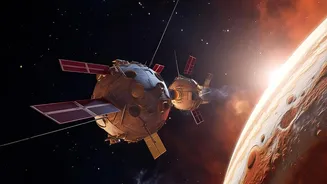
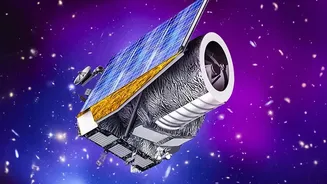
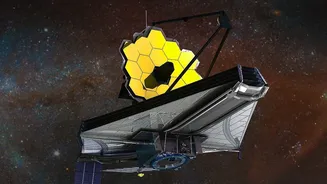
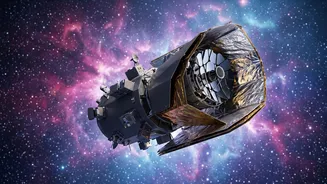
NASA has officially given the green light for the PRobe far-Infrared Mission for Astrophysics, or PRIMA, to move into its next phase of development. This isn't just another telescope; it's the very first in a new category of NASA missions called Probe
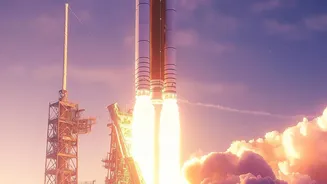
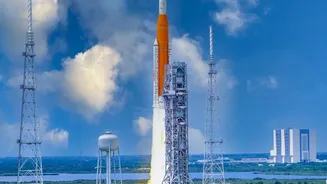
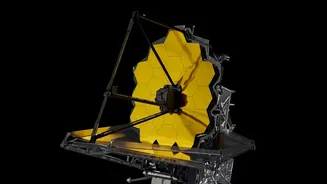
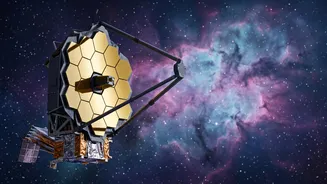
Explorers. Recommended by the National Academies of Sciences, this new class is designed to fill a crucial gap between smaller, focused missions and giant, multi-billion-dollar flagship observatories like the James Webb Space Telescope (JWST). With a project cost capped at around $1.2 billion, PRIMA is a heavyweight mission tasked with tackling high-priority science without the budget of a flagship project. If all goes according to plan after further reviews, PRIMA is targeted to launch in 2033 for a five-year mission managed by NASA's Jet Propulsion Laboratory.
The Power of Seeing in Far-Infrared
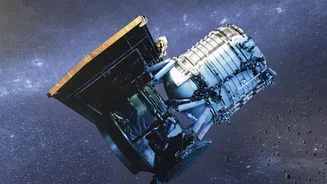
So what makes PRIMA special? It’s all about the light it sees. While telescopes like Hubble see visible light and JWST specializes in near- and mid-infrared, PRIMA will survey the sky in far-infrared light. This part of the spectrum is essential for seeing through the dense clouds of cosmic dust that obscure many of the universe's most important processes. Far-infrared is the glow emitted by some of the coldest objects in space, allowing astronomers to witness the hidden nurseries where stars and planets are born. PRIMA’s 5.9-foot (1.8-meter) telescope will be cryogenically cooled to just a few degrees above absolute zero. This extreme cold makes the telescope incredibly sensitive, enabling it to pick up faint signals that would be overwhelmed by the heat of a warmer instrument. It will bridge the observational gap between JWST and ground-based radio telescopes like ALMA, giving scientists a more complete picture of the cosmos.
Connecting Galaxies, Black Holes, and Dust
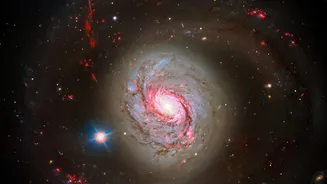
The headline's mention of a "central takeaway" points to the interconnected nature of PRIMA's science goals. The mission will investigate how galaxies and the supermassive black holes at their centers grow and evolve together. It will also trace how cosmic dust and heavy elements—the building blocks of everything, including us—were created and spread across the universe over billions of years. These seemingly separate topics are all part of one grand cosmic ecosystem. Stars are born from clouds of gas and dust; they live, die, and enrich the galaxy with heavier elements, which then form new stars, planets, and even the right conditions for life. Black holes influence their host galaxies through powerful feedback mechanisms. PRIMA will study these interconnected processes to paint a clearer picture of how the universe came to look the way it does today.
The Search for Our Cosmic Origins
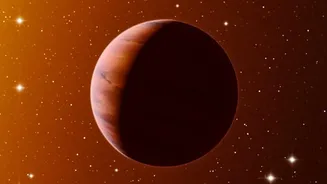
Perhaps the most exciting aspect of PRIMA's mission is its focus on the origins of planets and their atmospheres. A key science goal is to understand the role of water in the formation of new worlds. By observing protoplanetary disks—the swirling collections of gas and dust around young stars where planets form—PRIMA can trace the signatures of water and organic molecules. As one scientist noted, these are questions JWST can't answer because the necessary spectral lines are only visible in the far-infrared wavelengths PRIMA is designed to see. By quantifying the amount of water and other key elements like carbon and oxygen in these cosmic nurseries, astronomers can better understand the conditions that lead to the formation of habitable planets. In essence, PRIMA will be looking back in time to study the very processes that may have led to the emergence of life on Earth.