

The dream of a Tuscan road trip—zipping between cypress-lined hills and medieval towns—can quickly sour with too much time spent in the car. The secret to a truly magical experience is to slow down and embrace a rhythm of short driving days.
Embrace the 'Slow Travel' Philosophy
A successful
Tuscan road trip isn’t about how many towns you can see in a day, but how deeply you can experience the places you visit. The core idea is simple: minimize time behind the wheel to maximize time for everything else. Short driving days—ideally under two hours—mean you're not just rushing from one photo opportunity to the next. You have time for a long, leisurely lunch in a village piazza, an unplanned detour to a family-run winery, or simply sitting on a bench to watch the world go by. This approach swaps the stress of a packed schedule for the joy of immersion, allowing the true character of the region to unfold at a more natural, enjoyable pace.
Anchor Yourself in Key Locations
Instead of booking a new hotel every night, which involves a constant cycle of packing and unpacking, choose two or three 'anchor' locations for your trip. This strategy is the backbone of a relaxed itinerary. For a classic tour, consider splitting your time between a base in the Chianti region, north of Siena, and another in the Val d'Orcia to the south. This allows you to explore the surrounding areas through a series of short, looping drives. You'll return to a familiar bed each evening, get to know your local cafe, and feel less like a tourist on a tight schedule and more like a temporary resident soaking in the local culture.
Historic Hill Towns to Explore
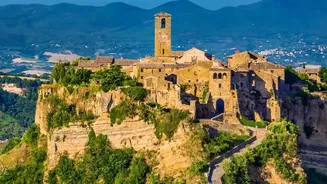
Tuscany's hill towns are legendary, each with its own unique personality. From your base, you can easily visit several without feeling rushed. San Gimignano, with its famous medieval towers, offers incredible views and a palpable sense of history. Montepulciano, perched high on a ridge, is renowned for its Vino Nobile wine and grand Renaissance palaces. Pienza, the "ideal city of the Renaissance," is a UNESCO World Heritage site and a jewel of urban design, perfect for a gentle stroll. The key is to pick one or two for a day's outing, wander their ancient stone streets, and then retreat to the countryside.
The Drive is the Destination
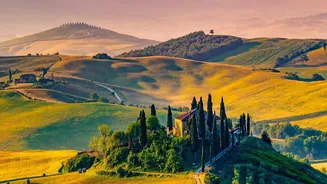
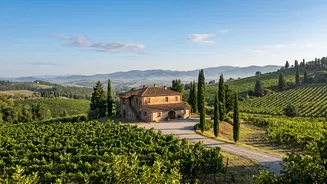
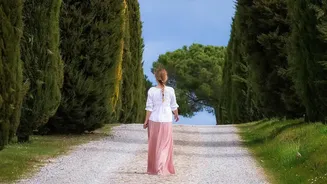
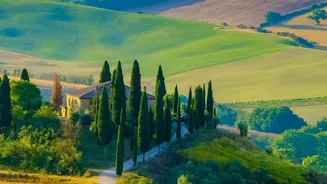
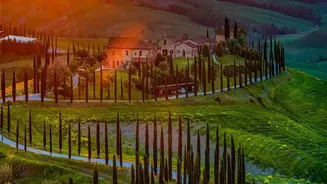
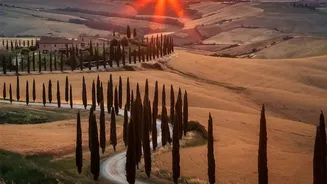
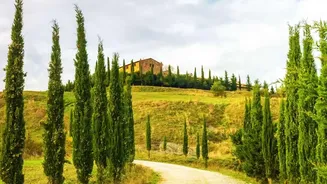
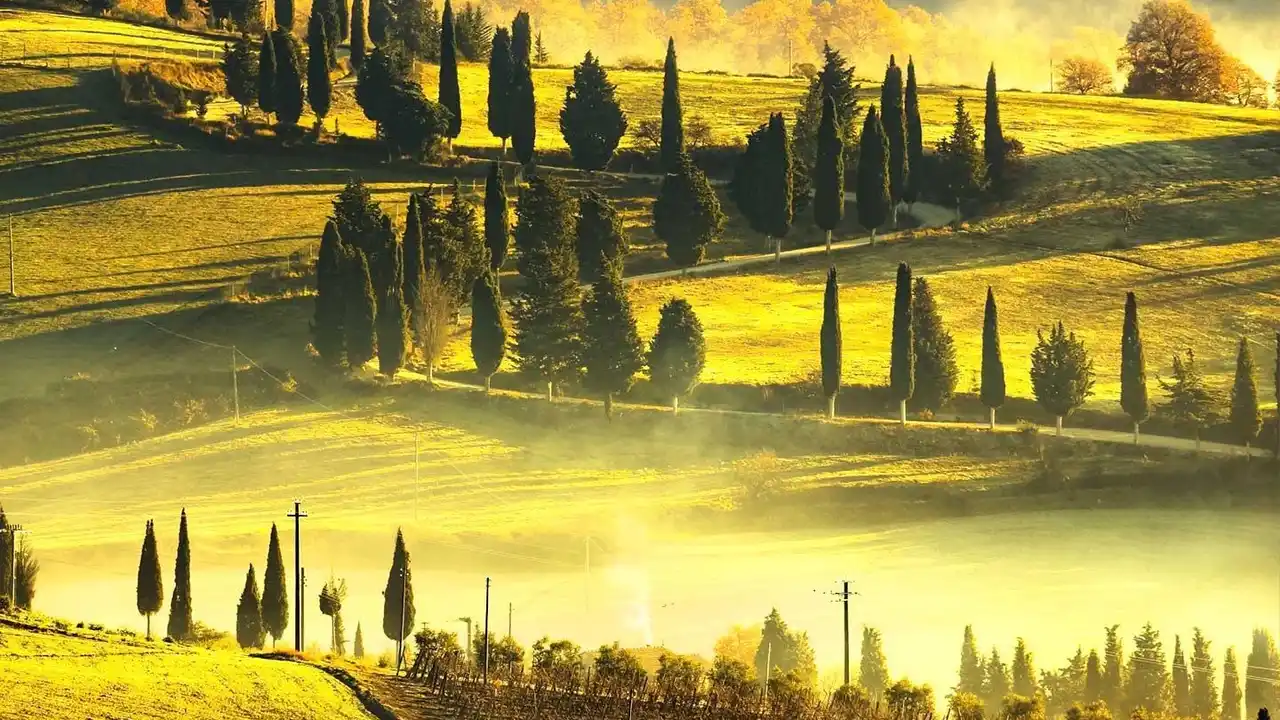
In Tuscany, the journey is just as important as the towns you visit. The scenic drives are an attraction in themselves. The SR222, known as the 'Chiantigiana,' is a classic route that winds through the heart of Chianti wine country between Florence and Siena, offering endless vineyard views. Further south, the Val d'Orcia delivers those iconic postcard landscapes: rolling hills, cypress-lined avenues, and isolated stone farmhouses. The drive from San Quirico d'Orcia to Pienza is particularly breathtaking. Give yourself permission to pull over frequently, take photos, and simply absorb the stunning, ever-changing scenery.
A Sample 5-Day Slow Itinerary
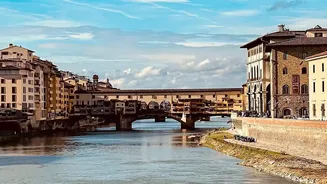
Day 1: Arrive in Florence, pick up your rental car, and take a short drive into the Chianti region. Settle into an agriturismo near a town like Greve or Panzano. Day 2: Explore the Chianti Classico wine route (SR222), visiting a winery for a tasting and stopping in the charming village of Radda in Chianti. Day 3: Drive south to the Val d'Orcia (approx. 1.5 hours), making Siena a mid-day stop. Establish your new base near Pienza or Montalcino. Day 4: Take a scenic loop through the Val d'Orcia, visiting the famous cypress grove near San Quirico d'Orcia and the Renaissance town of Pienza. Day 5: Explore the wine town of Montepulciano in the morning before beginning your journey back towards Florence or your departure city.
Essential Driving and Parking Tips
Driving in Tuscany is a joy, but navigating the historic towns requires some knowledge. Nearly all have a 'Zona a Traffico Limitato' (ZTL), a restricted traffic zone in the historic center. Driving into an active ZTL will result in a hefty fine. The rule is simple: always park outside the ancient city walls. Look for the blue-lined paid parking lots ('parcheggio') on the outskirts of towns. From there, it's usually a short and pleasant walk into the center. Renting a smaller car will also make navigating narrow country roads and finding parking spots much easier.