


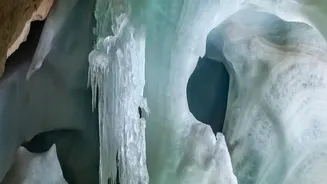
What is a Hanging Glacier?
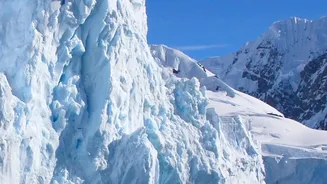
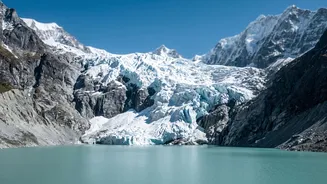
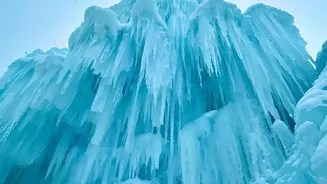
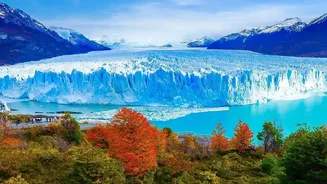
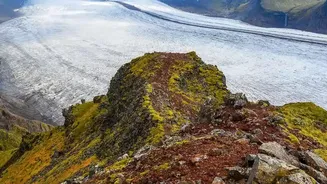
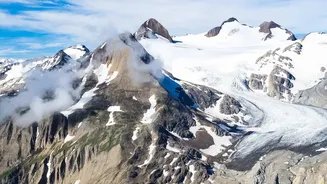
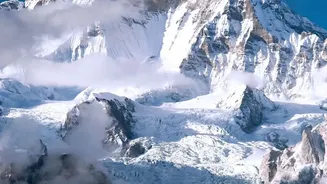
Unlike the vast, slow-moving glaciers that carve out valleys over millennia, a hanging glacier is an ice mass that clings precariously to a steep mountain wall. It often forms when a smaller tributary glacier is left suspended high above the main valley floor.
Because of the steep incline, it doesn't flow downwards but rather grows in mass until its own weight becomes too much to bear. The front of the glacier often terminates abruptly in a cliff of ice, inherently unstable and prone to breaking off without warning. This is a natural process, but one that becomes a critical hazard when it occurs above populated areas.
The Mechanics of a Catastrophe
The danger of a hanging glacier lies in its potential for sudden collapse. As global temperatures rise, the cycle of freezing and thawing weakens the ice and the bedrock it is attached to. Think of permafrost as the glue holding shattered mountain slopes together; as it melts, this glue fails. When a critical threshold is passed, a massive section of ice and rock can detach, falling thousands of feet into the valley below. The impact generates energy comparable to an earthquake and can trigger a devastating chain reaction known as a multi-hazard cascade. The falling debris can dam a river, creating a temporary and highly unstable lake. When this natural dam inevitably bursts, it releases a torrent of water, ice, and rock that hurtles downstream as a debris flow, destroying everything in its path.
A Present Danger in India
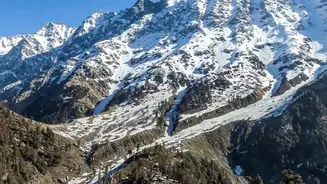
This threat is not hypothetical. The 2021 Chamoli disaster in Uttarakhand, which claimed over 200 lives and destroyed two hydropower projects, was the result of a massive rock and ice avalanche originating from a hanging glacier. Recent studies have underscored the scale of this hidden hazard. One comprehensive assessment identified 219 hanging glaciers in Uttarakhand's Alaknanda basin alone, a key headstream region of the Ganga. Scientists estimate this basin contains over two cubic kilometres of ice, with a significant portion being unstable hanging mass. Simulations show that a major collapse in this area could generate avalanche flows over 50 metres high, threatening important settlements and pilgrimage sites like Badrinath and Mana.
Life in the Shadow of Ice
The risk is compounded by rapid development in these vulnerable valleys. Built-up areas in high-risk zones have expanded dramatically. What was just 8,000 square metres of infrastructure in 2000 is projected to grow to over 150,000 square metres by 2030 in some parts of the Alaknanda basin. This means more roads, hotels, dams, and, crucially, more people are being placed directly in the path of potential disasters. While Himalayan communities have lived with natural hazards for centuries, the combination of accelerated glacial melt due to climate change and unplanned construction is creating an unprecedented level of risk. Exposure to these avalanche-related hazards is set to increase, with projections showing a 17% rise in the number of people living in at-risk areas by 2030 compared to 2000.
The Challenge of Monitoring and Mitigation
Unlike glacial lakes, which can be monitored for changes in water level, predicting the collapse of a hanging glacier is incredibly difficult. In the European Alps, high-risk glaciers are closely observed with radar systems and time-lapse cameras to provide early warnings, but deploying such technology across the vast and rugged Himalayas is a monumental challenge. Experts argue that the first step is to systematically identify the most perilous glaciers and focus monitoring resources on them. Following the Chamoli disaster, Indian agencies like the National Disaster Management Authority (NDMA) have increased efforts to manage glacial risks, but the focus has often been on glacial lake outburst floods (GLOFs). The unique threat from hanging glaciers requires a different and more technologically advanced approach, potentially using satellite technology to detect structural changes in the ice in real-time.