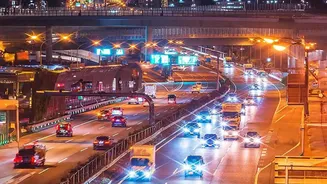








What is the ITMS?
The Intelligent Traffic Management System (ITMS) is a high-tech project approved by the Union Cabinet, with a budget of nearly ₹1,790 crore, aimed at modernising Delhi's traffic control. Think of it as giving the city's traffic network a 'brain'. Instead
of relying on fixed-timer signals and manual intervention, the ITMS will use a vast network of AI-powered cameras and sensors to manage traffic in real-time. The system will be implemented by the Delhi Police across 42 key traffic corridors in three phases over 24 months. Its core feature is an Adaptive Traffic Control System (ATCS), which will dynamically adjust signal timings based on actual traffic density, helping to reduce unnecessary stops and create 'green waves' for smoother vehicle flow.
Automated Enforcement: The End of Unseen Violations
A major component of the ITMS is its automated enforcement capability. The system will deploy cameras at 1,029 enforcement locations to automatically detect a wide range of traffic violations. These include common offences like red-light and stop-line violations, speeding, and wrong-way driving, as well as not wearing helmets or seat belts, using a mobile phone while driving, and illegal parking. AI-based analytics will also help authorities identify stolen or blacklisted vehicles, track repeat offenders, and investigate hit-and-run incidents by cross-referencing with the VAHAN database. This technology-driven approach aims to make enforcement more consistent and effective, reducing the need for on-ground police presence and encouraging better compliance with traffic laws.
Live Traffic Information for Smarter Commutes
For the daily commuter, one of the most significant benefits will be the availability of real-time traffic information. The system will detect congestion, slow-moving traffic, and road incidents as they happen, allowing the Delhi Police to respond faster with diversions. This information will be shared with the public through Variable Message Signs on roads and other digital platforms. It may also be shared with popular navigation service providers, enabling drivers to make more informed decisions and choose the best route based on current conditions. This feature promises a more predictable travel experience, helping citizens avoid unexpected jams and plan their journeys more efficiently.
C-DAC’s Role and the ‘Made in India’ Touch
The Centre for Development of Advanced Computing (C-DAC), a premier Indian R&D organisation, will serve as the Project Management Consultant. C-DAC's role involves providing crucial technical support, including scrutinising the technology, monitoring progress, and validating the system's performance during both the implementation and maintenance phases. This partnership ensures that the massive project has expert technical oversight from a domestic institution, aligning with a 'whole-of-government' approach that brings together the Ministry of Home Affairs, Delhi Police, and C-DAC as technology partners. Their involvement is key to integrating the various components—signals, cameras, and AI capabilities—into one harmonised system.
A Lifeline for Emergency Services
Beyond easing daily commutes, the ITMS has a critical life-saving function: creating priority 'green corridors' for emergency vehicles. Using GPS and advanced algorithms, the system can automatically adjust signals to provide a clear path for ambulances and fire tenders, significantly reducing their response times during critical situations. This is especially vital in a city where emergency vehicles often get stuck in heavy traffic. The system's ability to detect incidents in real-time will also enable quicker deployment of emergency services to accident sites.