


A Mission of Firsts
Starship Flight 15, which launched from Starbase, Texas, was ambitious from the start. The primary goal was to demonstrate that not only the first-stage Super Heavy booster but also the second-stage Starship spacecraft could be recovered for reuse. While
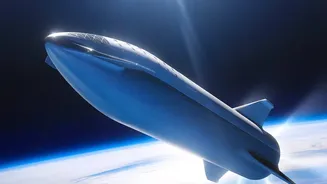
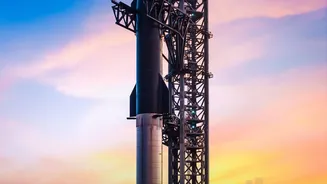
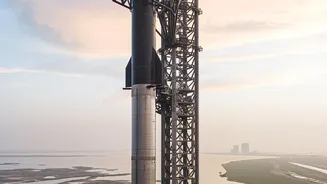
the booster was intentionally diverted to the Gulf of Mexico due to an anomaly, the Starship upper stage, known as Ship 42, successfully reached orbit. After a mission lasting approximately 22.5 hours, it returned to Earth, where it was caught by the launch tower's giant mechanical arms. This marked the first time a spacecraft returning from orbital velocity was recovered in this manner, a long-held goal for the company.
What Did Starship Do For 22 Hours?
The extended time in space wasn't just for show. After reaching orbit, the primary mission for Ship 42 was to deploy a batch of 26 Starlink V3 satellites. This task demonstrated Starship’s capability as a payload delivery platform, which is core to SpaceX's business model. Following payload deployment, the spacecraft completed roughly 14 orbits of Earth. This long coasting phase allowed engineers to monitor the vehicle’s systems in the space environment over an extended period, gathering crucial data on its performance and health before attempting the difficult return journey.
The 'Mechazilla' Catch Explained
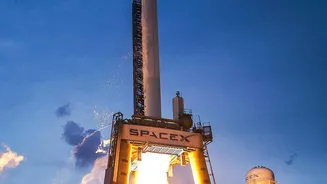
The concept sounds like science fiction: catching a returning spaceship out of the sky. The system, nicknamed 'Mechazilla', consists of a massive launch integration tower equipped with two large arms, often called 'chopsticks'. After surviving the intense heat of atmospheric re-entry from orbital speeds of around 27,000 km/h, Ship 42 used its flaps for aerodynamic control. In the final moments of descent, it performed a flip maneuver and ignited three of its Raptor engines to slow down and hover. It then steered itself precisely between the waiting arms of the tower, which closed around the vehicle to secure it. This system relies on incredibly precise guidance systems, including high-resolution cameras and LiDAR, to track the vehicle and adjust for a perfect catch.
Why Catch, Not Land?
SpaceX's Falcon 9 boosters land on their own legs, so why the change in strategy for Starship? The primary reason is to make the system fully and rapidly reusable. By catching the vehicle, SpaceX eliminates the need for heavy landing legs, saving mass that can instead be used for payload. Furthermore, the tower catch places the vehicle directly back onto the launch mount, theoretically enabling a much faster turnaround time for the next flight—potentially within hours or days, rather than weeks. This approach brings space launch closer to the operational model of commercial aviation, where the cost per flight is driven down by maximizing the number of times each vehicle can fly.
A Game-Changer for the Space Economy
The successful recovery of an orbital upper stage is a monumental step toward making spaceflight radically cheaper and more accessible. While the Falcon 9 rocket reuses its first stage, its upper stage is expendable. A fully reusable Starship system could slash the cost of launching a kilogram into orbit, with some projections suggesting costs could eventually fall below $100 per kilogram. This dramatic cost reduction transforms the economics of everything from deploying satellite constellations like Starlink to building bases on the Moon and, ultimately, enabling Elon Musk's vision of creating a city on Mars. This successful catch, while only one part of the puzzle, proves a critical piece of that vision is achievable.