


The Search for Another Blue Marble
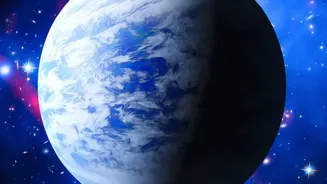
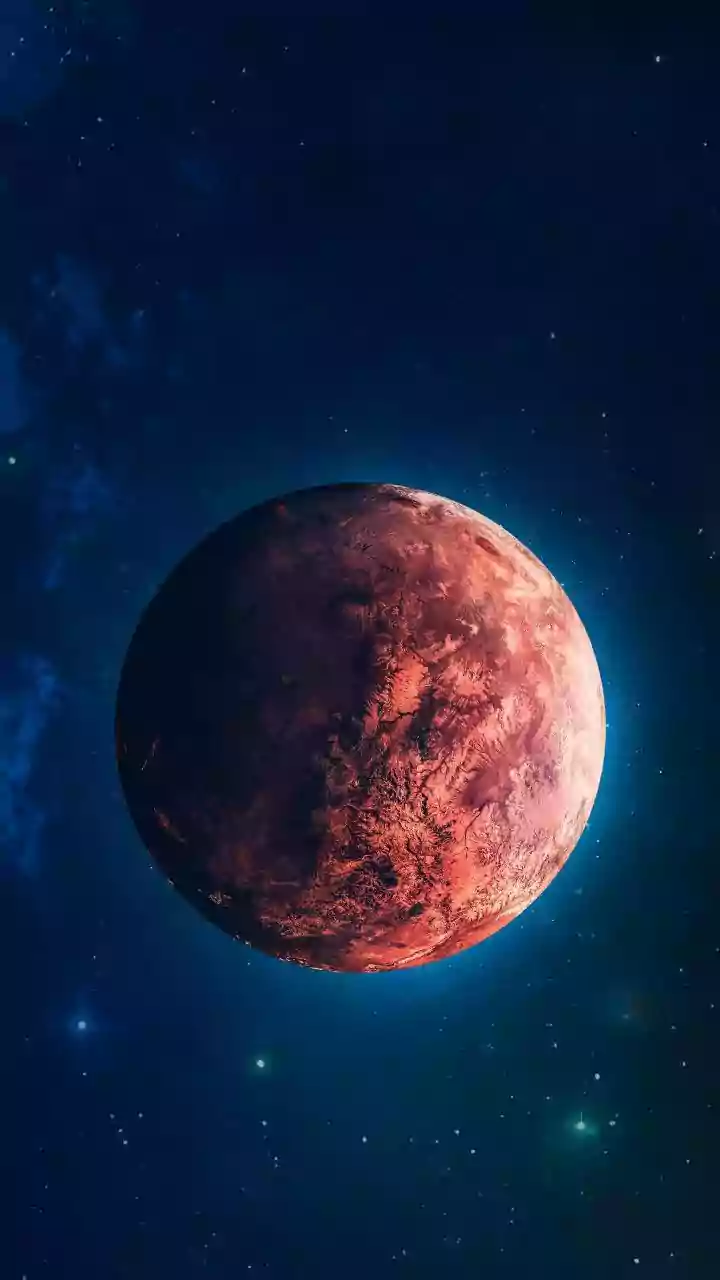
For decades, the hunt for extraterrestrial life has been guided by a simple mantra: follow the water. On Earth, liquid water is the one non-negotiable ingredient for life as we know it. Finding it on a rocky planet orbiting another star would be a monumental
discovery, instantly elevating that world to a prime candidate for habitability. Powerful tools like the James Webb Space Telescope (JWST) were designed with this quest in mind, equipped to seek out the telltale chemical fingerprints of water in the atmospheres of these faraway planets. But scientists are finding that spotting this precious molecule is far more complex than they had hoped.
Reading Light Through an Alien Sky
The primary method for sniffing out atmospheric water is called transit spectroscopy. When an exoplanet passes, or 'transits,' in front of its host star from our point of view, a sliver of starlight filters through the planet's atmosphere. By analyzing the spectrum of this light, astronomers can see which wavelengths were absorbed by molecules in the atmosphere. Water vapor has a distinct and well-known absorption signature, so in theory, seeing that signature in the data means you have found water. This technique has been a game-changer, allowing us to probe worlds light-years away. The problem is, the star itself isn't the perfect, stable backdrop we wish it were.
The Star's Deceptive Glare
One of the most significant challenges is what astronomers call 'stellar contamination'. Stars are not uniform, featureless balls of light. They have turbulent surfaces with phenomena like starspots (cooler, darker patches, like sunspots) and faculae (hotter, brighter regions). This variability can mimic or completely mask the signal from a planet's atmosphere. For instance, if a planet transits across a hot, bright patch on the star, it can make the planet appear larger or its atmosphere hotter than it truly is. Conversely, crossing a cool starspot can make the planet seem smaller. This stellar 'noise' can dramatically alter the results, leading to misinterpretations of the atmospheric data. In some cases, stellar activity can change the calculated abundance of a molecule by orders of magnitude.
The False Positive of Stellar Water
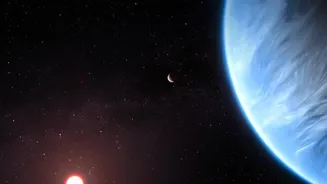
An even more confounding issue is that stars themselves can have water. Cooler stars, particularly the M-dwarf red dwarfs that are common targets for exoplanet searches, can have significant amounts of water vapor in their own outer layers, especially within cooler starspots. This creates a perplexing scenario: when a telescope detects the signature of water, it can be nearly impossible to determine if the signal is from the planet's atmosphere or from the star itself. This exact dilemma arose with observations of the exoplanet GJ 486 b, where an initial water signal detected by the JWST raised hopes of a steamy atmosphere, only for later analysis to suggest the signal was more likely from water in cool spots on the host star.
Forging a Path Through the Noise
Despite these hurdles, the scientific community is not deterred. Instead, these challenges are driving innovation. Researchers are developing more sophisticated models to understand and subtract the effects of stellar activity. New missions, like NASA's Pandora satellite, are specifically designed to observe a planet and its star simultaneously to better disentangle their light signals. By making repeated observations of the same system, scientists can track the star's changes over time, helping to isolate the consistent signal from the planet's atmosphere. Furthermore, focusing on multi-wavelength observations, from UV to infrared, can help reveal stellar contamination that might be missed in a narrower band of light.