







The Groundbreaking Claim
For decades, creatine has been a staple supplement for athletes and gym enthusiasts aiming to boost performance, strength, and muscle growth. Its benefits, when paired with resistance training, are among the most well-researched in sports nutrition. However,
a new study is turning heads by exploring a fascinating question: can creatine provide benefits even to those who don't follow a structured workout routine? The suggestion that a supplement could help build or maintain muscle without exercise is compelling, especially for those who struggle to find time for the gym or are managing age-related muscle decline.
What Did the Study Actually Find?
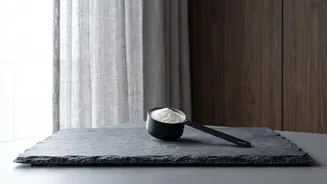
A recent 12-week study from Texas A&M University, published in the Journal of the International Society of Sports Nutrition, investigated this very idea. The researchers looked at 64 healthy adults between the ages of 45 and 65. Participants were divided into groups, with some following an exercise and diet program and others not. Within these groups, some individuals took 10 grams of creatine monohydrate daily, while others received a placebo. The results for the non-exercising group were particularly noteworthy. Those who took creatine without being part of the structured workout program gained approximately 2.4 pounds (about 1.1 kg) of lean tissue over the 12 weeks. They also showed improvements in both leg press and bench press strength.
How Does Creatine Work?
To understand these findings, it helps to know what creatine does. Creatine is a naturally occurring compound found in our bodies and in foods like red meat and fish. Its primary role is to help regenerate the body's main energy molecule, adenosine triphosphate (ATP). During short, intense activities—like lifting a heavy object or performing a quick sprint—your muscles use ATP for energy. By increasing the available pool of creatine in your muscles, supplementation helps you replenish this energy faster, which is why it’s so effective for improving performance during resistance training. It also draws water into muscle cells, a process called cell volumization, which can contribute to a fuller appearance and may signal muscle growth.
Not a Magic Pill for the Couch
So, does this mean you can cancel your gym membership and rely on a supplement for your fitness goals? Not exactly. The researchers themselves are careful to note that creatine is not a replacement for exercise. While the non-exercising group saw benefits, the participants who combined creatine with a structured exercise and diet program saw even greater gains. They added nearly three pounds of lean tissue, lost more body fat, and experienced more significant strength improvements. The study is exciting because it suggests creatine may help middle-aged and older adults preserve or even build a small amount of muscle and strength, which is crucial for healthy aging and combating the natural decline known as sarcopenia.
Who Could Benefit Most?
The findings are most promising for specific populations. For middle-aged and older adults, maintaining muscle mass is vital for mobility, metabolic health, and overall quality of life. This study suggests creatine could be a useful tool in that battle, especially during periods when structured exercise isn't possible. It could also be relevant for individuals recovering from an injury or illness that requires them to be less active. While some past research on complete immobilization (like wearing a cast) has shown mixed results, this new study points toward a potential protective benefit during periods of general inactivity rather than total disuse.
A Tool, Not a Replacement
Ultimately, the science remains clear: the most powerful stimulus for building and maintaining muscle is, and always will be, resistance exercise. Creatine is a powerful and safe tool that enhances the results of that exercise. This new research expands our understanding of its potential, showing it may offer a baseline level of support even on its own. It reinforces creatine's role as more than just a supplement for elite athletes, positioning it as a potential ally in the broader quest for healthy aging and muscle maintenance across different lifestyles and activity levels.