



The magic of human movement is often about balance. Two popular activities, cycling and skating, both challenge our equilibrium, but in surprisingly different ways. Understanding this contrast can make you better at both, especially on the bike.
The Bicycle’s Built-in Stability
At first
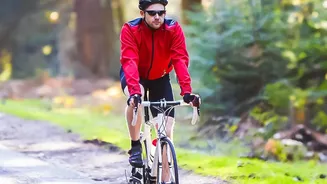
glance, a bicycle seems inherently unstable; a tall, thin frame on two narrow wheels. Yet, once it's moving, it becomes a remarkably stable machine. This isn't just because of the rider. The bike itself is designed to stay upright. A key factor is the geometry of the front fork and the 'trail', which makes the front wheel automatically steer into a lean. If the bike tilts left, the wheel subtly turns left, bringing the base of support back under the center of mass. This self-correcting nature is a fundamental aspect of bicycle stability. Furthermore, the gyroscopic effect of the spinning wheels provides a stabilizing force, resisting the bike's tendency to tip over. The faster the wheels spin, the stronger this effect becomes, which is why it's much harder to balance on a bike at a near-standstill than at a moderate speed. The rider's job is less about actively preventing falls and more about making small, intuitive adjustments with their weight and steering to guide this inherently stable system.
Skating: You Are the Center of Gravity
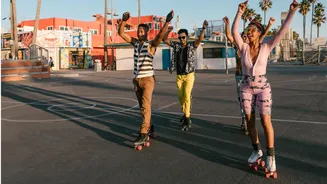
Skating, whether on inline or roller skates, is a completely different story. Here, there is no stable machine to partner with; you are the entire system. Balance on skates is a dynamic and constant act of personal control. Your body must create its own stability from the ground up, with a very small base of support under each foot. This requires immense engagement from your core muscles—the abdominals, obliques, and lower back. These muscles act as the central pillar, connecting your upper and lower body and allowing for the transfer of power and maintenance of posture. Unlike a bike, where forward momentum is your friend, on skates you must be balanced even at a standstill. This involves a 'ready position' with knees bent and your weight centered. Every movement, from a simple push to a complex turn, originates from precise weight shifts and core tension. It's a pure test of the body's proprioception—its innate sense of its position in space.
Stability vs. Agility: The Core Contrast
The fundamental difference comes down to this: a bicycle is a tool that helps you balance, while skates are tools that challenge you to balance. On a bike, stability is largely provided by the vehicle's design and forward motion. Your core is used for stability and efficient power transfer from your hips to the pedals, but the bike does much of the balancing work. On skates, your core is the primary source of balance. All stability comes from your ability to control your body's posture and position over the wheels. This is why many find learning to cycle easier than learning to skate. A bike wants to stay upright once moving, but skates require you to learn how to keep yourself upright. Turning also highlights this difference. A cyclist steers with handlebars and subtle leans, while a skater carves and turns by shifting their entire body weight and using the edges of their wheels.
Applying Balance Skills to Your Ride
Understanding the skater's reliance on core strength and proprioception can directly help you become a better cyclist. While the bike helps, a rider with poor balance is inefficient and less safe. To improve, focus on engaging your core. A strong core provides a solid platform, preventing you from rocking in the saddle and wasting energy. Practice slow-speed drills, like trying to ride as slowly as possible in a straight line or navigating a tight figure-eight. These exercises remove the stability that comes from speed and force your body to make the micro-adjustments necessary for balance, much like a skater does. Focus on keeping your upper body relaxed and looking far ahead, not down at your front wheel. This allows your body's natural balance system and the bike's self-correcting geometry to work together seamlessly. Off-bike exercises that challenge your proprioception, such as single-leg stands or using a balance board, can also have a significant and positive impact on your confidence and control in the saddle.