





More Than Just a Preference
For most of human history, handedness was seen as a simple matter of habit or training. Around 90 percent of people are right-handed, a ratio that has remained surprisingly stable. But this preference is an external sign of a much deeper neurological
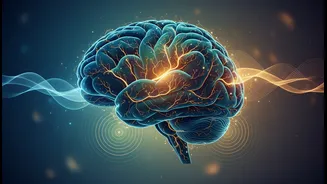
concept: brain lateralization. This means that the brain's two hemispheres are not identical; they are specialized for different functions. For the vast majority of right-handed individuals, crucial language centres and fine motor control for the dominant hand are based in the left hemisphere. For left-handers, this organisation can be reversed or more spread out across both hemispheres. Understanding this fundamental asymmetry is the first step in unlocking why it matters so much after an injury.
A New Look at Skill Acquisition
A long-standing question has been whether our dominant hand is simply better because we use it more, or if it has an innate biological advantage. Some recent research challenges the idea of an in-born skill gap, suggesting that practice is the main driver of dominance. This is a hopeful discovery for neuro-rehabilitation. It implies that the non-dominant side of the body possesses the same biological potential for learning motor skills. When one hemisphere is damaged by a stroke or traumatic brain injury (TBI), this underlying potential in the other hemisphere becomes a critical resource for recovery. The brain’s ability to reorganize itself, known as neuroplasticity, is the mechanism that rehabilitation aims to harness.
When Injury Disrupts the Balance
A neurological injury like a stroke often affects one side of the brain, leading to impairment on the opposite side of the body (hemiplegia or hemiparesis). For a right-handed person, a stroke in the left hemisphere can be devastating to their dominant right side. Interestingly, research shows that outcomes can differ depending on which hemisphere is damaged and which hand was dominant. One study found that individuals whose dominant hand was affected by a stroke showed less overall impairment compared to those whose non-dominant hand was affected, even if their functional performance in daily activities was similar. Another study on gait patterns found that patients with left-sided weakness (right hemisphere stroke) had different movement patterns than those with right-sided weakness (left hemisphere stroke), suggesting brain asymmetry influences recovery strategies.
A Roadmap for Personalized Rehabilitation
These findings are pushing experts toward a more personalized approach to neurorehabilitation. Instead of a one-size-fits-all therapy plan, clinicians can use a patient's handedness and the specific location of their brain injury to create a tailored strategy. For example, knowing that the brain's two hemispheres have different roles in motor control could change how therapy is applied. Some research suggests that after a left-hemisphere stroke in a right-handed person, the non-paretic left limb effectively becomes the more skilled limb as it's used more to compensate. Therapeutic approaches like bilateral arm training, which involves using both arms, aim to rebalance the communication between the hemispheres, promoting functional recovery. This detailed understanding allows therapists to generate better hypotheses for what might work for an individual patient, moving closer to precision neurorehabilitation.