





A Trial by Terrain
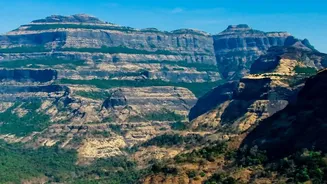
The focus of these intensive trials is the Sakleshpur-Subrahmanya Road ghat section in Karnataka, a key part of the Bengaluru-Mangaluru railway line. This 55-kilometre stretch is one of Indian Railways' most technically demanding corridors. It features
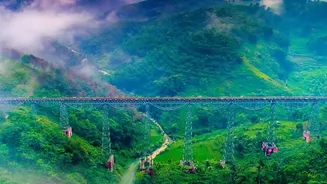
a formidable combination of steep gradients, 108 sharp curves, 57 tunnels, and 226 bridges. Historically, the terrain has posed significant operational challenges, forcing trains to move at slower speeds and requiring special measures to ensure safety on both ascents and descents. For any regular train service, this section is a serious undertaking. For a high-performance train like the Vande Bharat, designed for speed and efficiency on flatter routes, it represents the ultimate test of its engineering and adaptability. The success or failure of these trials, overseen by the Research Designs and Standards Organisation (RDSO), will have major implications.
The Banker Locomotive Question
For decades, trains navigating steep inclines like the Sakleshpur-Subrahmanya section have relied on 'banker locomotives'. These are additional engines attached to the rear of a train to provide the extra pushing power needed to climb the ghats and to assist with braking on the way down. While effective, this process is cumbersome and time-consuming. Trains must halt before the ghat section to have the bankers attached and stop again after to have them detached, adding significant time to the journey. One of the primary goals of the current Vande Bharat trials is to prove that the train can conquer these gradients without any banker assistance. This would be a historic first for the route and a game-changer for operational efficiency. Eliminating the need for bankers would not only slash travel times but also streamline railway operations, saving both fuel and manpower.
Technology Under the Microscope
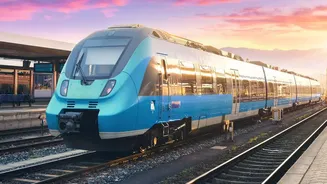
Unlike conventional trains pulled by a single engine, the Vande Bharat Express uses a distributed propulsion system. Power is spread across multiple coaches, giving the entire trainset its own motive power. This provides superior acceleration and braking, which are critical in a ghat environment. For these trials, a specially manufactured 20-car rake from the Integral Coach Factory (ICF) in Chennai is being used. This version is fitted with a crucial piece of technology: an Automatic Emergency Braking (AEB) system. This safety feature is designed to automatically apply the brakes if the train exceeds the mandated 30 kmph speed limit within the ghat section, preventing any possibility of losing control on steep descents. The RDSO teams on board are meticulously evaluating every parameter, from the performance of the braking and traction systems to overall stability and passenger comfort on the sharp curves.
The Future of Ghat Travel
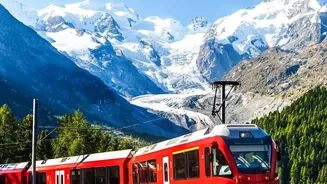
If these trials prove successful, the immediate 'next step' will be the launch of a regular Vande Bharat service between Bengaluru and Mangaluru. This would provide a faster, more modern connectivity option between the state capital and the coastal region. However, the implications are much broader. A positive outcome would validate the Vande Bharat platform as a versatile solution capable of operating on India's most challenging terrains. It would unlock the potential for introducing similar high-speed services on other ghat routes across the country, such as those on the Mumbai-Pune line. These trials are essentially creating a blueprint for the expansion of modern rail infrastructure into hilly and geographically complex regions that were previously difficult to service with high-speed trains. It marks a pivotal moment in demonstrating the full capability of India's indigenous engineering.