




The Old Erosion Question
For centuries, we’ve observed the power of water to shape the world. From the Grand Canyon to the smooth stones in a riverbed, erosion is a fundamental force of nature. On a smaller scale, scientists have long studied 'splash erosion'—the process where
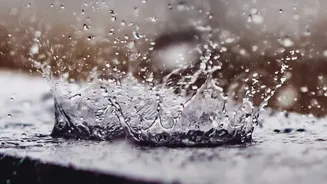
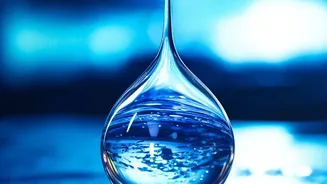
individual raindrops strike bare ground. They act like billions of tiny hammers during a downpour, dislodging soil and kicking off the process of land degradation. This is particularly critical in agriculture, where topsoil loss can devastate crop yields, and it’s a constant concern in a country like India with its intense monsoon seasons. The general idea was simple: the kinetic energy of the falling drop does the work. But the precise mechanics, especially on hard, non-soil surfaces, remained something of a mystery. How could a soft liquid inflict damage on solid materials?
A Shockingly Powerful Discovery
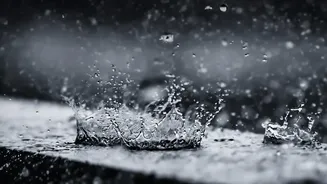
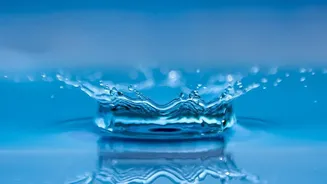
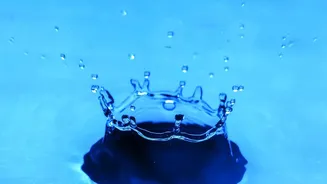
A groundbreaking study from researchers at the University of Minnesota has shed new light on this old puzzle. Using a novel technique called 'high-speed stress microscopy,' scientists were able to measure the hidden forces at play when a liquid drop hits a surface. Previously, this phenomenon could only be studied visually with high-speed cameras. The new method allowed the team to quantify the pressure and shear stress, essentially revealing the invisible punch packed by the droplet. What they found was astonishing. The force isn't concentrated in the centre of the drop as you might expect. Instead, as the droplet hits and spreads out, the force travels with the expanding edge of the liquid. For a very brief moment, this edge spreads faster than the speed of sound, creating a shock wave across the surface. In essence, each raindrop behaves like a tiny bomb, releasing its impact energy explosively.
The 'Small Bomb' Effect Explained
This 'small bomb' effect is what gives a seemingly gentle raindrop the power to wear away stone, concrete, and metal over time. While a single drop does negligible damage, the repeated supersonic shockwaves from billions of drops create microscopic stresses that accumulate. This is the mechanism that validates the ancient proverbs about dripping water. The study explains why even the most durable coatings and surfaces eventually fail under the relentless assault of the elements. It’s not just a steady, gentle wearing-away; it’s a series of microscopic, high-pressure explosions. This repeated stress eventually causes cracks and pits to form, leading to material failure. The research finally provides the physical data to back up what we’ve observed for millennia.
From Soil to Solar Panels
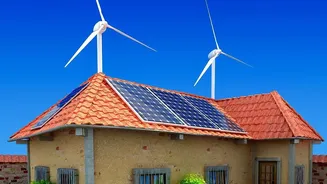
The implications of this discovery are vast and extend far beyond understanding how landscapes are formed. In India, where agriculture is the backbone of the economy, understanding the precise mechanisms of soil erosion is crucial for preserving precious topsoil. But the applications don't stop there. Think about the high-tech materials we rely on daily. Wind turbine blades, for instance, must spin in all weather conditions, and their leading edges are constantly bombarded by raindrops at high speeds. This erosion is a significant factor in their maintenance and lifespan. Similarly, the protective coatings on buildings, cars, and even solar panels must withstand this constant, explosive assault. Recent studies on solar farms show that while panels can reduce overall erosion underneath them, the concentrated dripping from their edges creates new erosion 'hotspots'. Understanding the exact nature of droplet impact can help engineers design more resilient materials and smarter structures.
Designing the Future of Surfaces
Armed with this new knowledge, the next step for researchers is to figure out how to mitigate these powerful impacts. According to the study's authors, the goal is to design special surfaces that can reduce the amount of shear stress caused by droplets. If you can create a surface that dissipates or redirects the energy from that initial supersonic shockwave, you can dramatically extend the life of the material. This could lead to longer-lasting paints that protect our homes, more efficient and durable wind turbines providing clean energy, and even better land management strategies to protect our farms from the erosive power of rain. This fundamental research into the behaviour of a single water droplet could unlock a new generation of materials engineered to withstand the elements more effectively than ever before.