







What TRAI Is Proposing
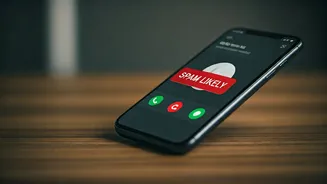
The telecom regulator has asked the government for authority under the Information Technology (IT) Act to penalise call-management applications, such as Truecaller, Hiya, and Whoscall. The core issue is that these apps are allegedly mislabeling legitimate
commercial and even government communications as spam. Specifically, calls from the 1400 and 1600 number series—officially designated for promotional and transactional messages like bank alerts or delivery updates—are frequently being blocked or tagged as spam by these platforms. At present, TRAI has no direct power over these apps, as they are considered 'intermediaries' under the IT Act and not telecom licensees, which fall directly under TRAI's purview. Gaining these new powers would designate TRAI as an 'authorised agency', allowing it to enforce compliance and prevent the wrongful blocking of essential communications.
The Problem of Wrongful Tagging
While users rely on these apps to filter out unwanted calls, TRAI officials have pointed out an unintended consequence. When legitimate businesses using the designated 1400-series numbers find their calls blocked, they may be pushed to revert to using standard 10-digit mobile numbers for their outreach. According to officials, this would ironically make the spam problem worse, as it becomes harder for consumers to distinguish between a genuine business call and actual spam or fraud. The regulator's goal is to restore trust in the official numbering series, ensuring that when you receive a call from a 1400 or 1600 number, you can be reasonably sure it's for a legitimate purpose. The move isn't about shutting down spam-filtering apps but ensuring they don't inadvertently disrupt necessary services.
A Native Solution: The CNAP Plan
This proposal is part of a larger, more ambitious strategy by TRAI to tackle unsolicited communications. The regulator has also been pushing for the implementation of a nationwide Calling Name Presentation (CNAP) service. Unlike third-party apps that rely on crowdsourced data, which can be inaccurate or outdated, CNAP would be a network-level feature. It would display the caller's name as registered in the official Know Your Customer (KYC) documents submitted when the SIM card was purchased. The Department of Telecommunications (DoT) has already asked providers to conduct trials, with a potential rollout targeted for 2026. The idea is to give users a verified identity for every caller, straight from the telecom operator's database.
The Inevitable Privacy Debate
However, the CNAP proposal has sparked a significant debate around privacy. Telecom operators themselves, along with privacy advocates, have raised concerns. They argue that automatically displaying a person's KYC-registered name on every call, even a misdialed one, could lead to serious privacy violations. This is particularly worrying for vulnerable individuals, such as women, who may face increased harassment if their names are readily available to strangers. There's also the question of data accuracy. A SIM card could be registered in one person's name but used by a family member, or a stolen phone could be used for malicious calls, wrongly implicating the registered owner. To address this, TRAI has proposed an opt-out feature, but concerns remain about how effective and accessible it would be.