



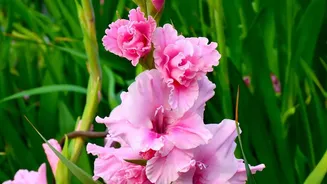
A Floral Revolution at 10,600 Feet
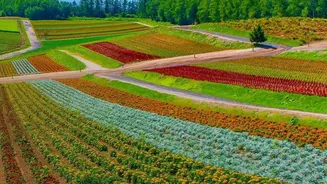
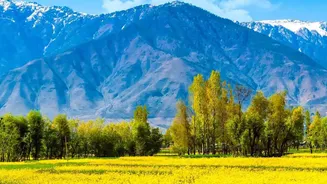
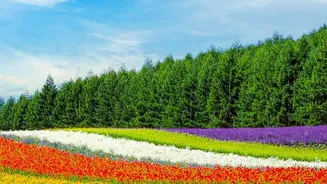
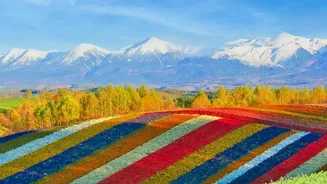
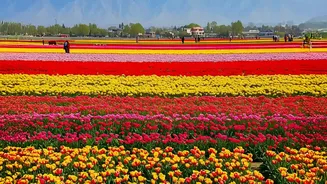
In a region famed for its rugged, lunar-like landscapes, the sight of millions of blooming flowers is a dramatic contrast. Yet, this is the new reality at Choglamsar and Stakna, near Leh. In September 2026, the world’s highest-altitude twin flower fields
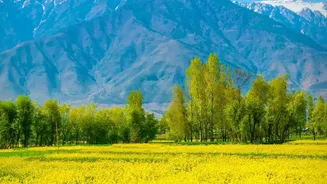
were inaugurated here, transforming 40 acres of land into a vibrant spectacle. The fields, sitting at an elevation of about 10,600 feet, are now home to over 2.5 million flowers, primarily consisting of 2.4 million Liliums and 100,000 Gladioli. This large-scale, organised cultivation of ornamental flowers is a first for the high-altitude region. The Choglamsar field began planting in July 2026 and saw its first blooms by early September, while the flowers at Stakna, planted in August, are expected to bloom towards the end of October.
An Initiative for a Greener Economy
This floral bloom isn't a random act of nature. It's the result of a deliberate and ambitious government initiative aimed at diversifying Ladakh's economy and creating new livelihood opportunities. In June 2026, the foundation stone was laid for these high-altitude floriculture parks, a project designed to turn Ladakh into a hub for premium flowers. The vision, conceived by Ladakh's Lieutenant Governor Vinai Kumar Saxena, is to harness the region's unique climate, which is surprisingly well-suited for certain high-value flowers that can be sold in national and international markets. The project is being implemented with technical support from the CSIR-Institute of Himalayan Bioresource Technology (CSIR-IHBT), Palampur. The goal is to make floriculture a profitable alternative for local farmers, self-help groups (SHGs), and cooperatives.
More Than Just Lilies and Gladioli
While Liliums and Gladioli are the stars of the new fields, Ladakh's floral identity is expanding on multiple fronts. The new parks are also planned to cultivate other species like Tulips, Petunia, Salvia, and Marigold. This push for floriculture builds on other trends in the region. For years, the 'Purple Revolution' has seen farmers in Jammu & Kashmir, and more recently Ladakh, successfully cultivate lavender as a drought-resistant, high-value crop. This initiative, part of the CSIR's Aroma Mission, has helped farmers shift from traditional crops to more profitable aromatic plants. Additionally, Ladakh has long celebrated its natural blooms through events like the Apricot Blossom Festival, known locally as 'Chuli Mendok'. Every spring, villages in the lower valleys are covered in soft pink and white flowers from apricot trees, a fruit deeply embedded in the region's culture and economy.
Empowering Local Communities
The Choglamsar and Stakna flower fields are designed to be more than just tourist attractions; they are centres for economic empowerment and training. The plan involves the Agriculture Department managing the cultivation for the first year before handing over the fields to local SHGs and cooperatives. These groups will receive training in scientific cultivation, post-harvest management, and market linkages to sell the flowers in major cities where a single Lilium stem can fetch a high price. This model aims to create a sustainable ecosystem where local communities, especially women and youth, can benefit directly from the new green economy, turning the challenging climate into an agricultural advantage.
A New Chapter for Ladakh Tourism
For travellers, this development adds a completely new dimension to the Ladakhi experience. Traditionally, tourism has focused on adventure activities, monasteries, and stark natural beauty. Now, visitors have a new reason to explore the region: its blossoming landscapes. The flower fields at Choglamsar have been opened to the public for a nominal entry fee, creating a new recreational destination for both tourists and residents. This shift towards 'eco-tourism' and 'agri-tourism' helps diversify attractions beyond the peak summer months, potentially extending the tourist season. It also offers a more serene and colourful counterpoint to the epic mountain scenery, inviting visitors to appreciate a gentler side of Ladakh's unique environment.