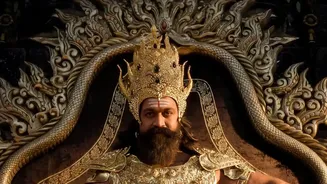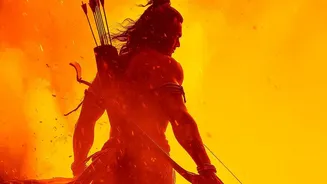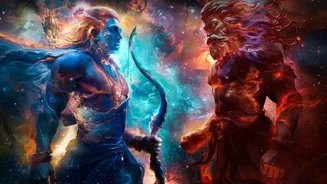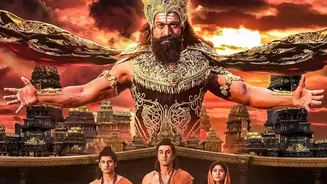

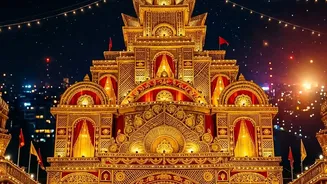

The figure of Ravana, the ten-headed king of Lanka, is central to the Ramayana, but his very name holds a story. It originates from a specific, powerful event and perfectly captures his essence. This detail is part of a larger conversation.
The Meaning of a Roar
The name 'Ravana'
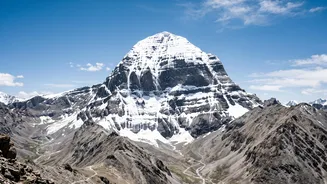
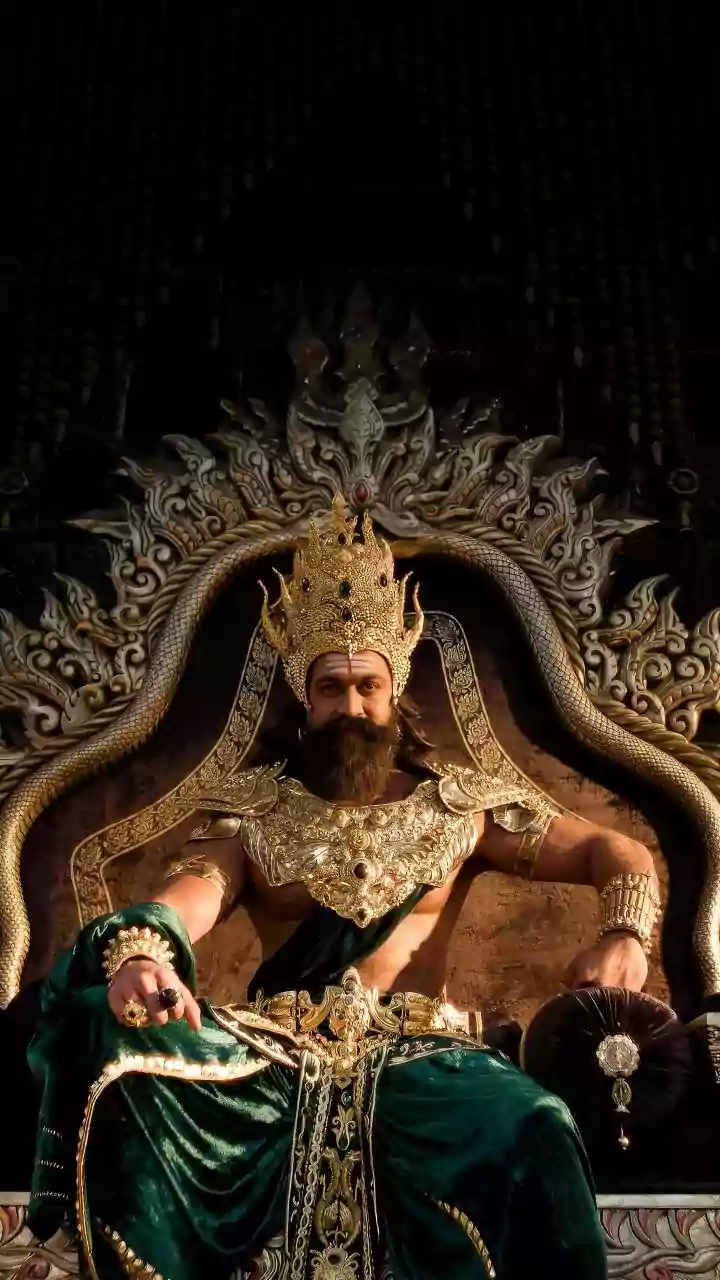
is not the one he was born with; it was earned. In Sanskrit, the root word 'ru' means 'to roar' or 'scream', and Ravana literally translates to 'one who roars'. This name was bestowed upon him by Lord Shiva himself. According to the legend, in a display of arrogance, Ravana attempted to lift Mount Kailash, Shiva's divine abode. To humble the powerful king, Shiva pressed down on the mountain with his toe, trapping Ravana’s arms underneath. The unbearable pain caused Ravana to let out a terrifying scream that was said to have shaken the three worlds. After crying out and singing hymns to Shiva for a thousand years, Shiva, pleased with his devotion, freed him and gave him the name Ravana, forever marking him by the power of his agonizing roar.
A Name That Embodies Character
More than just a label, the name Ravana encapsulates the core traits of his character in the epic. It signifies immense power, unbridled arrogance, and a fearsome presence. Ravana was a figure of profound contradictions: a great scholar well-versed in the Vedas and Shastras, an accomplished ruler, and a master of the veena, yet also a tyrant driven by ego and desire. His 'roar' is symbolic of this overwhelming force, a power that could challenge the gods but was ultimately rooted in pride. The name serves as a constant reminder of his defining moment of hubris and his complex relationship with Lord Shiva, a blend of defiance and devotion that is central to his identity.
The Ramayana as 'Itihasa': A Recorded Past
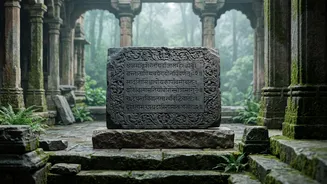
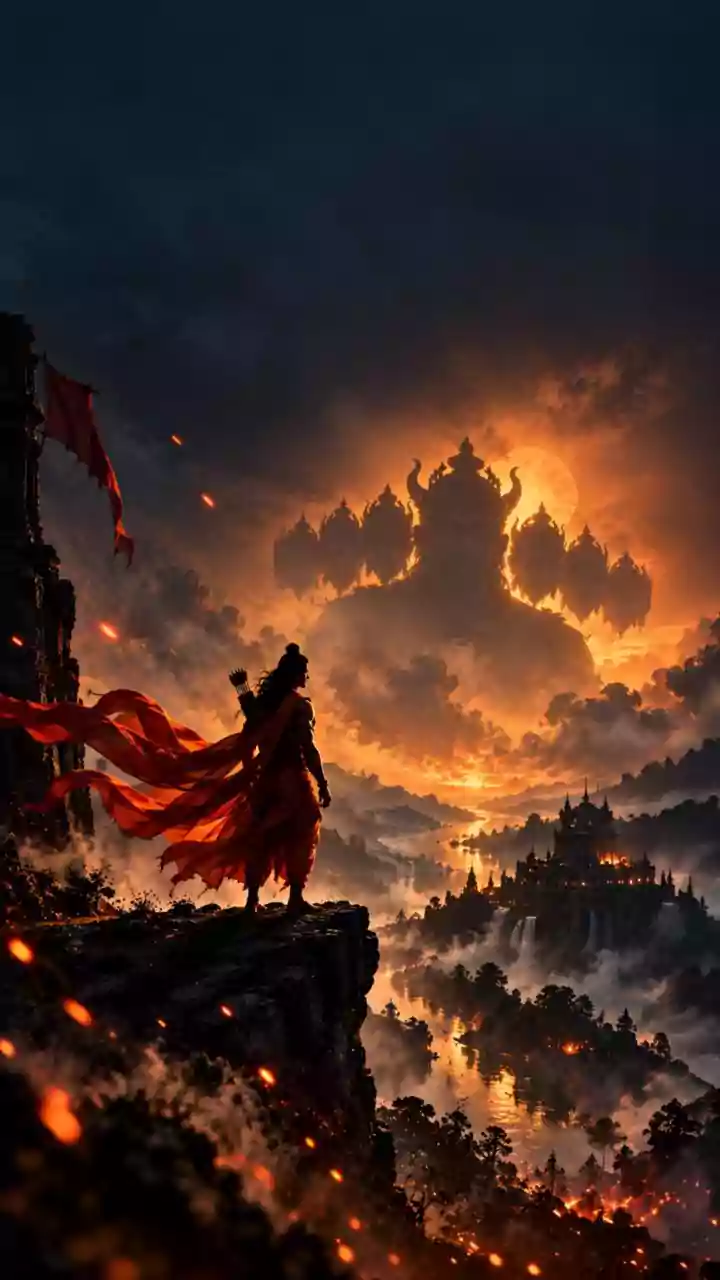
For many, the Ramayana is not a myth but 'Itihasa', a Sanskrit term meaning 'thus it happened'. This perspective views the epic as sacred history, a factual account of events that occurred in a previous age, the Treta Yuga. Proponents of this view point to several factors. The text, composed by the sage Valmiki who was a contemporary of Rama, provides detailed genealogies and specific geographical locations that can be identified on a modern map of India and Sri Lanka. Places like Ayodhya, the Godavari river, and the location of the fabled Ram Setu bridge are cited as evidence of the narrative's grounding in reality. Furthermore, some researchers have used astronomical data mentioned in the text to propose specific dates for the events, lending what they see as scientific weight to its historicity.
The Ramayana as 'Kavya': A Poetic Truth
Conversely, many scholars classify the Ramayana as 'Kavya', or epic poetry. This viewpoint does not necessarily deny a potential historical core to the story but emphasizes its literary, symbolic, and moral dimensions over literal fact. From this perspective, the Ramayana's primary purpose is to explore themes of dharma (duty), righteousness, and human values through a compelling narrative. Supporters of this view note the lack of definitive, independent archaeological evidence that can conclusively prove the epic's key events or the existence of its characters as described. The story contains supernatural elements, such as talking monkeys, flying chariots, and divine interventions, which are seen as hallmarks of mythology and allegory rather than historical record. The narrative is a vehicle for profound philosophical teachings, and its power is not dependent on its literal truth.