
Understanding the 'Evening Star'
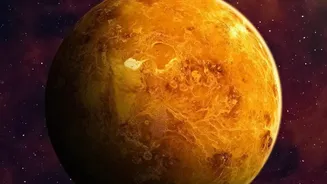
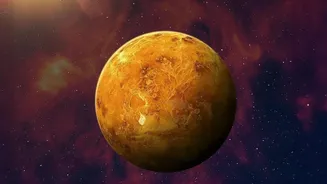
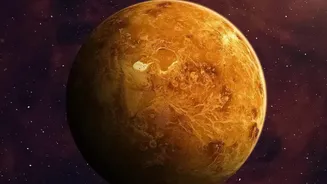
Venus is often called the 'Evening Star' or 'Morning Star' for a simple reason: its orbit. As the second planet from the Sun, its path is inside Earth's orbit. This means that from our perspective, Venus never strays far from the Sun's glare. It’s physically
tethered to our star in the sky, unable to appear in the middle of the night like Mars or Jupiter. Instead, it graces our skies for a few hours after the sun sets or before it rises. This close relationship with the Sun is what makes its appearances special. For the past few months, it has been climbing higher in the evening sky, becoming a familiar and brilliant beacon in the twilight. This month, that slow climb reaches its peak, setting the stage for a fantastic viewing opportunity for everyone, no matter their level of stargazing experience.
What 'Greatest Elongation' Means
The term 'greatest elongation' might sound technical, but the concept is straightforward. It simply marks the moment when Venus appears to be at its greatest angular distance from the Sun as seen from Earth. Imagine Venus on a leash tied to the Sun; the elongation is when that leash is stretched as far as it can go to the side from our viewpoint. When this happens in the evening sky, it’s called a 'greatest eastern elongation.' For the event on August 15, 2026, Venus will be a full 46 degrees away from the Sun. This is near the maximum possible separation, making it a particularly good one. This wide gap is what transforms Venus from a fleeting point of light lost in twilight into a prominent, unmissable jewel that hangs in a darker sky.
Your Viewing Guide for August 15
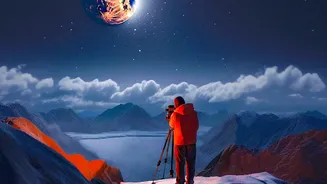
The best part about this celestial event is its accessibility. You don’t need special equipment or a remote dark-sky location. In fact, it’s one of the easiest astronomical phenomena to witness. To see Venus, simply head outside shortly after sunset on the evenings around August 15th. Find a spot with a relatively clear view of the western horizon. As the colours of twilight fade, you will see Venus emerge as an intensely bright, steady point of light. It will be far brighter than any star, so you cannot mistake it. Its brilliance is so profound that it can often be the first 'star' to appear in the evening. The official moment of greatest elongation occurs at 11:30 AM IST on August 15th, which means the evenings of the 14th, 15th, and 16th will all offer nearly identical, spectacular views.
What You Will Actually See
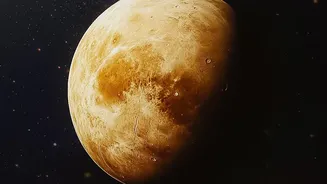
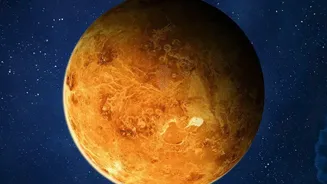
To your naked eye, Venus will look like a magnificent, silvery-white light that doesn't twinkle like a star. Its steady glow is due to it being a planet reflecting sunlight, unlike distant stars which are points of light affected by our atmosphere. While this view alone is stunning, a little magnification can reveal a fascinating detail. If you have a pair of binoculars or a small backyard telescope, point them toward Venus. You might be surprised to find that it isn't a perfect circle. Around its greatest elongation, Venus appears about 50% illuminated, looking just like a tiny, perfect half-moon. This is called dichotomy. Seeing the phases of Venus was a key observation for Galileo centuries ago, helping to prove that the planets orbit the Sun. With just a pair of binoculars, you can witness this same historic piece of evidence from your own home.
The Show Continues
If you miss the exact date of August 15th, don't worry. While this marks the point of widest separation, Venus will remain a spectacular object in the evening sky for many weeks. Throughout August and into September, it will continue to command the western sky after sunset. In fact, while its angular separation from the Sun will begin to decrease, its brightness will actually increase. Venus is scheduled to reach its 'greatest brilliancy'—its brightest point for this apparition—on September 18, 2026. As it gets closer to Earth in its orbit, its apparent size increases, and although its phase becomes a thinning crescent, the increased size makes it appear even more dazzling. This means you have a long window of opportunity to enjoy the beauty of the Evening Star this season.