






Understanding Agility and Reflexes
Before we pit these two activities against each other, let's clarify what we mean by agility and reflexes. Agility is your body's ability to change direction or position quickly and efficiently while maintaining control. Think of a badminton player lunging
for a shuttlecock or a cricketer quickly adjusting their feet. Reflexes are even faster—they are involuntary, near-instantaneous movements in response to a stimulus. While related, agility is a skill you can consciously train, while reflexes are about optimising your nervous system's response time. A truly agile person has excellent reflexes, but they also possess balance, coordination, and power.
Rope Skipping: A Workout for Your Nervous System
At first glance, skipping seems like a simple cardio exercise. In reality, it's a highly effective form of plyometric training—exercises that use explosive movements to build power. Every time you jump, your muscles are forced to contract and lengthen in rapid succession. This high-impact, fast-paced activity does more than just elevate your heart rate; it trains your nervous system to be more efficient. The constant, rhythmic cycle of jumping and landing requires a split-second conversation between your brain, eyes, hands, and feet, essentially hardwiring new motor patterns. This process enhances neuromuscular communication, which is the secret to quicker reflexes and faster footwork.
How Skipping Builds Reactive Speed
The key advantage of rope skipping for agility lies in its ability to improve reactive speed and coordination. The rope provides immediate, non-negotiable feedback; if your timing is off, you trip. This forces your body to make constant, tiny corrections to maintain balance and rhythm. Over time, this trains you to be incredibly light on your feet, reducing ground contact time and improving your ability to react instantly. This is why boxers and martial artists have used skipping for decades—it directly translates to the sharp, responsive footwork needed to evade an opponent or launch a quick attack. It builds the kind of agility needed for dynamic, unpredictable environments.
Yoga’s Role: Building a Foundation of Control
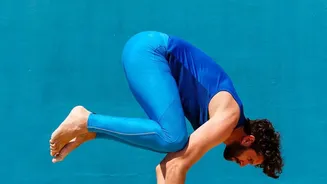
So, where does yoga fit into this equation? Yoga’s approach to agility is fundamentally different. It focuses on building flexibility, balance, core strength, and proprioception—your body's awareness of its position in space. Poses like Tree Pose or Warrior III challenge your stability, forcing smaller stabilising muscles to engage and work in harmony. This develops a deep sense of body control and balance. While yoga improves your range of motion and makes movements more fluid, it is generally a slower, more deliberate practice. It excels at improving what we might call 'controlled agility'—the ability to move gracefully and maintain difficult positions with precision.
The Verdict: Different Tools for Different Goals
When comparing the two, rope skipping is superior for sharpening fast-twitch, reactive reflexes. The high-speed, repetitive, and coordinated nature of skipping directly trains the nervous system to fire more rapidly, leading to measurable improvements in foot speed and reaction time. Yoga, on the other hand, builds the crucial foundation upon which agility stands: balance, flexibility, and core stability. It enhances your ability to control your body's movements, but it doesn't typically operate at the high speed required to hone sharp reflexes in the same way skipping does. Yoga makes you more stable and aware; skipping makes you quicker.