




India's Growing Appetite for Gas
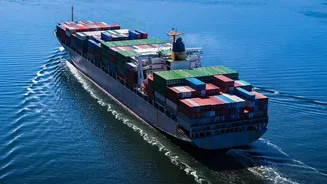
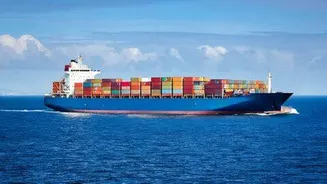
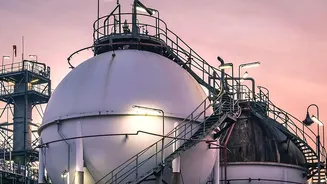
India is the world's fourth-largest importer of LNG, a super-chilled form of natural gas that can be transported by sea. This dependency is not a luxury; it is a necessity. Natural gas is a critical feedstock for the fertiliser industry, accounting for 70-80%
of production costs and thereby directly impacting the agricultural sector. It also plays a vital role in power generation, city gas distribution networks for households and vehicles, and various industries from petrochemicals to steel and ceramics. To meet this demand, India relies heavily on imports, which satisfy roughly half of its total natural gas consumption. Traditionally, Qatar has been a dominant supplier, providing over 40% of India's LNG. However, as recent events have shown, this reliance on a single region carries significant risks.
The Chokepoints of Global Energy
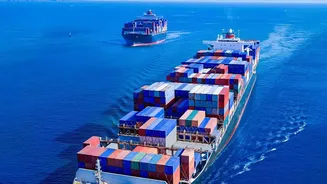
The story of India's energy vulnerability is a story of geography. Two maritime passages are particularly critical: the Strait of Hormuz and the Bab el-Mandeb Strait at the entrance to the Red Sea. The Strait of Hormuz, a narrow waterway between Iran and Oman, is the world's most important oil transit chokepoint. Before recent disruptions, approximately 40% of India's crude oil imports and a staggering 50-60% of its LNG supplies passed through it. Any conflict or instability in this region, as seen with recent tensions involving Iran, can immediately threaten this flow. Similarly, the Bab el-Mandeb Strait has become a flashpoint due to attacks on shipping, forcing vessels to take a longer, more expensive route around Africa. A simultaneous disruption at both these chokepoints represents a worst-case scenario for India's energy security.
A Familiar Pattern of Risk
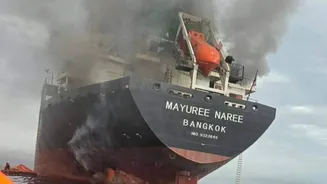
The risks facing LNG imports mirror those that have long plagued crude oil supplies. The same tankers, whether carrying oil or gas, are often exposed to the same geopolitical threats in the same narrow waterways. Recent disruptions in the Persian Gulf have already provided a stark example, causing supply shocks from Qatar, India's key LNG provider. This forced Indian importers to scramble for alternative cargoes from countries like Oman, the United States, and Nigeria, often at higher prices. Reports from July 2026 warn that a dual closure of the Strait of Hormuz and the Red Sea could cause Brent crude prices to spike as high as $130-135 per barrel. The impact on LNG prices would be similarly severe, creating a double blow to the Indian economy.
The Economic Ripple Effect
When energy supply routes are disrupted, the consequences extend far beyond the energy sector. Rerouting ships around Africa can add two to three weeks to delivery times and dramatically increase freight and insurance costs. For India, this translates directly into a higher import bill, which can widen the country's current account deficit and put downward pressure on the rupee. Domestically, higher LNG prices mean increased costs for fertiliser production, which could necessitate larger government subsidies or lead to higher food prices. Key industries face margin pressures from elevated raw material and logistics expenses. Ultimately, sustained high energy prices stoke inflation, impacting everything from household budgets to the competitiveness of Indian exports.
Searching for Energy Security
In response to these vulnerabilities, India is pursuing a multi-pronged strategy. A key element is the diversification of suppliers. The country has expanded its crude oil sourcing to around 40 nations, up from 27 just a few years ago. A similar diversification is underway for LNG, with increased purchases from the US, Nigeria, and Oman to reduce over-reliance on the Persian Gulf. The government is also focused on increasing domestic energy production and has approved the expansion of its Strategic Petroleum Reserves to act as a buffer against supply shocks. Furthermore, there is a strategic push towards renewable energy, green hydrogen, and carbon capture technologies to fundamentally reduce import dependency. These efforts aim to build a more resilient energy system that can better withstand external shocks.