




A Fiery Ascent and a Sudden Anomaly
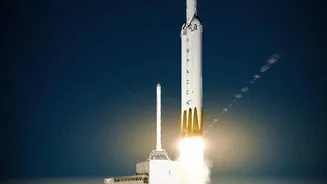
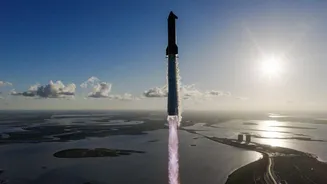
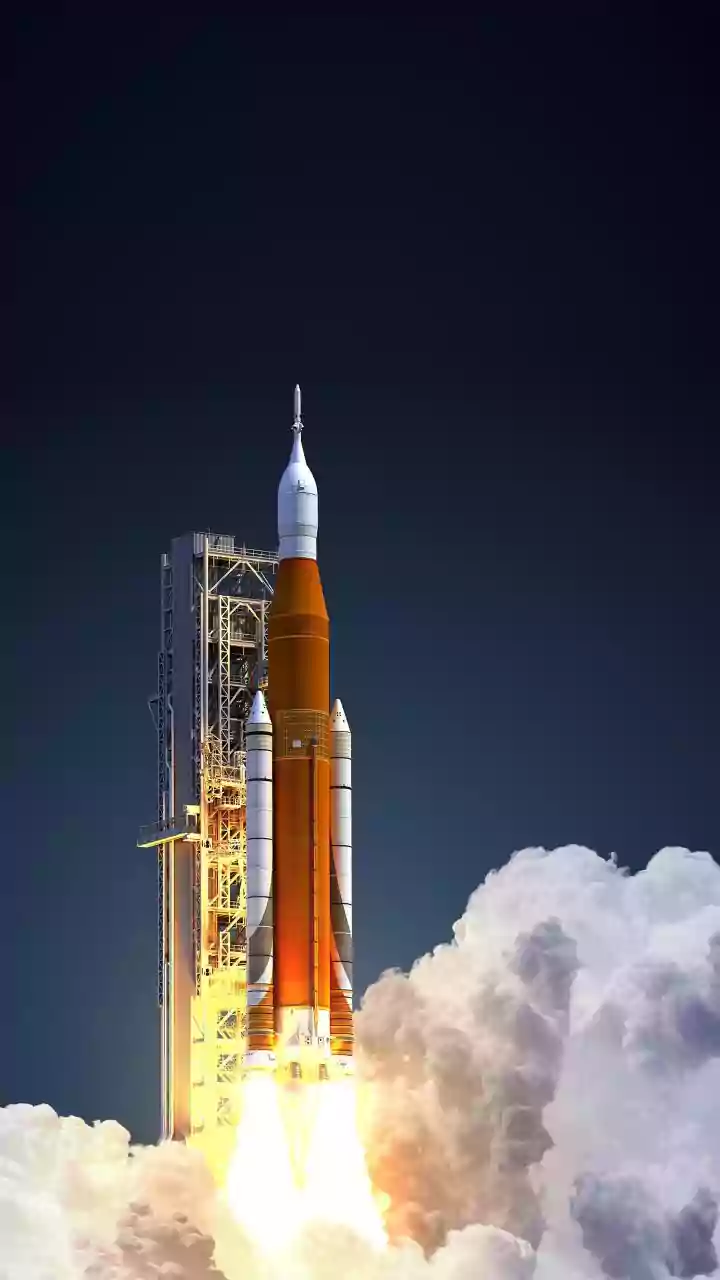
On September 28, 2026, SpaceX’s massive Starship vehicle lifted off from its Starbase facility in Texas for its 14th integrated test flight. For the first few minutes, the world's most powerful rocket performed as expected, thundering skyward on the power of its Super
Heavy booster. However, during the ascent, an anomaly occurred: one of the booster's 33 Raptor engines shut down prematurely. Shortly after the upper stage separated from the booster, it faced its own issue when one of its six engines also failed. In the high-stakes world of spaceflight, such failures can be catastrophic. For a moment, it seemed the mission's most ambitious goals were in jeopardy as flight controllers in mission control scrambled to assess the vehicle's health. The Super Heavy booster, its job done, successfully performed its maneuvers and completed a controlled splashdown in the Gulf of Mexico. All eyes were now on the Starship upper stage.
Pushing Through to Orbit
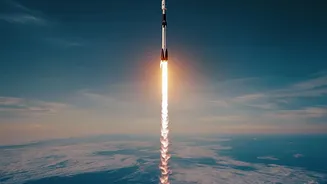
Despite the engine loss, SpaceX made the bold call to press on. The remaining five Raptor engines on the Starship upper stage fired for longer than planned, compensating for the lost thrust and pushing the vehicle to its target. In a nail-biting sequence, Starship successfully executed its orbital insertion burn. For the first time in the program's history, after 13 previous suborbital flights, Starship had reached a stable orbit around Earth, climbing to an apogee of approximately 275 kilometers. This moment marked a colossal milestone, transitioning Starship from a prototype undergoing atmospheric tests into a spacecraft capable of operating in orbit. It was the primary goal of the flight, and achieving it, even with a wounded vehicle, was a testament to the rocket's redundant design and the team's confidence.
First Payload, First Purpose
Reaching orbit wasn't just for show. Flight 14 was Starship's first operational mission, carrying a payload of 26 next-generation Starlink V3 internet satellites. After settling into orbit, the spacecraft opened its payload bay doors and, in a sequence often likened to a Pez dispenser, successfully deployed all 26 satellites into low-Earth orbit. This was another critical first. It proved Starship could do the job it was ultimately designed for: delivering massive amounts of cargo to space. These new V3 satellites are designed to significantly increase the capacity and speed of SpaceX's global broadband network. Completing this objective turned the test flight into a commercially productive mission, a key step toward the rocket's long-term business case.
An Early but Controlled Return
The original flight plan called for a nearly 10-hour mission, completing about six orbits before a deorbit burn. However, SpaceX officials decided to play it safe. In a move described as being made out of an “abundance of caution” following the ascent engine anomaly, the mission was shortened. After just under two orbits and about three hours of flight time, a single Raptor engine fired to begin the deorbit sequence. Starship then performed its signature “belly-flop” maneuver, using its large surface area and fins to slow down as it re-entered Earth's atmosphere. In the final moments, the ship reoriented itself to a vertical position and performed a landing burn before splashing down in the Pacific Ocean north of Hawaii. While the vehicle broke apart shortly after its hard splashdown, achieving a controlled atmospheric re-entry and targeted splashdown after an orbital flight was another major objective ticked off the list.
What This 'Successful Failure' Means for SpaceX
So, was it a success or a failure? In the world of SpaceX, it was both—and that's the point. The company’s philosophy is built on iterative testing: fly, fail, fix, and fly again. This flight provided invaluable data on how the vehicle performs with an engine out, the stresses of orbital flight, and the dynamics of re-entry. While the engine failure will need to be investigated—especially as NASA is relying on Starship to land astronauts on the Moon for its Artemis program—the mission's overall success in reaching orbit and deploying its payload is a far more significant headline. It proved the fundamental architecture works. For SpaceX, this flight wasn't about achieving a perfect mission; it was about pushing the hardware to its limits, learning from anomalies, and taking a giant leap toward a future of fully reusable rockets capable of taking humanity to Mars.