




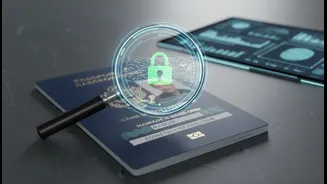
The Convenience Trap
Let’s be honest: remembering dozens of unique, complex passwords for every app and website is nearly impossible. The human brain craves simplicity. This is why so many people fall into the trap of password reuse. You have one strong password you trust,
and you use it for everything from your email and social media to your online shopping and, most critically, your bank accounts. While it feels convenient, this habit is the digital equivalent of using the same key for your house, your car, and your high-security bank locker. If a thief gets that one key, they get access to everything.
Why Your Travel App Is Not a Fortress
You trust your bank to have world-class, Fort Knox-level security. They invest enormous resources into protecting your money. Travel and hospitality companies, on the other hand, are in the business of selling experiences, not securing data. While they have security measures, their systems are often not as robust as a bank's. The travel industry is a frequent target for cybercriminals precisely for this reason. Data breaches in the travel sector are common, with hackers stealing databases full of user information, including usernames, emails, and passwords. These sites are considered 'soft targets' compared to financial institutions. When your credentials are stolen from a less secure travel site, it becomes a gateway for criminals to try their luck elsewhere.
The Hacker's Favourite Trick: Credential Stuffing
This is where the real danger lies. Hackers take the lists of usernames and passwords stolen from a data breach—say, from that travel app you used—and use automated software to 'stuff' these credentials into other, more valuable websites. The bots will try your travel site username and password combination on major banking portals, email providers, and e-commerce sites, hoping for a match. They are betting on the fact that many people reuse passwords. This isn't a sophisticated hack targeting you personally; it's a high-volume, automated attack that plays the odds. If your banking password is the same as your breached travel site password, you’ve just handed criminals the keys to your account.
Your New Security Playbook
Protecting yourself doesn't require a degree in cybersecurity. It just requires changing a few habits. Here is your simple, three-step playbook for a much more secure digital life.
First, and most importantly, use a unique and strong password for every single one of your financial accounts. This is non-negotiable. Your bank, credit card, and investment app passwords should be for their eyes only.
Second, get a password manager. These are tools that create and securely store long, random, unique passwords for all your accounts. You only need to remember one strong 'master password' to unlock your password vault. The manager can then automatically fill in your credentials on websites and apps, giving you the ultimate combination of security and convenience.
Third, enable Two-Factor Authentication (2FA) wherever it is offered, especially for banking and email. 2FA adds a second layer of security by requiring a second piece of proof to log in, like a one-time code sent to your phone. This means that even if a hacker steals your password, they still won't be able to get into your account without your phone.