








The Ground Beneath Our Feet
From the sprawling arid zones of Rajasthan to the lush Himalayan foothills, grazing lands are a vital resource. They support the livelihoods of millions of pastoralists and contribute significantly to India's milk and meat production. However, these ecosystems
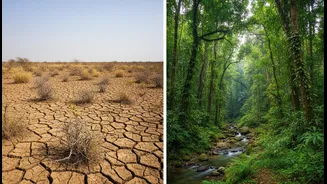
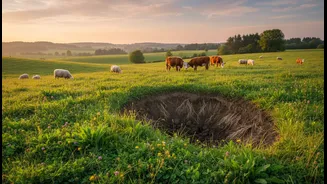
are under immense pressure. The dynamic between a grazing animal and the land it stands on is incredibly complex. For centuries, traditional grazing practices have shaped these landscapes, but factors like climate change, shifting land-use patterns, and increasing livestock numbers are threatening this delicate equilibrium. Overgrazing can lead to soil degradation, loss of plant diversity, and erosion. Conversely, the complete absence of grazing can also have unintended negative consequences, sometimes reducing the stability of carbon stored in the soil. The health of our soil is paramount; it holds more carbon than the atmosphere and all plant life combined, making it a crucial player in the climate change puzzle. Finding a sustainable middle path is no longer just an academic exercise; it's a national imperative.
A New Scientific Quest
Recognizing this urgency, researchers at various Indian institutions, such as the Indian Institute of Science (IISc) and the Central Arid Zone Research Institute (CAZRI), are undertaking critical studies to decode the impacts of grazing. These projects aim to move beyond the simple 'grazing is good or bad' debate. Instead, they seek to provide data-driven answers to specific questions: How does the intensity of grazing—light, moderate, or heavy—affect the soil's ability to store carbon? How does rotational grazing, where animals are moved between pastures, compare to continuous grazing in the same area? What happens to the local microclimate, the tiny pocket of atmosphere near the ground, when grazing patterns change? And how do different native plant species respond to the stress of being eaten and trampled? By setting up controlled experiments, scientists can isolate these variables and measure their precise effects, providing the first clear blueprint for sustainable grazing management tailored to India's diverse environments.
How the Study Works
To get these answers, researchers are setting up long-term field experiments in different ecological zones. A common method involves establishing several plots of land. Some plots are completely fenced off to exclude all grazing animals, serving as a baseline. Other plots are subjected to different 'treatments'—for example, one might have continuous grazing by a certain number of animals, while another might employ a rotational system. Over months and years, scientists will meticulously collect data. They will take soil samples to analyze for organic carbon, nitrogen content, and microbial activity. They will monitor plant life, tracking the diversity of species, root depth, and overall biomass. Specialized sensors will be deployed to measure soil moisture, temperature, and local humidity, painting a picture of the microclimate. This painstaking data collection is essential. The goal is to understand not just what happens, but why it happens, tracking the intricate chain of events from a nibbling goat to the amount of carbon locked away underground.
From Data to Decisions
The ultimate aim of this research is not to produce academic papers that gather dust on a shelf. It is to generate practical guidelines that can be used by pastoral communities, livestock farmers, and government policymakers. For instance, if the research shows that a specific rotational grazing strategy significantly boosts soil carbon in a semi-arid region, that information can be shared through agricultural extension services to help farmers adopt more sustainable practices. Research by the Central Arid Zone Research Institute, for example, has long focused on developing livestock and range management practices to support livelihoods in drought-prone areas. Similarly, if certain native grasses are found to be particularly resilient to grazing and good for soil health, reseeding programmes can prioritize them. The data can inform policies on managing common grazing lands and provide a scientific basis for incentivizing climate-friendly animal husbandry. It’s about turning scientific insights into real-world action that benefits both the environment and the economy.
The Bigger Picture
This research in India is part of a global effort to understand and leverage 'nature-based solutions' for climate change. Grasslands cover about 40% of the Earth’s land surface and managing them effectively is a powerful tool for carbon sequestration. Studies from around the world have shown that the impact of grazing is highly dependent on local conditions like climate and soil type. What works in the rangelands of Australia or the plains of North America may not work in the Indian context. That is why local, context-specific research is so vital. The findings from these Indian university studies will not only help secure the future of pastoralism in the country but will also contribute valuable knowledge to the global scientific community. By understanding the sweet spot—the right intensity and type of grazing for a given environment—we can ensure that our grasslands continue to support our livestock while simultaneously acting as a vital carbon sink, helping to mitigate the impacts of a changing climate.