







The Unseen Cost of Computation
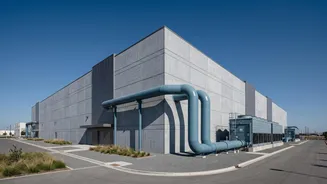
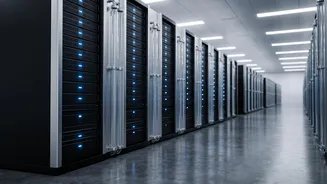
The magic of AI doesn't happen in the cloud; it happens in massive, energy-intensive warehouses called data centres. These facilities are packed with thousands of high-performance computer servers that generate an immense amount of heat while processing
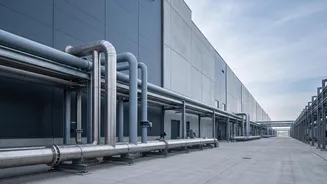
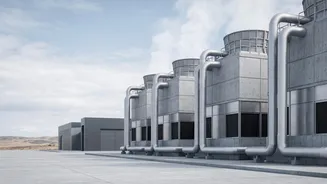
data. To prevent these crucial components from overheating and failing, they require constant cooling. While older data centres often relied on simple air conditioning, many modern facilities, especially those powering AI, use evaporative cooling systems. These systems use water as a key medium to dissipate heat. As hot air passes over or through water, the water evaporates, carrying heat away with it. This process is highly effective but also incredibly water-intensive, as a significant portion of the water is lost to the atmosphere. This direct water use is compounded by the indirect water consumption required to generate the enormous amounts of electricity these centres consume.
A Gulping Giant with a Growing Appetite
The scale of this water consumption is staggering. A single large data centre can consume up to 19 million litres of water per day, equivalent to the daily water usage of a town with 30,000 to 50,000 people. As the demand for AI grows, so does the thirst. Tech giants have reported significant increases in their water usage, driven largely by their AI workloads. Google's water consumption, for instance, jumped 28% in a single year, reaching roughly 30 billion litres in 2024. Projections show that global data centre water consumption could more than double by 2030. Even a seemingly simple interaction with an AI model has a water cost. While estimates vary, researchers suggest that a series of 10 to 50 queries with a model like GPT-3 can consume the equivalent of a 500 ml bottle of water, factoring in both cooling and electricity generation.
India's Double-Edged Sword
India is aggressively positioning itself as a major global hub for data centres, with billions in investment pouring in from tech giants. The country's data centre capacity has quadrupled since 2020, and it is expected to continue its rapid expansion. However, this boom presents a critical challenge. India is one of the world's most water-stressed countries, with only 4% of global water resources for 18% of the global population. Alarmingly, a large percentage of India's data centres are being built in regions already facing high water stress, such as Mumbai, Chennai, and Bengaluru, which together host about 70% of the country's capacity. Projections indicate that India's data centres consumed around 150 billion litres of water in 2025, a figure that could more than double by 2030, placing immense pressure on already strained local water supplies for agriculture and communities.
Innovating Towards Sustainability
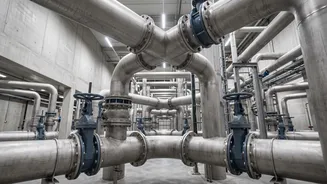
Recognizing the looming crisis, the industry is exploring and implementing more sustainable solutions. A key focus is on advanced cooling technologies that reduce water dependency. Closed-loop liquid cooling, for instance, circulates a coolant directly to the hottest components like processors, transferring heat more efficiently without the massive water loss from evaporation. Other methods like direct-to-chip and immersion cooling, where servers are submerged in a non-conductive fluid, are also gaining traction for high-density AI infrastructure. In water-scarce regions like India, these technologies are becoming a default choice for new builds. Additionally, some companies are pledging to replenish more water than they consume and are investing in water reuse and rainwater harvesting to mitigate their impact on local resources.