









Understanding the Mixed Signals
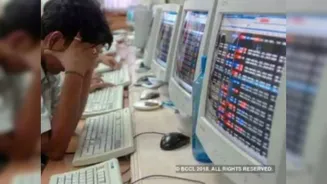
The first half of 2026 has been a turbulent ride for investors. Despite major indices showing resilience, the story underneath has been one of extreme choppiness, particularly in the tech sector. Geopolitical tensions, concerns over AI demand sustainability,
and uncertainty around interest rates have created significant market swings. Some analysts have pointed to a historic divergence between single-stock volatility and the broader market, drawing parallels to the dot-com era and flagging the risk of a market "shock." This has left many investors wondering whether to brace for a downturn or stay the course. Within this environment of uncertainty, a clearer-eyed perspective is gaining traction, one championed by market watchers like Abhay Agarwal of Piper Serica. The core idea is to look past the immediate panic and focus on the bigger picture.
The Illusion of Temporary Volatility
According to analysts like Abhay Agarwal, much of the current market volatility is sentiment-driven and temporary. For example, recent spikes in oil prices were linked directly to geopolitical fears rather than a fundamental shift in supply and demand, with expectations that prices would normalize once tensions ease. This principle applies to the tech sector as well. Fears about the costs of AI implementation or a potential delay in a high-profile IPO can cause significant, but often short-lived, selloffs. The key takeaway is not to overreact to headline-driven panics. As Rajeev Agarwal of Doordarshi notes, it's difficult to time the market perfectly, and disciplined, gradual investing during volatile periods can be more effective than waiting for the 'dust to settle'. This approach requires investors to distinguish between fleeting market jitters and genuine, long-term shifts in the industry.
The Real Story: Structural Opportunities
Beyond the day-to-day noise, powerful structural trends are reshaping the global economy. The artificial intelligence boom is the most prominent, driving a massive investment cycle in everything from data centers to semiconductors. This isn't just about a few high-flying stocks; it's about building the fundamental infrastructure for the next generation of technology. Companies that provide the power, cooling, and hardware for AI are seeing massive backlogs. The demand for high-speed connectivity is also exploding, creating a windfall for sectors like optical fibre manufacturing. Sterlite Technologies, backed by Vedanta's Anil Agarwal, saw its stock surge in 2026 on the back of the AI-driven demand for data infrastructure. These are not cyclical trends but foundational shifts. Other durable themes include cybersecurity, energy security, and what analysts are calling 'physical AI' or robotics.
A New Playbook for Indian Investors
For investors in India, this perspective is crucial. While some analysts, like Sandip Agarwal of Sowilo Investment Managers, caution that the old days of explosive, double-digit growth for the entire Indian IT services sector may be over, he also notes that AI is now 'the only path'. The industry is mature, but it is also adapting, with major players like TCS aggressively retraining their workforce for an AI-centric world. The real growth may come from different areas. Abhay Agarwal points towards mid-cap and small-cap companies in sectors like Electronic Manufacturing Services (EMS) and specialized banking, which he believes are better positioned for innovation and growth than some large-cap incumbents. The strategy is to identify companies that are enabling these structural shifts, whether through hardware, software, or specialized services, and to hold them for the long term.